Phil

Fiat Ducato Air Suspension – Heavy Duty Rear Kits for Ducato, Boxer, Relay and Jumper

If you own a Fiat Ducato, Peugeot Boxer, Citroen Relay or Citroen Jumper based van, camper or motorhome, there is a good chance that air suspension will make a very worthwhile difference to the way it drives, sits and copes with load. These vehicles have been one of the most important bases for European motorhomes for many years, and for AirRide they remain one of the biggest parts of our van and motorhome air suspension business.

In fact, our rear load support kits for the Ducato platform are our single most popular load support kits, accounting for around a third of all the load support kits we sell. For much of the last twenty years, Ducato based motorhomes made up the majority of the market. That is changing somewhat now as more manufacturers move towards Ford based vehicles, but the Ducato, Boxer, Relay and Jumper platform is still one of the most common and most important vehicle families on the road.

With the weather improving and more owners starting to think about weekends away, holidays, touring and getting their vehicle ready for the season ahead, now is a very good time to upgrade. We currently have good stock of popular Ducato air suspension kits and can also advise on front struts and AL-KO applications.

Why Fiat Ducato motorhomes and vans so often benefit from air suspension

The Fiat Ducato and its sister vehicles are used for panel vans, camper conversions, coach built motorhomes, A-class motorhomes, minibuses and commercial vehicles. That flexibility is one of their strengths, but it also means many of them work hard and carry a lot of weight. Water tanks, passengers, tool kits, mobility equipment, bikes, tow bars, scooter racks, luggage and general conversion weight can all take their toll on the rear suspension.

Many motorhomes are effectively running too close to the bump stops for comfort. When that happens, you lose suspension movement, ride quality gets harsher, the rear end can sag, the vehicle can feel less settled and the whole thing becomes more susceptible to wallowing, crosswinds and the buffeting effect of large passing vehicles.

A good rear air suspension kit for a Fiat Ducato, Peugeot Boxer, Citroen Relay or Jumper can help recover lost suspension motion, improve ride quality, improve stability, reduce sagging and help the vehicle sit and drive more as it should.

The toughest Ducato rear load support kit we know of

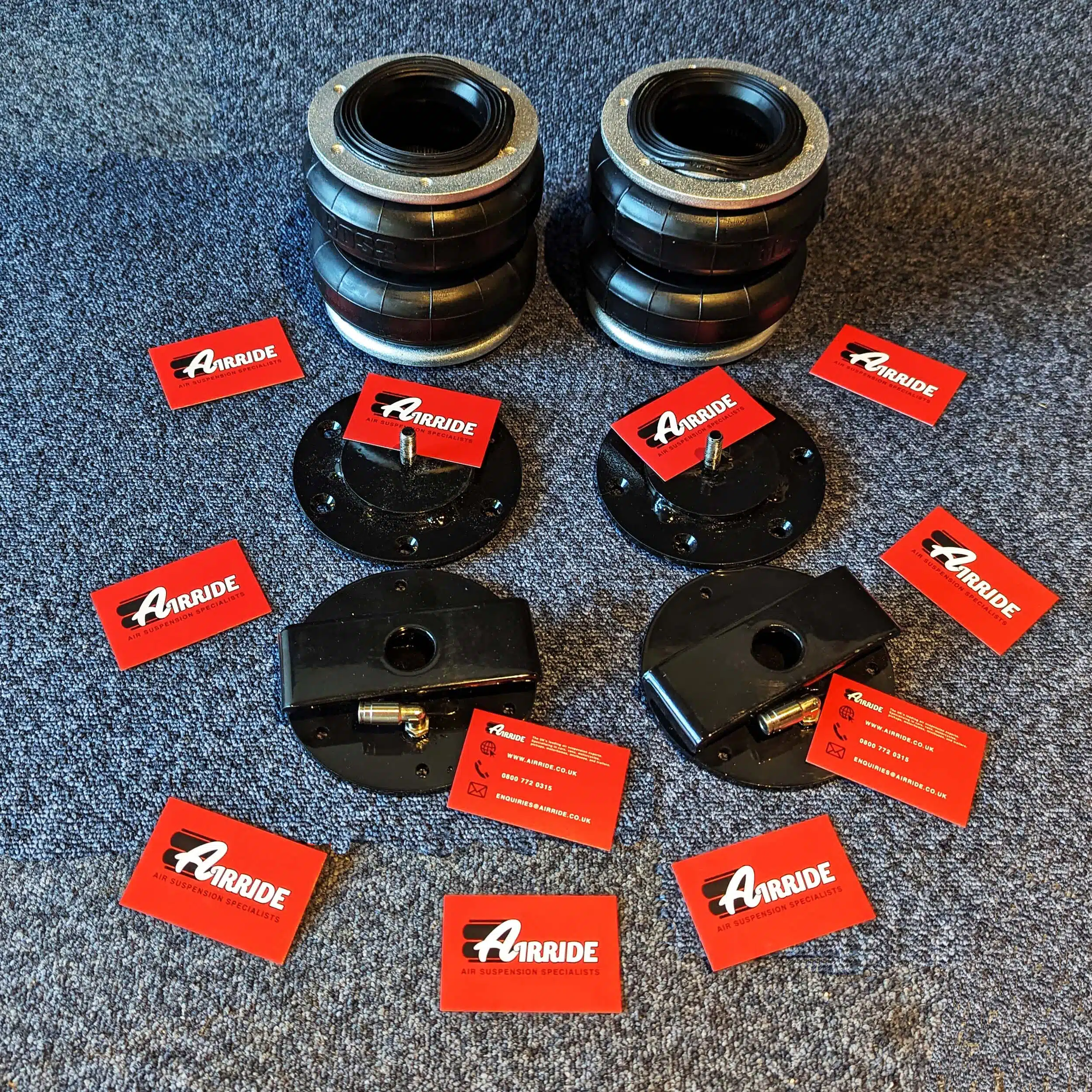
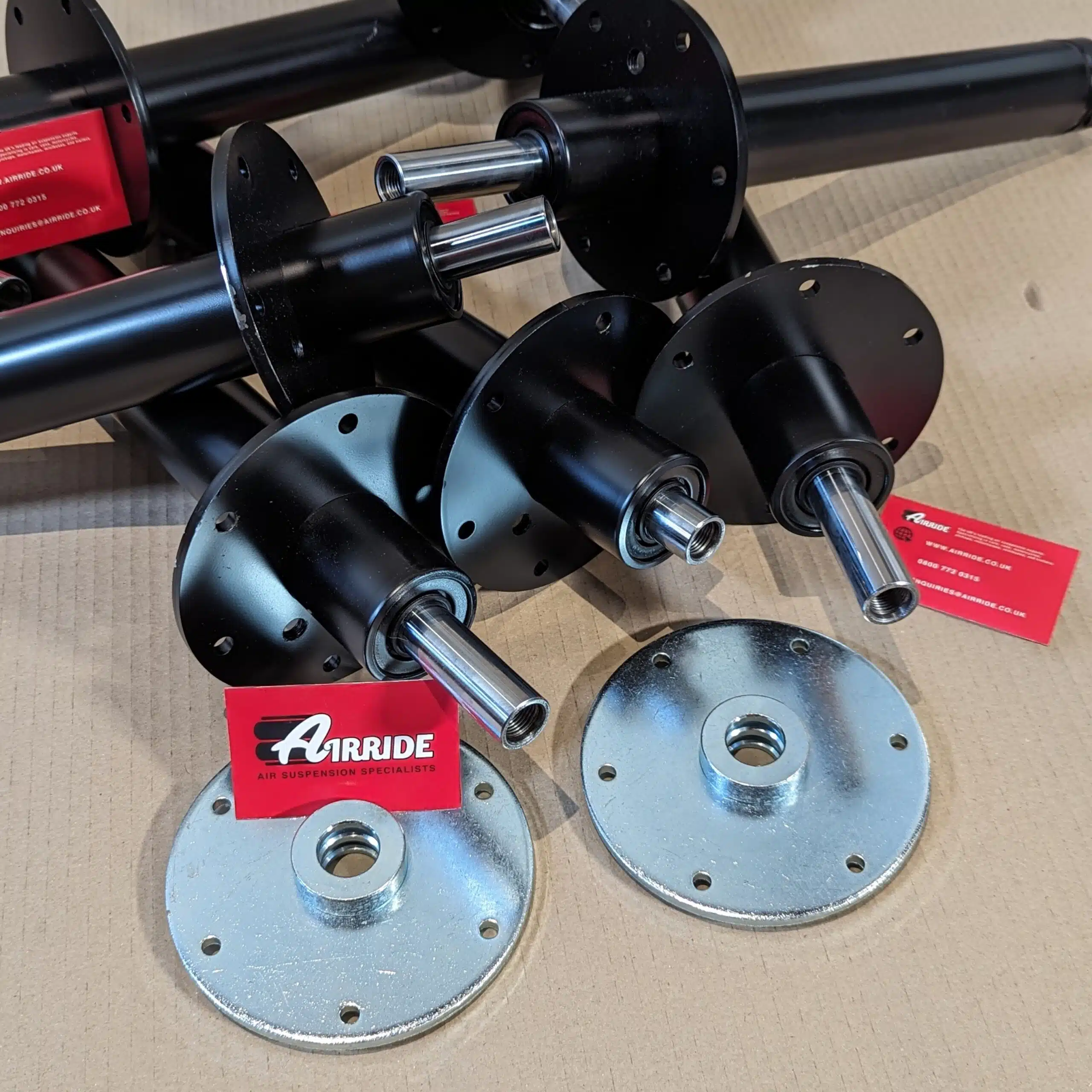
We believe the Boss bagged rear load support kit we supply for lifted Fiat Ducato, Peugeot Boxer, Citroen Relay and Jumper applications is the heaviest duty kit on the market that we know of.

  • Heaviest duty bags we know of
  • Heaviest duty brackets we have seen
  • Proper high quality fittings
  • Extremely simple bolt-on fitting
  • Designed specifically for hard-working vans, campers and motorhomes

That matters because all air suspension kits are not the same. The internet is full of low-priced air bag kits, unbranded bags, weak brackets and poor fittings. In this market, cheap often means compromised. Suspension parts are carrying real load on heavy vehicles, so bracket design, steel thickness, bag quality and fittings quality all matter a great deal.

Boss Extreme air bags - serious specification for serious vehicles

This rear kit uses two Boss Extreme double convoluted air bags. These are rated in use at 1136 Kg per side (max 2000 Kg per side) and have been government approved tested to over 750 psi. They can be used up to 400 psi and are recommended at a maximum of 160 psi in service. Most owners will never need anything like those figures in normal use, but that huge reserve of capacity tells you a lot about the specification of the bags.

In normal motorhome use, pressures are often far lower than the bag is capable of, which is exactly how we like it. It means the kit is working well within a robust design range rather than near its limit.

Heavy duty 6 mm brackets and proper support

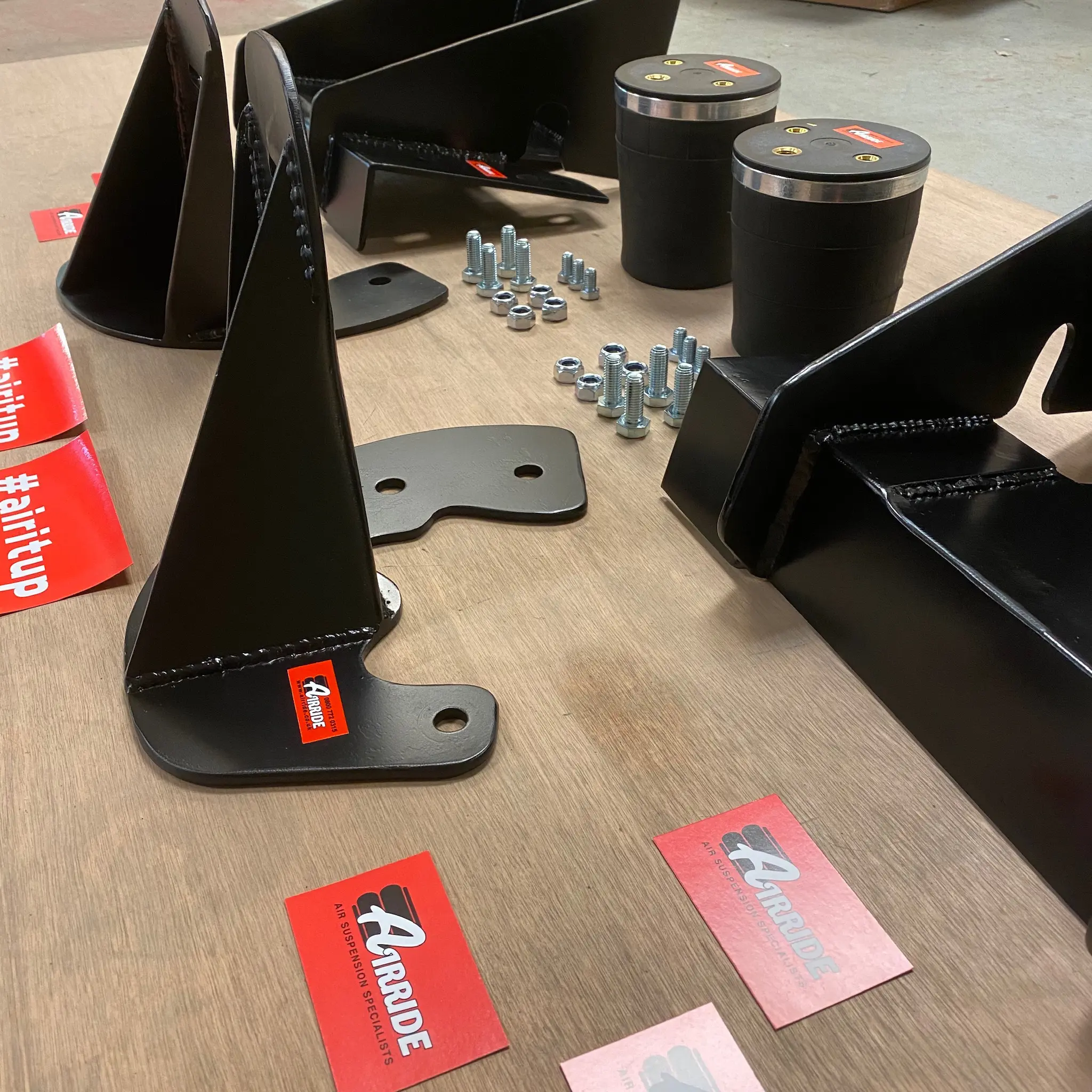
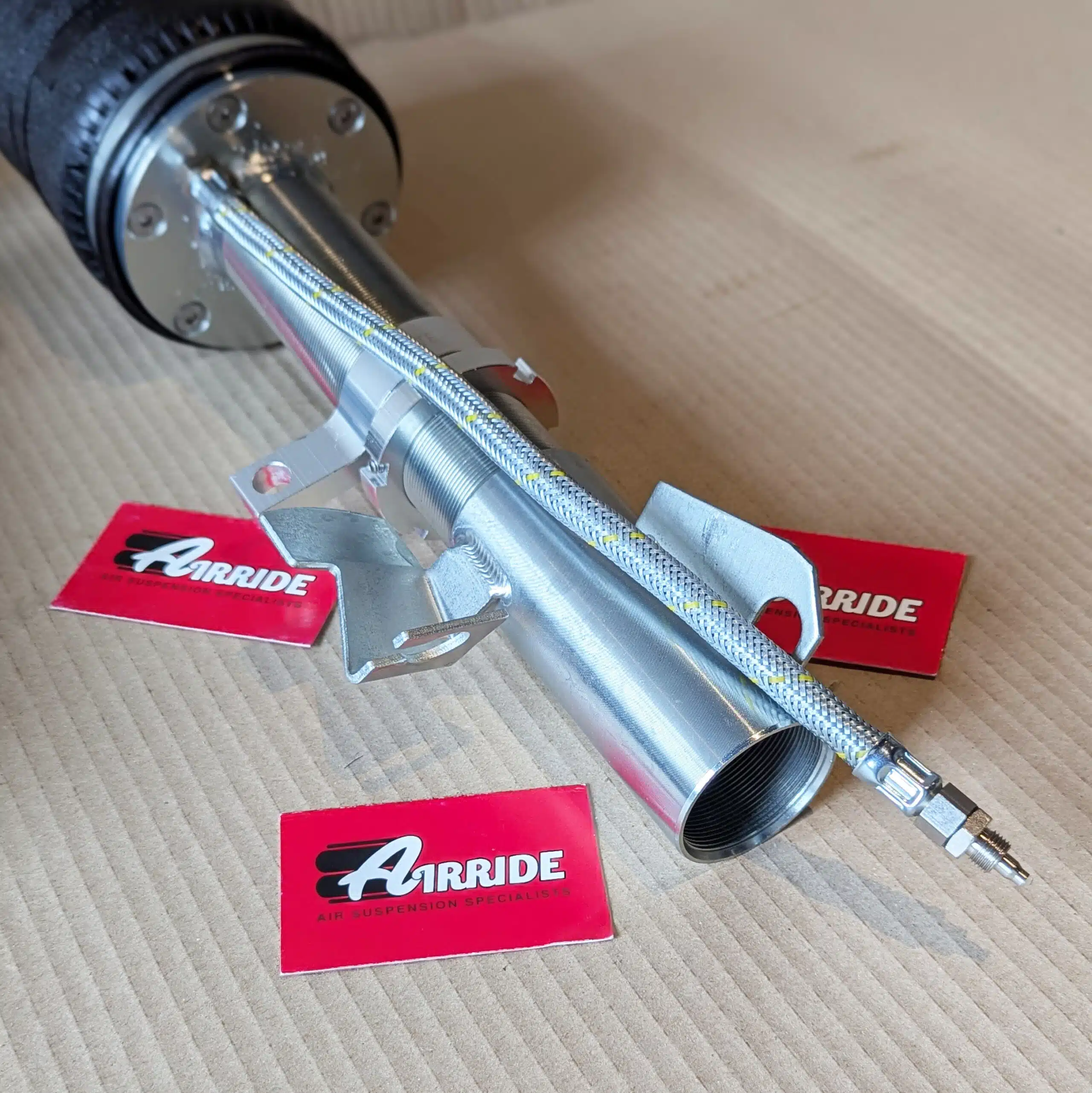
The brackets are just as important as the bags. Our Ducato based rear kits use proper heavy duty steel brackets made from 6 mm steel with real braces and supports where required. A good air bag fitted to a poor bracket is still a poor kit. Brackets must be designed to carry the load safely and properly without slipping, bending or creating issues elsewhere.

We do not use pressed single-piece brackets of the type known to cause chassis damage on this application (due to not spreading the heavy load over a large enough area). Our brackets are properly designed for the job, built for strength and support, and this kit is made in Norwich.

Over the years we have replaced or advised against a lot of poor quality kits. That is one of the big differences between dealing with an air suspension specialist and buying blind from a generic seller. We do not just move boxes. We have years of practical experience in supplying, fitting and supporting air suspension systems.

Easy to fit - no drilling, no nonsense

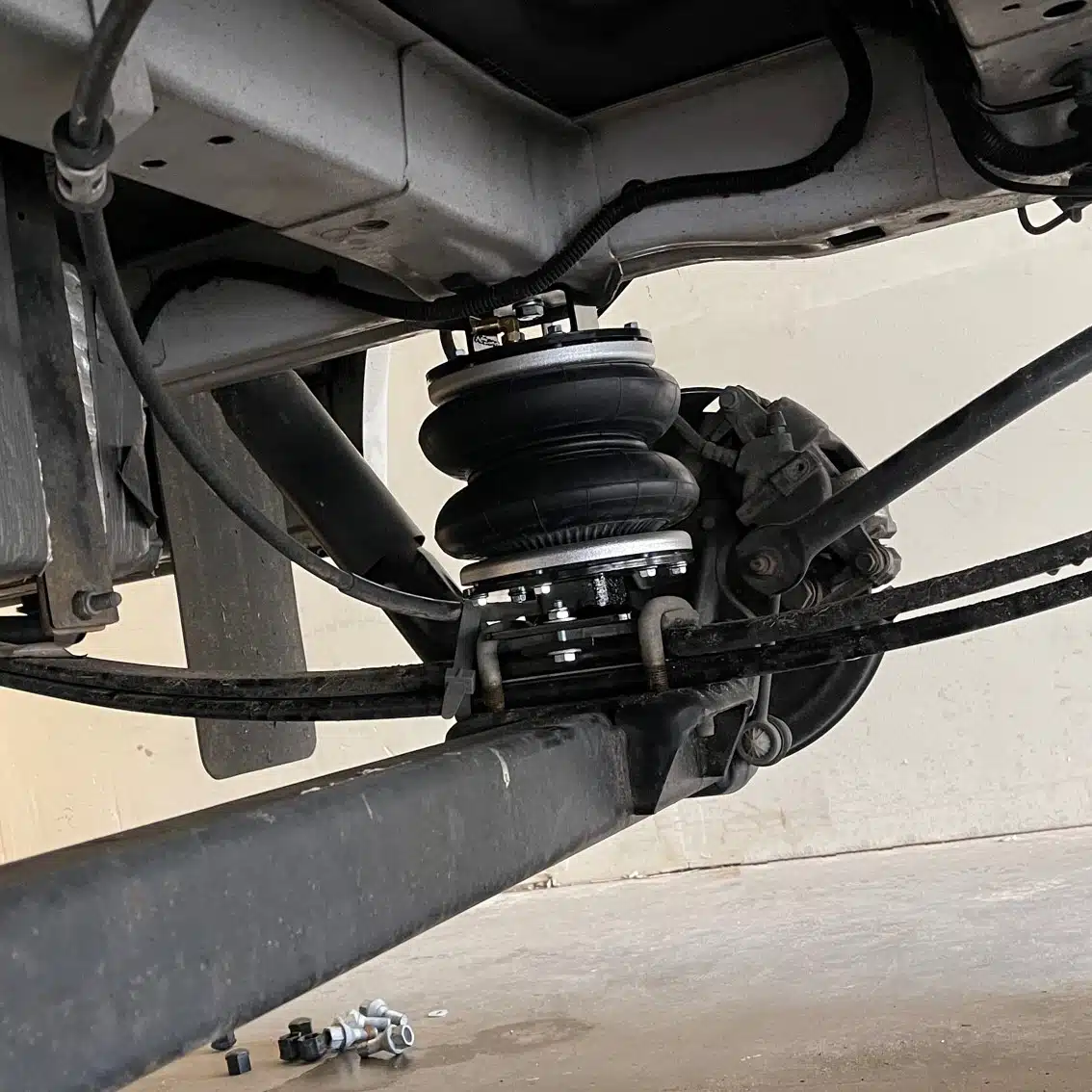
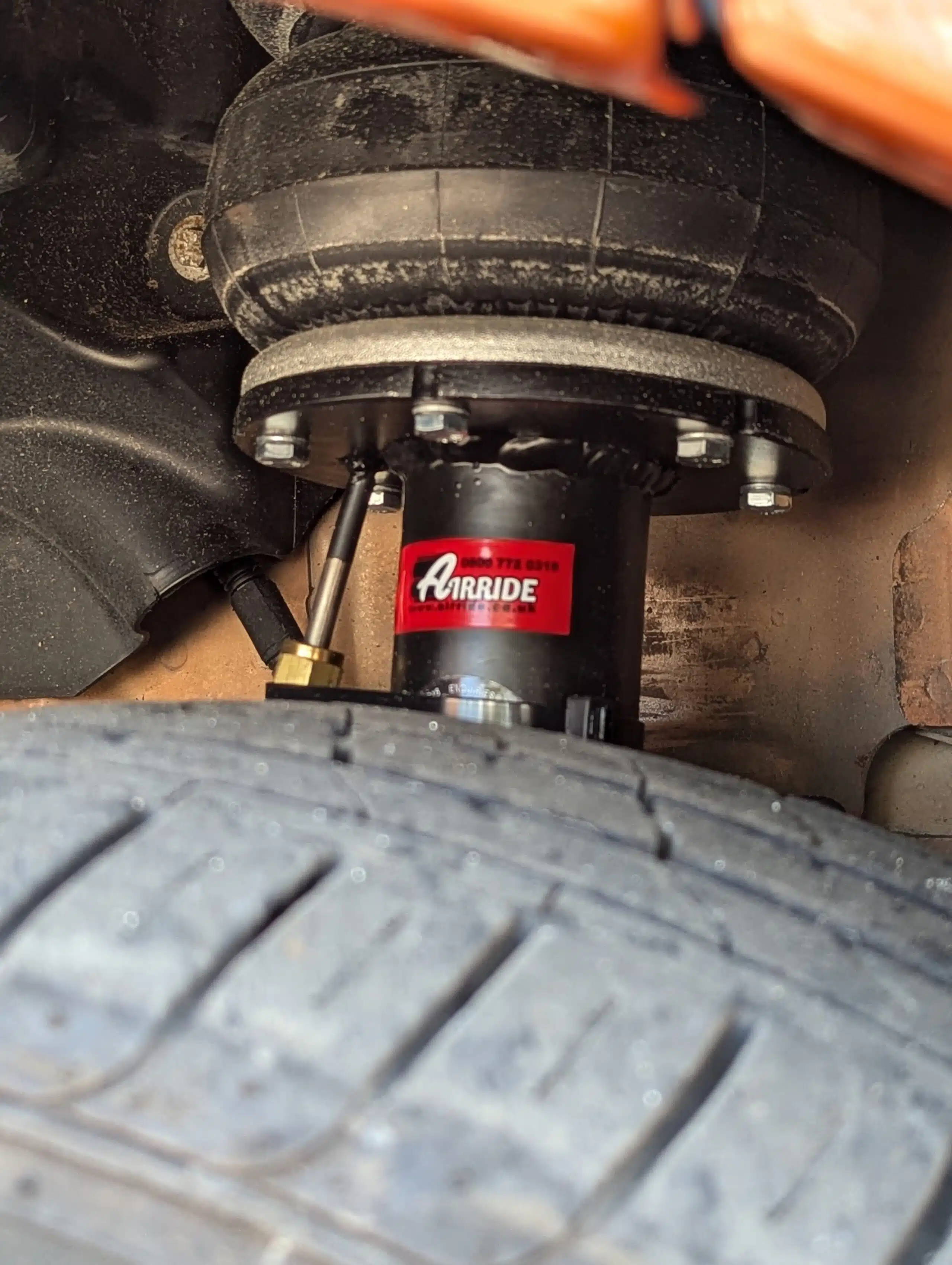
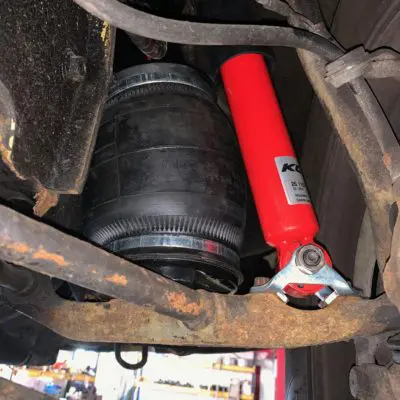
One of the biggest selling points of this Fiat Ducato rear air suspension kit is that it is also one of the easiest to fit. On the correct vehicles, it replaces the bump stops with heavy duty brackets and bags, and the installation is extremely straightforward. Remove the bump stop and fasten the new assembly in place. That is it.

No unnecessary complexity, no elaborate fabrication and no drilling for the basic mechanical installation. That makes it attractive for capable DIY owners, local garages and professional installers alike.

What are the real world benefits?

A properly chosen and properly fitted air suspension assistance kit for a Fiat Ducato, Peugeot Boxer, Citroen Relay or Jumper can help with a wide range of common complaints.

  • Improves ride quality
  • Helps recover lost suspension movement
  • Lifts a sagging rear end
  • Improves stability and handling
  • Reduces wallowing
  • Helps with crosswinds and passing lorries
  • Improves behaviour with bike racks, carriers and towing
  • Helps reduce grounding on ramps, ferries and awkward driveways
  • Can make the vehicle feel more controlled and more comfortable

For many motorhome owners, the biggest difference is that the vehicle simply feels more composed and more pleasant to drive.

Important - not every Ducato based vehicle takes the same rear kit

This is where real experience matters. Many sellers advertise one kit as fitting everything from the mid-1990s onward. In our experience, it is not always that simple.

Newer Fiat Ducato, Peugeot Boxer, Citroen Relay and Jumper models, particularly post-2020 vehicles, often need a different lower profile rear kit because there is less room between the chassis and leaf spring near the bump stop area. Some earlier vehicles may also need the lower kit if there is limited space, especially on heavier conversions.

We have seen examples where a standard style kit can be physically installed but the bags end up too compressed to work properly. In that situation, ride quality can actually get worse rather than better. That is why choosing the correct kit matters.

As a general guide, if there is less than 200 mm of room between the chassis and the leaf spring at the intended ride height, you may need the lower or later type of kit. If you are unsure, contact us and we will help you identify the correct option.

We are also often asked about later vehicles with an electronic handbrake and vehicles fitted with composite rear leaf springs. This kit can be fitted to both, and always has been able to. If you are unsure about your exact suspension specification, just contact us and we will be happy to advise.

We also offer Fiat Ducato front struts

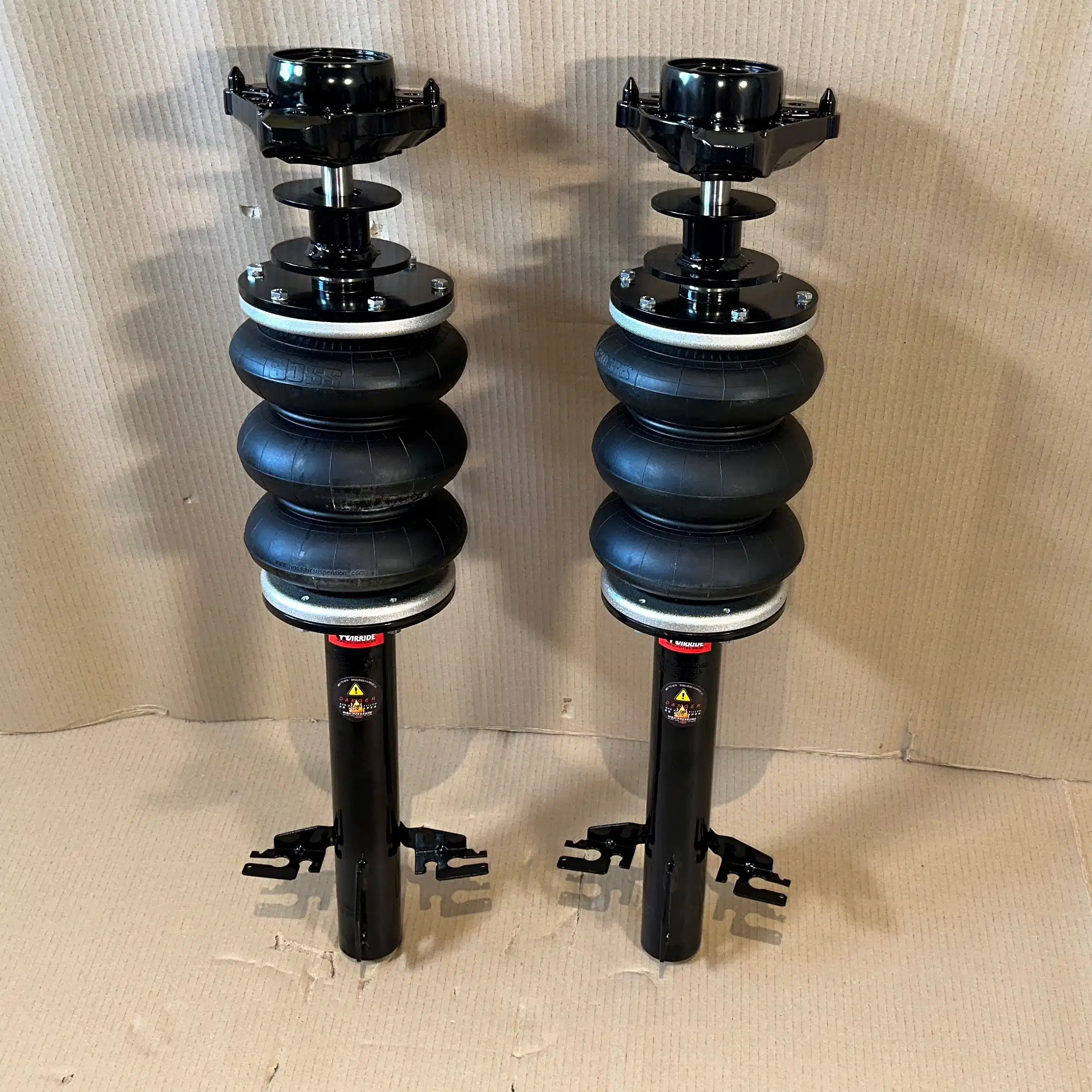
AirRide also offers front struts for all post-2006 Fiat Ducato based vehicles and for some post-2000 vehicles as well. These front strut solutions are ideal for owners wanting more control over front ride height, better balance, improved front end behaviour or a more complete air suspension solution.

If your vehicle is heavier than average, is an A-class motorhome, or you want a more advanced setup than rear assistance alone, please ask us about front air struts.

AL-KO chassis Ducato, Boxer, Relay and Jumper kits also available

Many motorhomes based on the Fiat Ducato, Peugeot Boxer, Citroen Relay and Jumper platform use AL-KO chassis rather than the standard rear suspension arrangement. We also offer kits for AL-KO based vehicles, but the fitment details can vary and some applications need additional advice before ordering.

If you have an AL-KO based motorhome, please contact us for more details and we will point you in the right direction.

Why buy from AirRide?

We are air suspension specialists with one of the largest product ranges in the market and more experience in this field than any company we know of. We deal with real installations, real customer problems and real vehicle differences. That practical knowledge makes a big difference when you are trying to choose the correct kit for a specific van or motorhome.

We do not compromise safety or specification just to get the price down. Even our basic kits are chosen and supplied with reliability, fitment and proper support in mind.

Get your Ducato air suspension sorted before the season gets busy

If your Fiat Ducato, Peugeot Boxer, Citroen Relay or Citroen Jumper is sitting low, riding poorly, grounding out, feeling unstable or simply not performing as it should, now is a very good time to sort it out. We currently have good stock of popular Ducato rear load support kits and can also advise on later vehicles, front struts and AL-KO applications.

Call AirRide on 0800 772 0315 or email enquiries@airride.uk for advice on the correct kit for your vehicle.

Whether you know it as a Ducato, Boxer, Relay or Jumper, we can help you choose a proper heavy duty air suspension solution that is built to do the job properly.
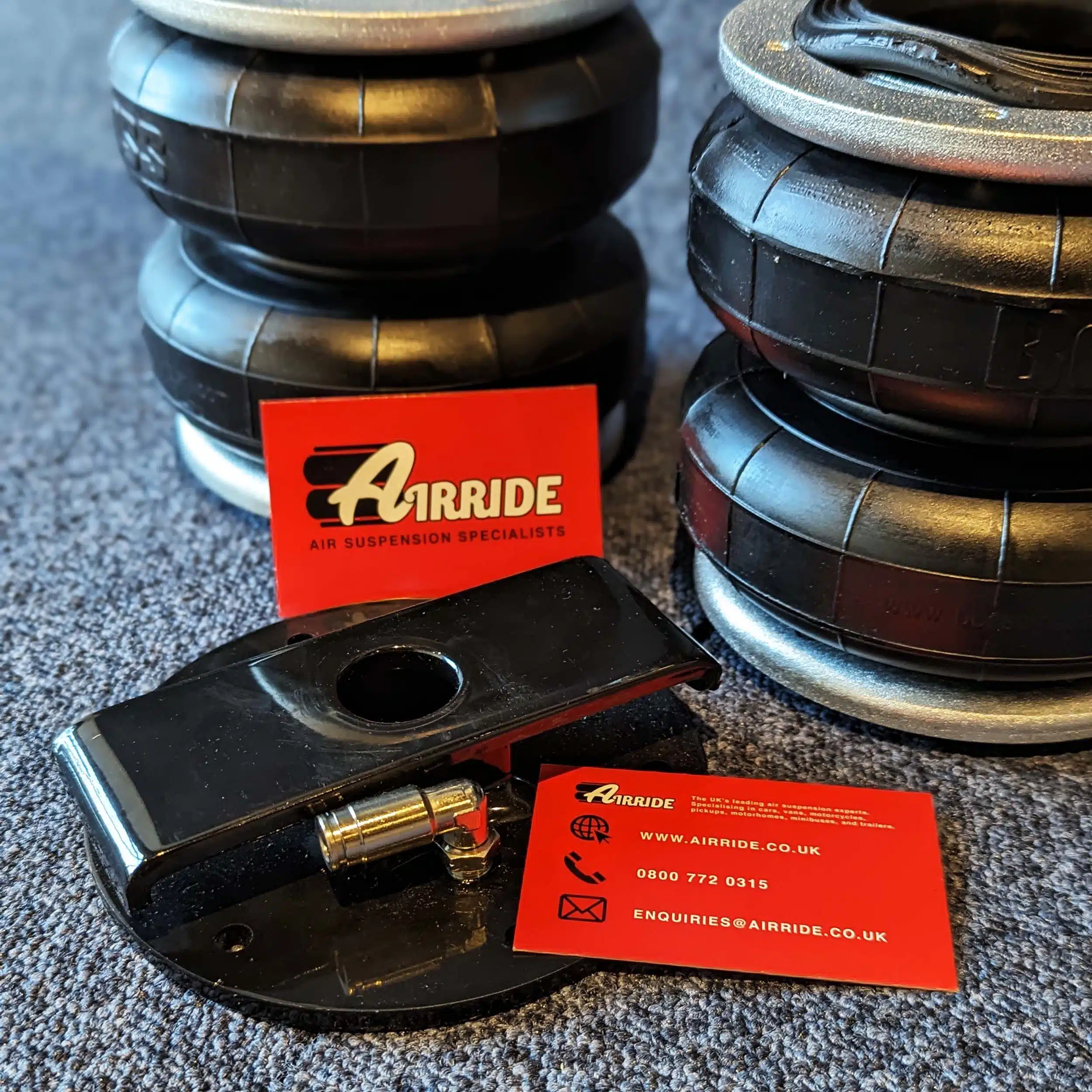
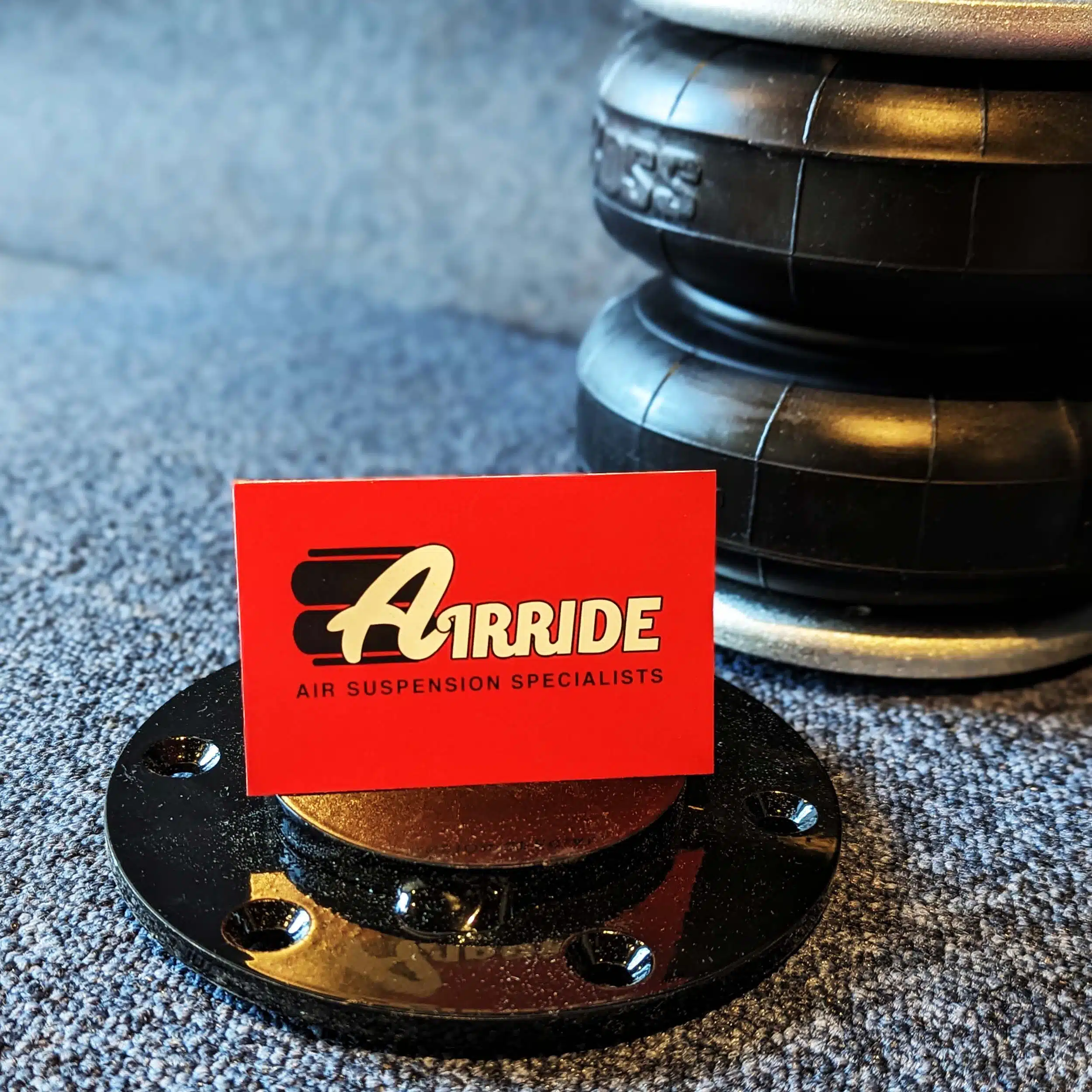
Close up of a new Fiat Ducato kit bottom bracket on blue background
Close up of a new Fiat Ducato kit top bracket on blue background
New Fiat Ducato load support kit on blue background
'Slim' kit shown installed on a Fiat Ducato
Ducato, Jumper, Relay, Boxer load support kit shown installed on a vehicle
Fiat Ducato front air struts on neutral background
AL-KO Suspension kit
Posted by Phil

Twin Tube or Mono Tube

Boss shock absorbers
TA Technix shock
Installed van strut

Monotube vs Twin Tube

Many air suspension and coil-over suppliers make a big deal out of using monotube shocks, leading to the assumption that they must be better. But is that really the case? The truth is, it's not about which is better - it's about which is better for your specific needs.

What’s the Difference?

Externally, there’s no visible difference between monotube and twin-tube dampers. Internally, however, they are quite different. To summarise:

  • Twin-tube dampers have two internal tubes.
  • Monotube dampers have a single tube.

This internal difference impacts manufacturing costs, performance characteristics, and durability. If you're curious about the technical details, you can find plenty of resources online, including diagrams and internal images. (Note: These are more accurately called dampers because they dampen motion rather than absorb shocks.)

Cost and Engineering

When producing a small number of dampers, monotube designs are usually more cost-effective due to fewer components and simpler operations. However, the precision required for monotube manufacturing makes them far more expensive at scale. Conversely, twin-tube dampers are cheaper to produce in large quantities and are usually lighter due to not needing the very thick body in their construction.

Durability

Monotube dampers rely on precise sealing technology to keep oil and gas separate within the single tube. Any slight imperfections in the outer tube will lead to failure, which can occur during regular road use or when mounting fixtures like brake pipes or sensors are welded onto the tube.
Challenging environments, such as normal road conditions with potholes, kerb strikes, or rough surfaces, can expose monotube dampers to these vulnerabilities. Twin-tube dampers, on the other hand, have an additional outer shell that protects the inner tube, making them more resistant to external damage from road debris or impacts. Monotube dampers are regularly damaged by potholes and kerbs, whereas twin-tube units are less prone to damage in this way.

Advantages and Disadvantages

Monotube Dampers

Advantages:

  • Superior control and fine adjustment.
  • Run cooler under extreme/track use.
  • No cavitation (foaming) as oil and gas are separated.
  • Can be installed at any angle, including upside down.
  • Firmer ride - a benefit on the track.
  • Less susceptible to shock fade under heat.
  • Often offer finer ride height adjustment, appealing to those prioritising aesthetics or custom setups.

Disadvantages:

  • Less durable for everyday road use.
  • More expensive to produce at scale.
  • Shorter stroke length.
  • Firmer ride - less comfortable on the road.
  • Adjustability, while possible, often requires jacking up the vehicle and working underneath, which may not be practical for many users.

Twin-tube Dampers

Advantages:

  • Smoother, more comfortable ride.
  • Longer stroke length for increased travel, which contributes to a more comfortable ride.
  • Lower production costs.
  • More forgiving of external wear and tear, such as damage or impacts.
  • Greater durability for road use, especially in challenging environments.
  • Quieter operation compared to monotube dampers.

Disadvantages:

  • Must be installed upright (cannot be inverted).
  • Retain heat, leading to potential performance drops under extreme/track use.
  • Typically lack adjustment options.
  • Can suffer from cavitation under extreme conditions, reducing damping performance.

Air Suspension-Specific Considerations

One key factor for air suspension is the natural cushioning effect provided by the air springs themselves. Even monotube dampers, typically marketed as “performance” options, will often provide a smoother ride than traditional coil springs when paired with air suspension. However, for most road users, the additional comfort and durability of twin-tube dampers make them the better choice.

So, Which Is Best?

Manufacturers that sell only one type of damper often claim theirs is superior. Those offering both typically provide a balanced view of the pros and cons, leaving the decision to the buyer. For road use, twin-tube dampers are generally the better choice. They are more durable, forgiving of impacts, and can handle everyday challenges like potholes or kerb strikes without failing. This is why nearly all mass-produced vehicles use twin-tube dampers. For car use the "best" option depends on your use and even driving style. For vans, and motorhomes twin tube shocks are almost always the way to go.

Our Recommendation

At AirRide, we design all our products for road use. For this reason, our dampers exclusively feature twin-tube designs, providing the durability and comfort needed for everyday driving.

We also stock monotube-based kits from brands like AirLift Performance, AirRide Gold, and TA Technix. These are typically marketed as “performance” kits – think track-focused, which often translates to less comfort on the road. That said, they still deliver a smoother ride than traditional coil-overs due to the air springs.

When you contact us to discuss a kit, we’ll ask what you’re looking to achieve with your air suspension. This helps us recommend the best option for your needs, ensuring those seeking a more comfortable ride don’t end up with a performance-oriented monotube kit that won’t deliver the desired results.

Posted by Phil

Cold Weather and Air Suspension Systems: What You Need to Know

Snowy car
Leafy lowered BMW E46
Toyota Supra Mk4 in a sunny parking lot

Air suspension systems enhance ride comfort and vehicle adaptability but face challenges in extreme temperatures. In cold weather, moisture can freeze within the system, causing blockages in airlines, valves, and fittings. To prevent this, it's essential to drain the air tank regularly, use airbrake antifreeze, and install water traps or air dryers to remove moisture. Additionally, rubber components like air bags become less elastic in low temperatures, increasing the risk of cracks or brittleness. Utilizing subzero-rated air bags and conducting regular inspections can mitigate these issues. Conversely, hot weather can accelerate rubber degradation and cause compressors to overheat. To address this, ensure proper ventilation for the compressor, inspect rubber components for heat-related damage, and minimize prolonged heat exposure by parking in shaded areas. Regular maintenance and seasonal adjustments are crucial to maintaining the reliability and performance of air suspension systems year-round.


Air suspension systems are a game-changer for ride comfort and vehicle adaptability, but cold weather can present unique challenges - especially for retrofit or aftermarket systems. These challenges primarily arise from two factors: moisture freezing inside the system and reduced elasticity of rubber components in low temperatures. Proper maintenance and preparation can help you ensure your air suspension system functions reliably, even in the harshest winter conditions.

Key Challenges and Solutions

1. Moisture Freezing Inside the System

Condensation is a natural by-product of air compression, but in cold weather, any moisture inside your system can freeze, leading to blockages in airlines, valves, and fittings.

How to Prevent Freezing Issues:

    • Drain the Air Tank Regularly: Water accumulates in the tank over time. Draining it monthly - or more often in humid climates - prevents water buildup that could freeze.
    • Add Airbrake Antifreeze: Specifically designed for pneumatic systems, airbrake antifreeze can be added to the airlines to prevent freezing in extreme conditions. This is especially important if your vehicle is used in subzero climates.
    • Install a Water Trap, Dryer, or Cooling Coil: Water traps capture condensation before it enters the airlines, while air dryers actively remove moisture. Cooling coils can also help by condensing and collecting water vapor before it freezes. These are effective upgrades to ensure a dry air supply year-round.

2. Reduced Elasticity of Rubber Components

At low temperatures, rubber becomes less elastic, which can impact the flexibility and performance of air bags.

How to Maintain Rubber Components:

  • Use Branded, Subzero-Rated Air Bags: Most high-quality branded air bags are rated for temperatures between -30° C and 70° C, making them suitable for year-round use. Choose air bags with these ratings to ensure durability in freezing conditions.
  • Inspect Regularly for Damage: Check for cracks, hardening, or brittleness in the air bags and hoses. Catching issues early can save you from unexpected failures in extreme weather.

Real-World Examples: Cold Climates and Air Suspension Success

Air suspension systems are not limited to mild climates. Vehicles like Range Rovers and Bentleys, which often come with factory-installed air suspension, are designed to operate in freezing conditions. Additionally, many buses, lorries, motorhomes, and 4x4s use air suspension in cold environments, such as Russia, the Baltic States, and ski resorts.

The key to reliability in these conditions is proper moisture control and quality components. With regular maintenance, freezing issues can be entirely avoided - even in temperatures as low as -30° C.

Preparing for Summer: Seasonal Adjustments

While winter presents challenges, hot summer conditions also demand specific maintenance.

Why High Temperatures Can Be Problematic:

  • Heat accelerates rubber degradation, making cracks and hardening more likely.

  • Compressors can overheat if ventilation is inadequate, leading to reduced lifespan or performance issues.

How to Prepare for Summer:

  • Inspect Rubber Components: Check for cracks, hardening, or other signs of degradation caused by heat exposure. Replace any components showing wear.
  • Ensure Proper Compressor Ventilation: Make sure the compressor is installed in a location with adequate airflow. If necessary, add ventilation or cooling fans.
  • Minimise Prolonged Heat Exposure: Parking in shaded areas or using sunshields can help protect the system from excessive heat during hot weather.

Pro Tips for Year-Round Air Suspension Maintenance

Seasonal maintenance is not just about weatherproofing - it’s about adapting your system to the challenges of your specific environment. By taking a proactive approach, you can maximise the performance and lifespan of your air suspension system, regardless of the season.

Key Takeaways:

  • In winter, focus on moisture control and subzero-rated components.
  • In summer, prioritise ventilation and heat protection for rubber components and compressors.
  • Regular inspections and adjustments ensure your system stays reliable year-round.

With these tips, air suspension systems can be used confidently all year round - whether you're navigating icy roads to a ski resort or enduring sweltering summer heat.

Posted by Phil

What if your vehicle is Mapped.

Modified Audi with air suspension on a dyno being power tested
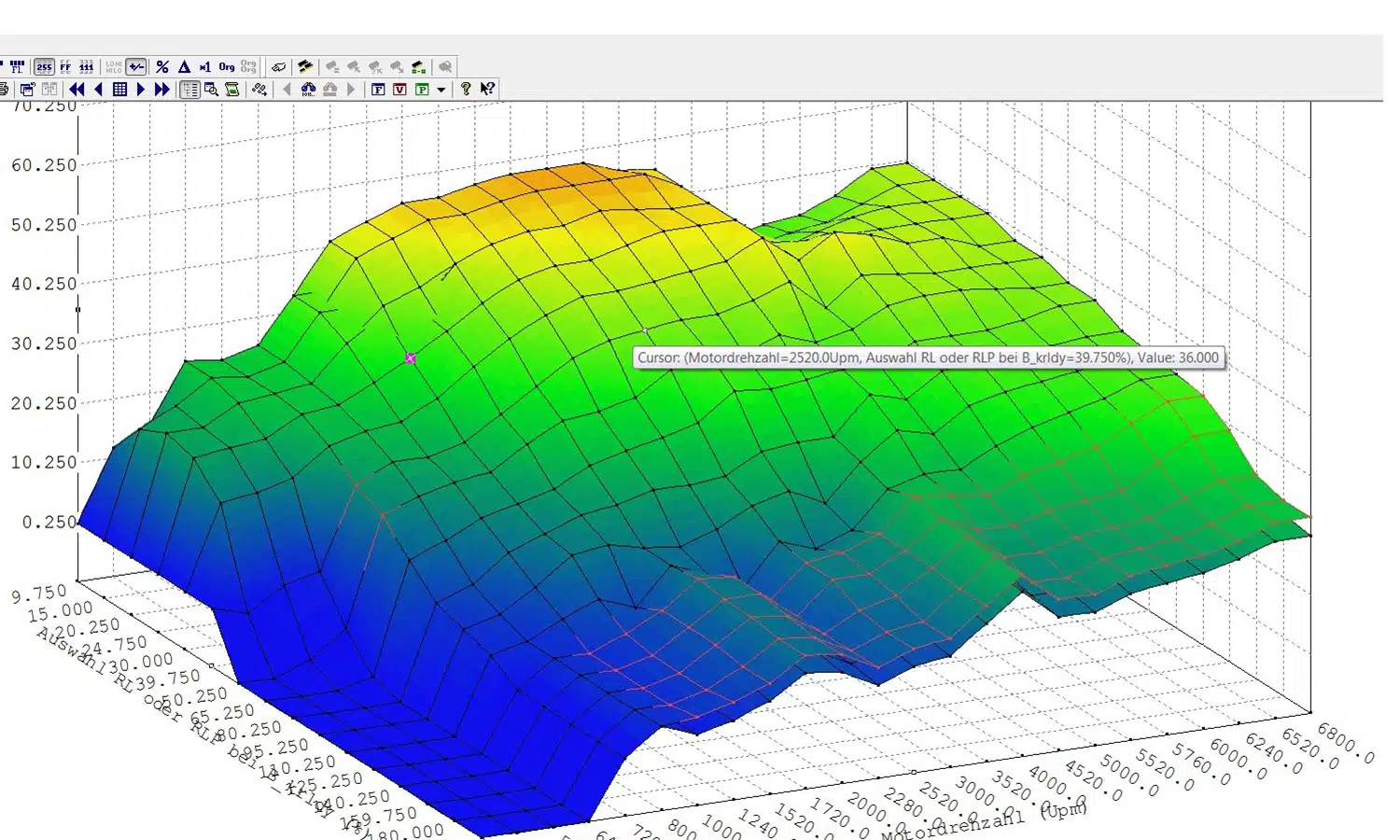
Shows 3D plot of mapping file for car
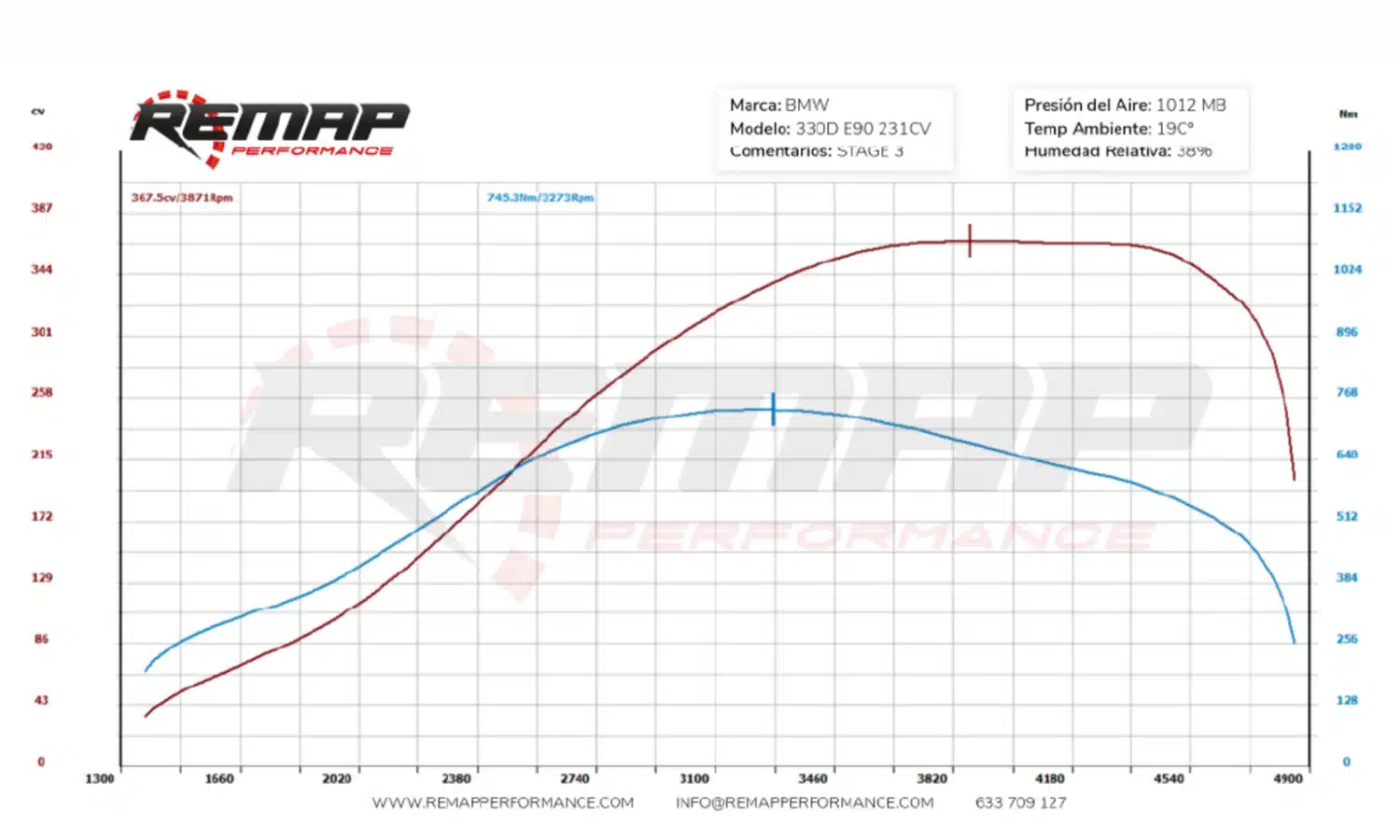
Power Graph showing modified car fitted with AirRide
Icon of car and power gauge

My Car is Mapped – Can I Still Have Air Suspension?

If you're considering upgrading your vehicle with air suspension but are wondering whether the fact that your car is mapped (or tuned) will affect the installation or performance, you're not alone. Many car enthusiasts with modified engines or performance upgrades ask this very question. Let’s explore why air suspension is still a fantastic option, even for high-performance or tuned cars.

What is Air Suspension?

Air suspension replaces traditional steel or coil springs with air-filled bags. The key benefits of this system include adjustable ride height, improved ride quality, and enhanced handling characteristics. It’s commonly used in performance, luxury, and show cars, as well as in custom builds for those who want a more versatile suspension setup.

Now, you might be wondering: What does car mapping have to do with air suspension? The answer is: not much! Let’s take a closer look.

Air Suspension Works Independently of Engine Power

Whether your car is tuned for 100 horsepower or 1000 horsepower, the suspension system operates independently of the engine’s output. Air suspension systems - whether they’re air bags, leaf springs, or coil springs - don’t rely on engine performance to function. This means that even if your car has been mapped for more power, it won't interfere with the installation or performance of air suspension.

Can Air Suspension Handle High-Power Builds?

One of the most common concerns when installing air suspension on a high-performance vehicle is whether the system can handle the additional power. The answer is: absolutely. Modern air suspension systems are engineered to handle high-performance demands, including the extra weight and stresses that come with tuning a car for more horsepower.

In fact, air suspension is frequently used on cars with power outputs of up to 1000 horsepower and speeds exceeding 220 mph. Whether you’re driving a modified street car, a high-performance model, or even a supercar, air suspension can easily support your vehicle’s weight and dynamic handling needs, even when additional power is added through tuning.

At AirRide, we supply high-quality air suspension kits that are specifically designed to manage extreme loads, performance demands, and dynamic driving conditions. Our kits are built to endure high-speed driving and aggressive cornering, ensuring that your car stays stable and comfortable, no matter how much power is under the hood.

Air Suspension and Performance: A Winning Combination

Many car enthusiasts find that combining a mapped engine with air suspension creates an ideal balance of performance and comfort. Air suspension allows you to fine-tune the ride height of your car, optimizing aerodynamics or lowering the car for a more aggressive stance when parked. This adaptability can improve the overall driving experience, even when your engine is tuned for more power.

Interestingly, air suspension can also improve lap times on the track (when measured before and after installation), which is why it's often banned in many forms of motorsport. Think of it like this: you've modified your engine to boost performance, and air suspension is doing the same for your vehicle’s suspension, allowing for better handling and improved stability.

Air suspension systems are highly adjustable, allowing drivers to tailor the ride quality for different conditions. Whether you're looking for a firmer, track-ready setup or a smoother, more comfortable ride for long journeys, air suspension can adapt to meet your needs.

Conclusion: Mapped Car and Air Suspension—A Perfect Pair?

To sum up: the fact that your car is mapped or tuned doesn’t impact your ability to install air suspension. The two systems work independently of each other, with air suspension focusing on ride height, comfort, and handling. Whether your car is producing 300 bhp or 1000 bhp, modern air suspension kits are more than capable of handling the demands of high-powered vehicles.

So, if you're looking for a smoother ride, more adjustability, or simply want to drop your car’s stance for a sportier look, adding AirRide is a fantastic upgrade that will complement your car's performance modifications without compromise.

Feel free to reach out if you’d like to learn more about how air suspension can enhance your tuned ride!

Posted by Phil

Air Suspension Airline Sizes

Measuring Airline: A Brief Guide

When it comes to air suspension systems, airline (also called hose, pipe, or tube) plays a critical role. Its primary purpose is to transfer air from where it is generated (the compressor or tank) to the air bags, and then back to the atmosphere when adjustments are made.

Why Not Use Metal Lines?

While metal or braided airlines do exist, their use is typically limited to specific situations, such as:

  • High-Temperature Lines: Near the compressor, where heat is a concern.
  • Struts with Moving Parts: For example, Air Lift front struts still use braided lines.
  • Show Builds: For cosmetic purposes, where the lines are visible, such as in a boot-mounted display.

Metal lines, however, are not used for the entire air suspension system in modified vehicles, vans, motorhomes, or OEM air suspensions. Here’s why:

  • Cost: Metal lines are more expensive to buy and install.
  • Practicality: They lack flexibility and can be harder to seal effectively.
  • Durability: Plastic lines are just as reliable and, in many cases, more so.

Nylon vs. Polyurethane Airlines

At AirRide, we exclusively use nylon airlines for our systems. Here’s why:

  • Durability: Nylon is tough and resistant to wear. It can kink during installation if not handled carefully, but once installed correctly, it offers exceptional longevity.
  • Strength: Modern air bags often have end caps made of nylon, meaning this material can support the entire weight of your vehicle!
  • Polyurethane: While softer and more flexible, it is more prone to damage and less durable over time.

Airline Sizes: What You Need to Know

Airline size varies between OEM and aftermarket air suspension systems:

  • OEM Systems: Common sizes include 4mm, 5mm, and 6mm, sometimes used in combination (e.g., 4mm for one section and 6mm for another). These sizes are not always printed on the airline but can sometimes be found, so it’s worth checking if you need a replacement.
  • Aftermarket Systems: The global aftermarket air suspension market, particularly dominated by US suppliers, tends to use imperial measurements:
    • Common Sizes: 1/4" and 3/8" are the most widely used.
    • Other Sizes: 1/8" and 1/2" may also appear in some setups.
    • Metric Sizes: 6mm and 8mm are sometimes used by smaller European suppliers.

Larger sizes are rarely used for standard road cars, as they pose risks such as excessively fast vehicle adjustments, which can be hazardous to both people and the vehicle's integrity. However, for show or demonstration vehicles, larger airlines are sometimes used intentionally to create faster vehicle movements, adding drama and visual impact to impress audiences. These setups prioritize attention-grabbing performance over practicality and are typically avoided in daily-driven vehicles.

Identifying Airline Sizes

Here’s how to identify the size of your airline:

  • Check for Markings: Many airlines have the size printed on the tubing or the push-fit connector collar.
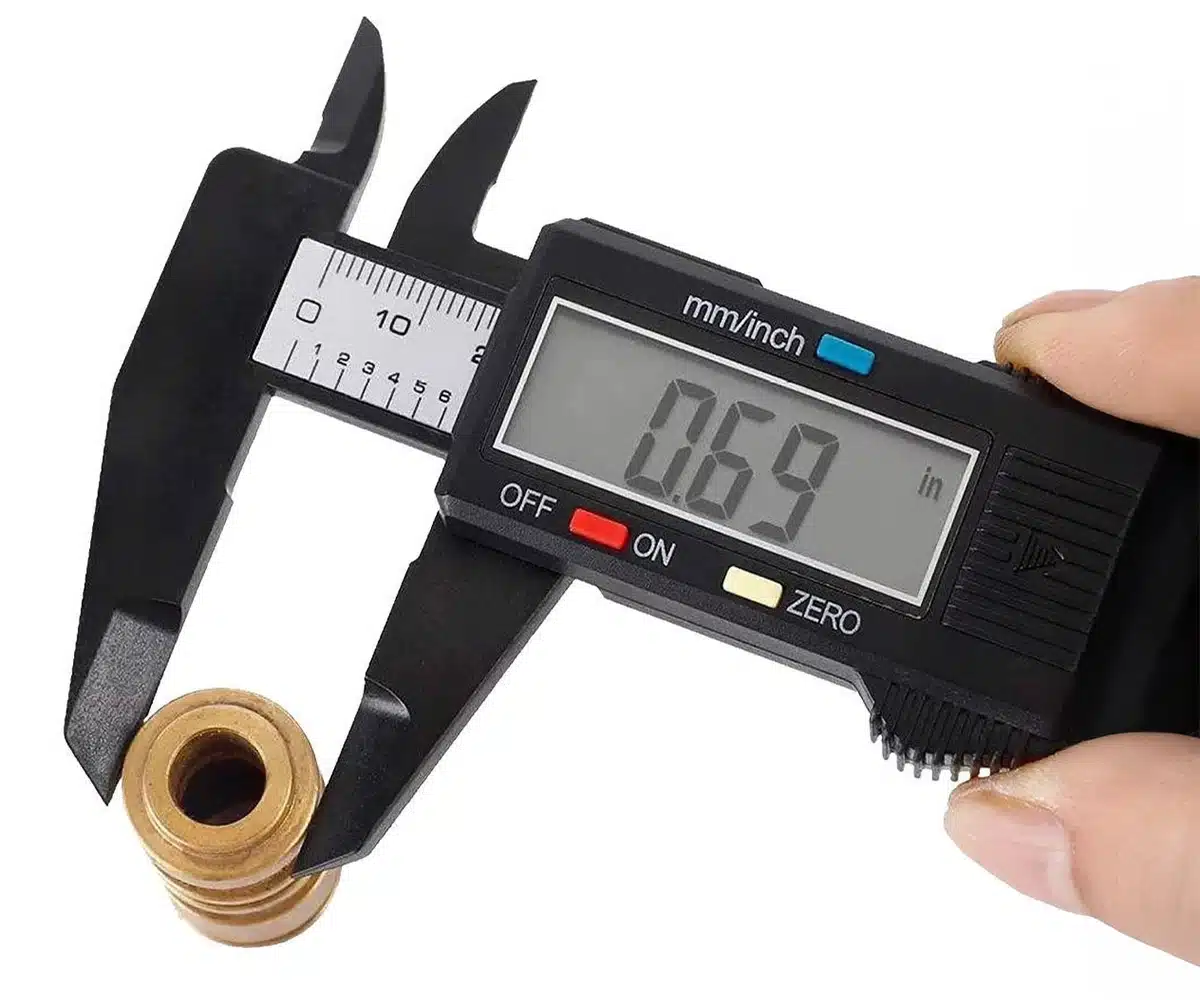
  • Use a Vernier Caliper: When markings aren’t present, a digital or analogue caliper is the best way to measure accurately.
  • Avoid Guessing: Metric and imperial sizes can be very close, so visual estimation or a ruler won’t be precise enough.

Choosing the Right Airline

At AirRide, all the airline we use is rated to handle over 200 psi, matching the high specifications of our premium air suspension systems. Whether you’re working with a new installation or a replacement, we can help you select the right airline for your needs.

Get in Touch

Need more information? Our team is here to help!
- Call us: 0800 772 0315
- Email us: ENQUIRIES@AIRRIDE.UK

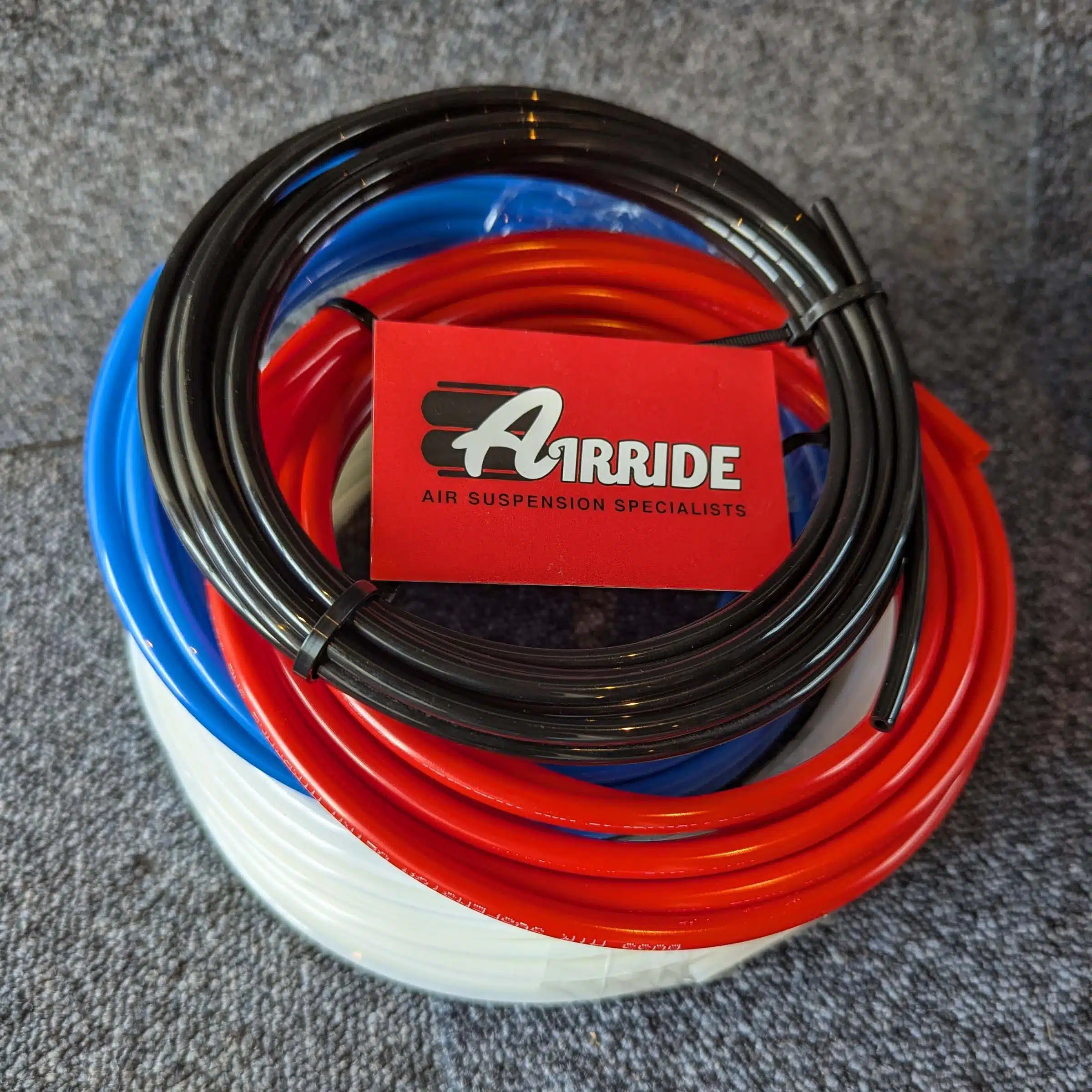
4, 5 and 6 mm, and 1/4 inch airline on blue background
digital callipers are good for measuring especially air suspension
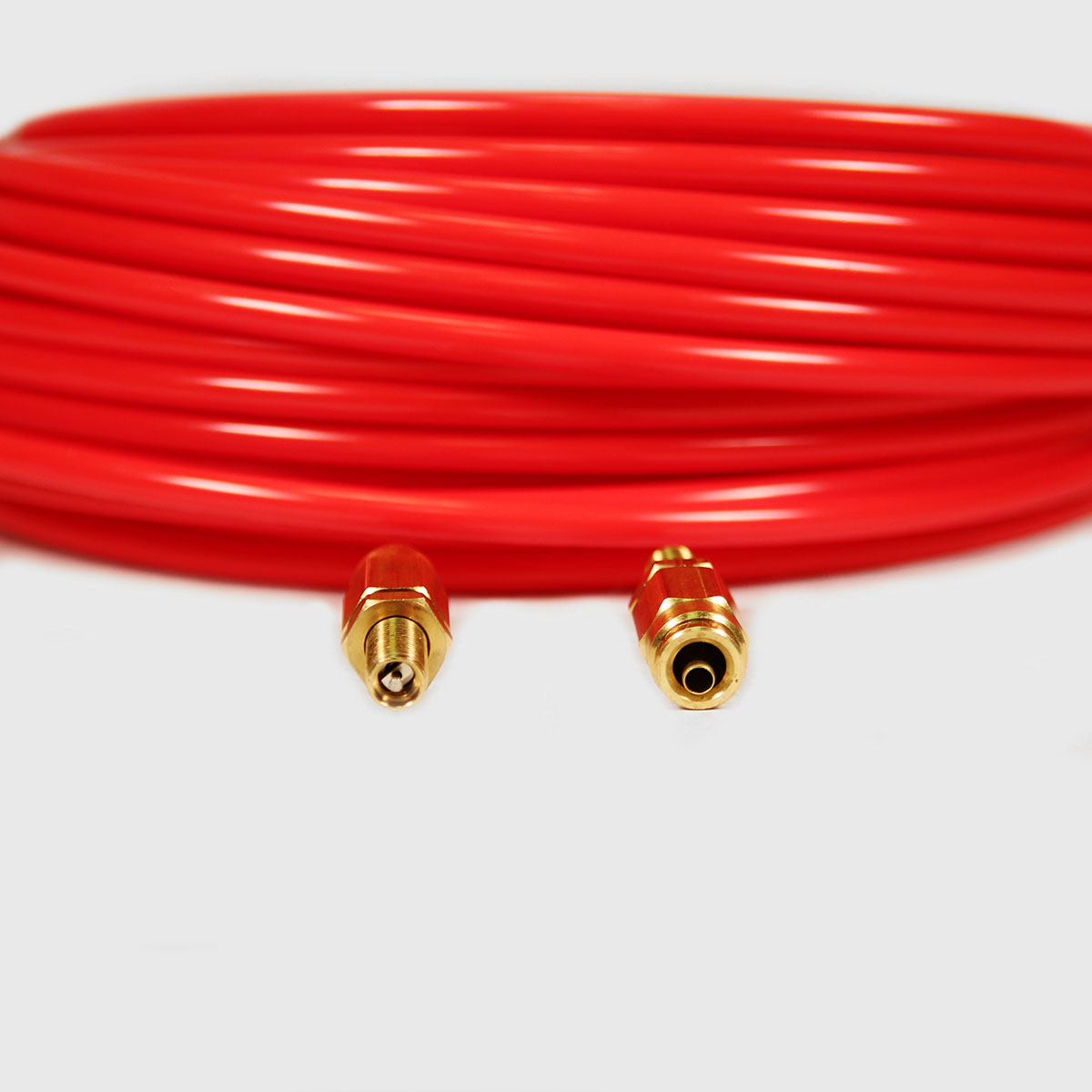
Basic Schrader Inflation Valve and Line
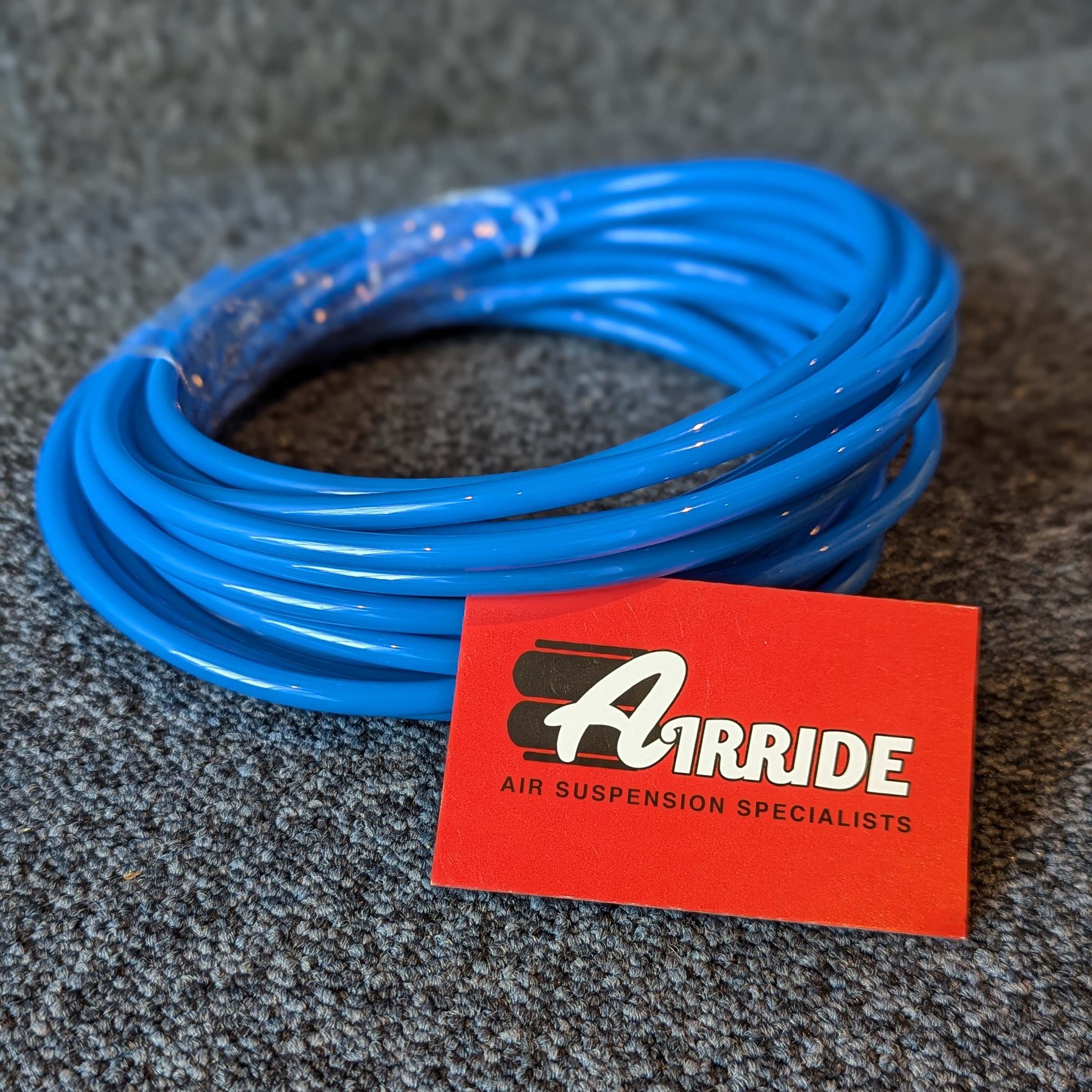
blue 6 mm PU airline on blue background
Posted by Phil

Can you repair my airbag please?

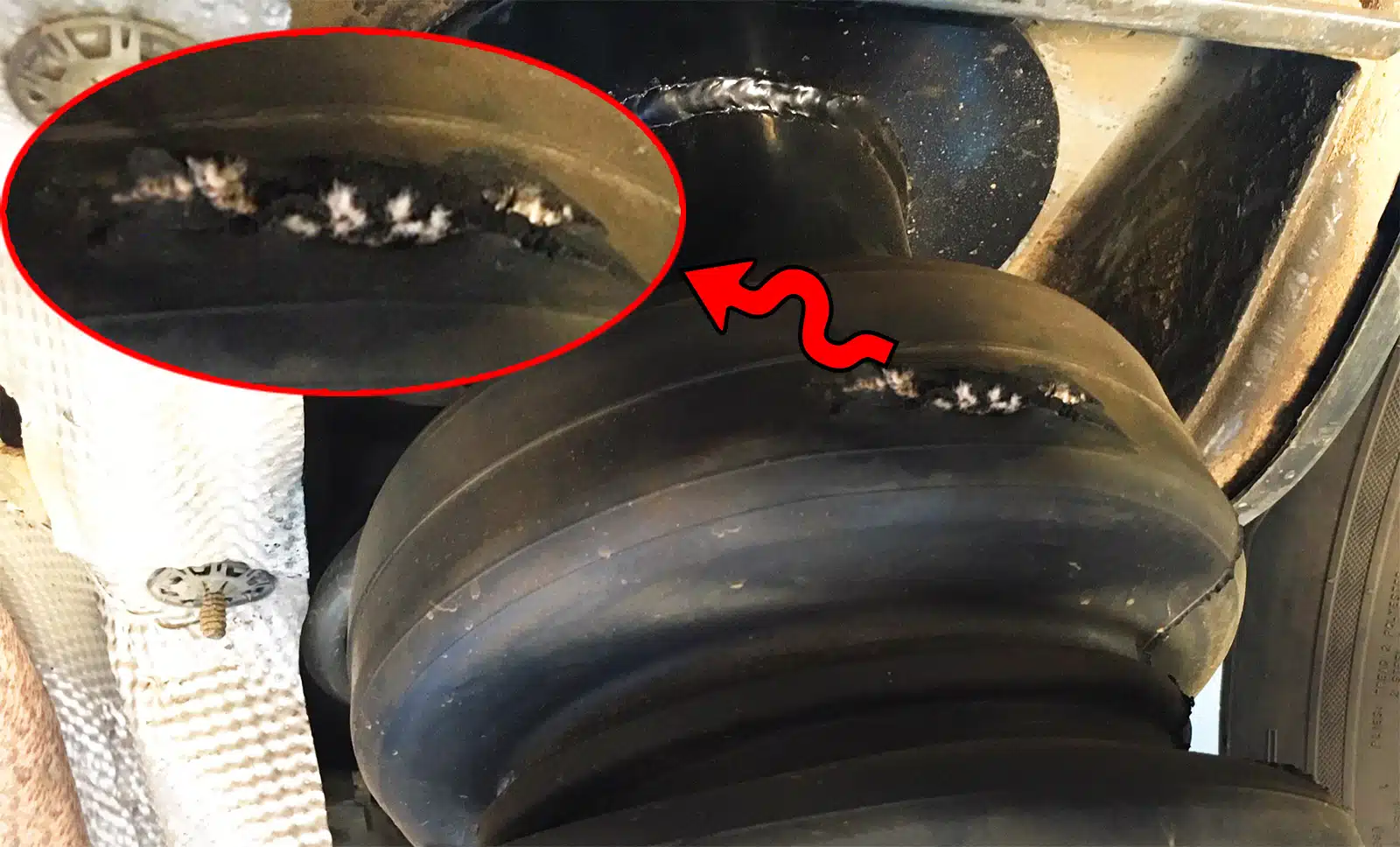
Black Air Spring with a hole in it and red arrow highlighting
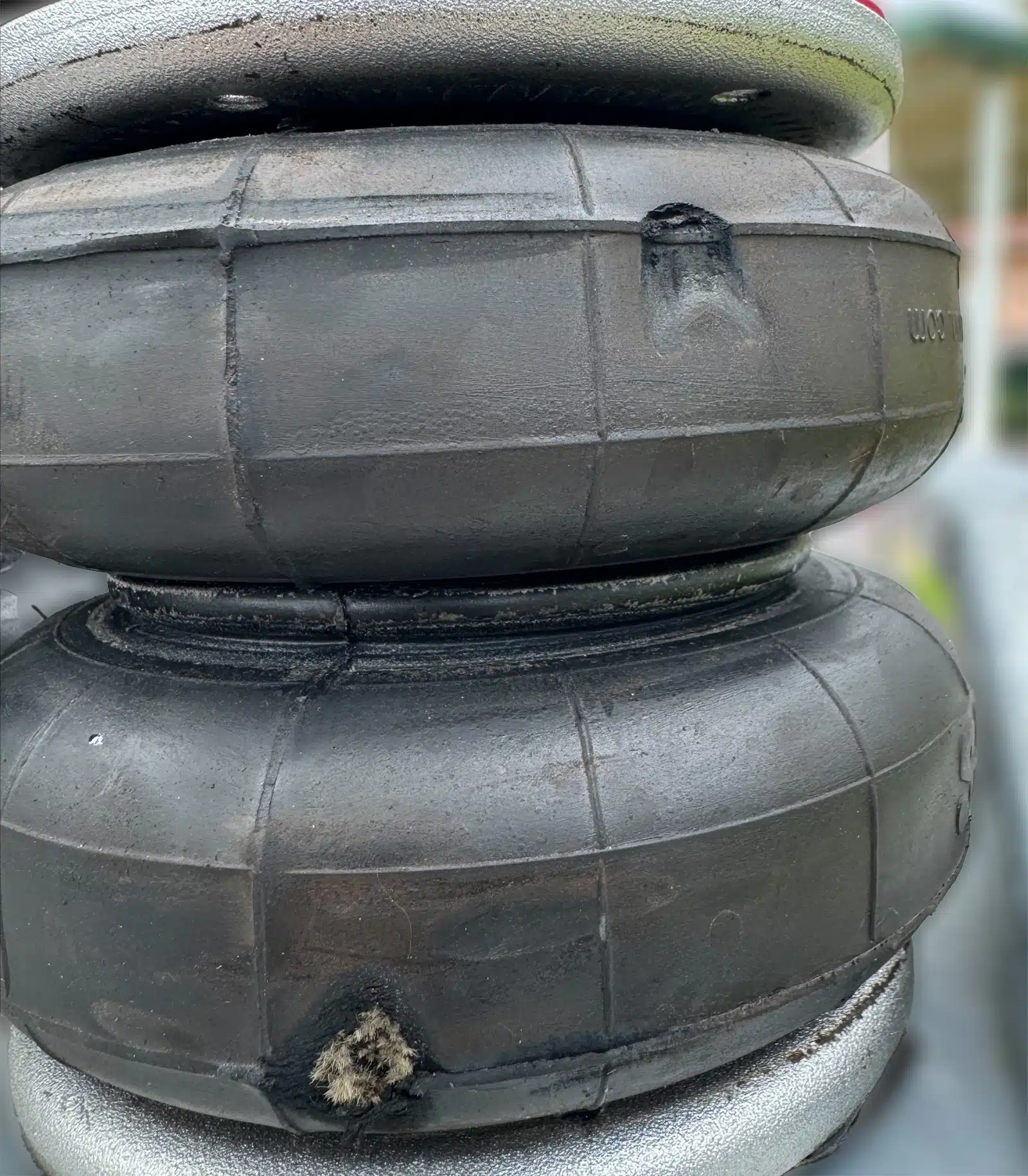
Boss Air Suspension bag has rubbed through in two places due to bad installation

Air Bags: Durability, Failures, and Replacements

Air bags (or air springs) are incredibly robust components designed for long-lasting performance. When treated well, they often last a decade or more. Just this week, we heard from a customer who installed one of our kits 24 years ago. Despite their MOT reporting signs of perishing on the bags, the vehicle still passed! Needless to say, they were impressed with the longevity.

Air suspension is a proven technology, widely used in buses, coaches, and trucks. These systems are designed to be reliable, often lasting over 100,000 miles when properly installed and maintained.

Causes of Premature Air Bag Failure

  • Abrasion from Metal Contact: If the air bag comes into contact with metal parts of the vehicle, it can wear through.
  • Abrasion from Foreign Matter: Impacts from road debris can damage the bag's surface.
  • Deflation: Leaving the vehicle with no air in the system for extended periods can weaken the bag.
  • Overextension: Extending the bag beyond its specifications, such as during a jacked-up repair with the bag pressurised, can cause structural damage.
  • Cracked End Caps: Running the suspension too low without internal bump stops or using overly long bolts can crack plastic end caps.

Metal contact is the most common issue we see, but all of these problems are preventable. It's important to note that these are not normal wear-and-tear issues, nor are they covered under warranty.

Understanding Wear and Fatigue

Over time, air bags will wear out and fatigue, much like tyres. This usually begins as tiny cracks that run vertically along the bag, often starting at the corners. These cracks are caused by the bag's inflation and deflation over hundreds of thousands - or even millions - of cycles. Initially, the cracks are superficial, limited to the outer layer (all our bags are multi-core). However, they will eventually grow deeper, leading to leaks.

  • When Should You Act? Visible cracks should be addressed promptly. Left unchecked, leaks can worsen, causing the compressor to overwork and potentially fail. Replacing the bag early prevents further damage to your system.

Can Air Bags Be Repaired?

Air bags are constructed similarly to tyres, but unfortunately, they cannot be repaired for several reasons:

  • Access: Most air bags are crimped at the ends, making it impossible to access the interior for proper repairs.
  • Extension: Air bags can extend up to 100% of their compressed height, far more than tyres. Repairs designed for tyres cannot handle this level of movement.
  • Pressure Dynamics: Repairs from the outside are pushed outward by internal pressure, making them short-lived and unreliable.

If an air bag fails, it must be replaced. Most OEM struts and bags are not designed for disassembly, which makes replacement your only option. For aftermarket systems, it's essential to identify and fix the cause of failure - often contact with another component - before installing a new bag.

Need Assistance?

If you're unsure about your air suspension or need help diagnosing an issue, our team is here to assist. Please note that we are based in central Norwich, and you can reach us at:

Posted by Phil

Measuring Threads

Measuring Threads: Why We Use Imperial Fittings

At AirRide, we exclusively use imperial fittings in our air suspension systems. While metric fittings might seem like the modern choice, imperial fittings remain the standard in the air suspension industry for good reason.

Why Imperial Fittings Dominate the Market

The air suspension market is heavily influenced by U.S.-based manufacturers, where imperial fittings are the norm. Many of the world’s leading air suspension brands, including AirLift, Viair, and Firestone, design their components with imperial threads. As a result:

  • Consistency Matters: Mixing imperial and metric threads can lead to compatibility issues, making imperial fittings the logical choice for aftermarket systems.
  • Firestone Legacy: One of the oldest air bag manufacturers, Firestone, primarily uses imperial threads. Many air springs are still designed to match the original Firestone specifications, ensuring widespread compatibility.

Understanding NPT Threads

The majority of air suspension systems use NPT (National Pipe Taper) threads. These are a specific type of imperial thread that offers excellent sealing properties.

  • What is NPT? NPT stands for National Pipe Taper. The tapering design enhances sealing by allowing the threads to compress slightly as they tighten.
  • Sealing Properties: While NPT threads are theoretically capable of sealing without additional materials, thread sealant or tape is essential in practice to ensure a leak-free connection.

NPT vs. BSP Threads

While NPT and BSP (British Standard Pipe) threads may look similar, they are not interchangeable:

  • Dimensional Differences: NPT and BSP threads differ in their pitch, angle, and diameter, making them incompatible.
  • Sealing Issues: BSP threads are often straight and require additional washers for sealing, whereas NPT threads rely on their taper for a tighter fit.

How to Measure Threads

Accurate measurement of thread size is essential for selecting the correct fittings. Here’s what you need to know:

  • Tools Required: Use a thread pitch gauge, thread caliper, and depth gauge for precise measurements.
  • Common NPT Sizes: 1/8 NPT, 1/4 NPT, 3/8 NPT, and 1/2 NPT are the most widely used, with 1/4 NPT being the most common in air suspension systems.
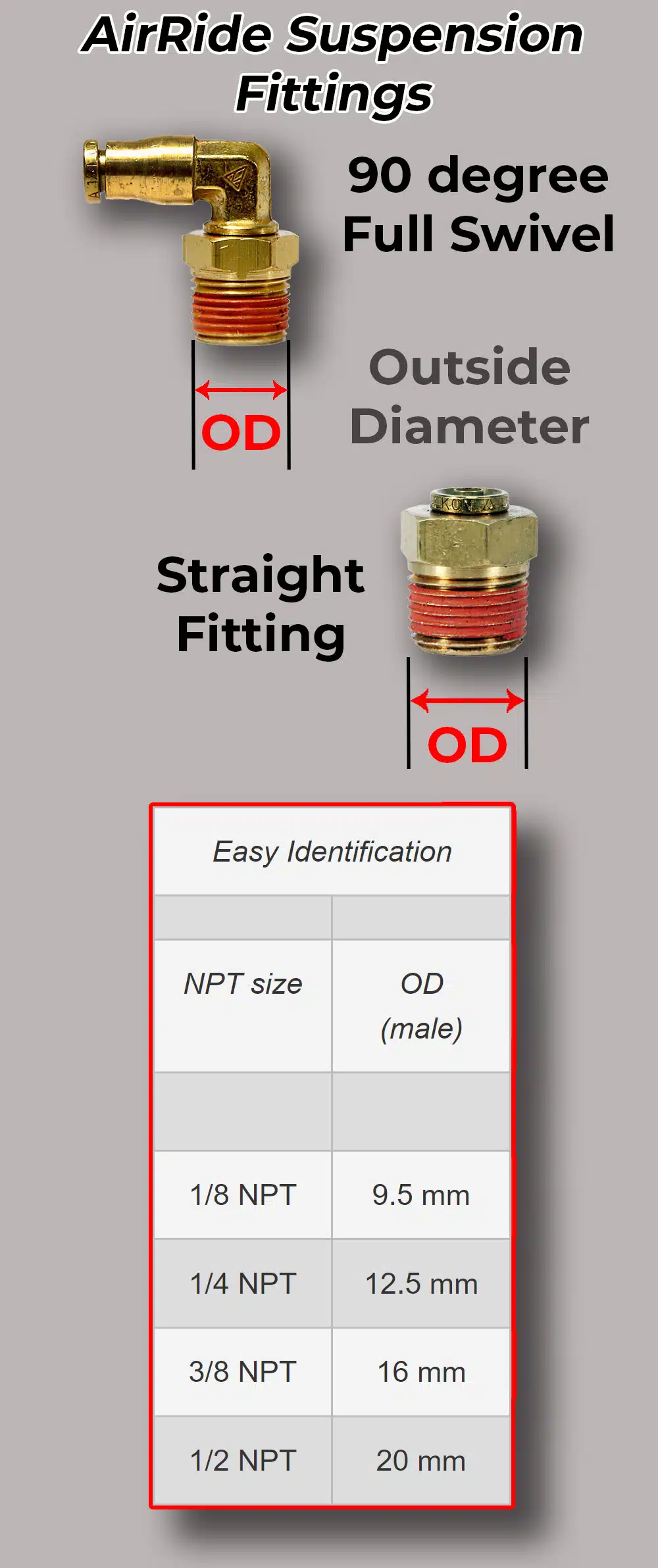
  • Avoid Misconceptions: The measured outside diameter (OD) or inside diameter (ID) does not directly match the named thread size. For example, a 1/4 NPT fitting has an OD of approximately 12.5mm, which can confuse those unfamiliar with nominal bore measurements.

Choosing the Right Fittings

Fittings come in various styles and sizes to suit different applications:

  • Male and Female Fittings: These refer to the external or internal threading of the component.
  • Straight vs. 90-Degree Fittings: All AirRide 90-degree fittings are 360-degree swivels, allowing for easy adjustment even when tightened. Fixed 90-degree fittings are not recommended, as they often align poorly during installation.

Our standard fittings are designed for 1/4 Push-To-Connect (PTC) airlines, but we also stock fittings for 1/8, 3/8, and 1/2 PTC hoses.

Why Quality Matters

At AirRide, we prioritize quality in every product we supply:

  • Leak-Free Performance: Our fittings undergo extensive testing to ensure they meet the highest standards of reliability.
  • Rigorous Testing Process: Every new product is first tested on our own vehicles for up to a year. If it meets our standards, it is installed in our workshop before being made available to customers.
  • Rejecting Low-Cost Alternatives: While we frequently receive offers for cheaper fittings, they often fail to seal properly, compromising the entire system.
Graphic showing sizes and explanations for air suspension fittings
AirRide Thread Sealant
Posted by Phil

Original Equipment Manufacturer (OEM) Air Suspension

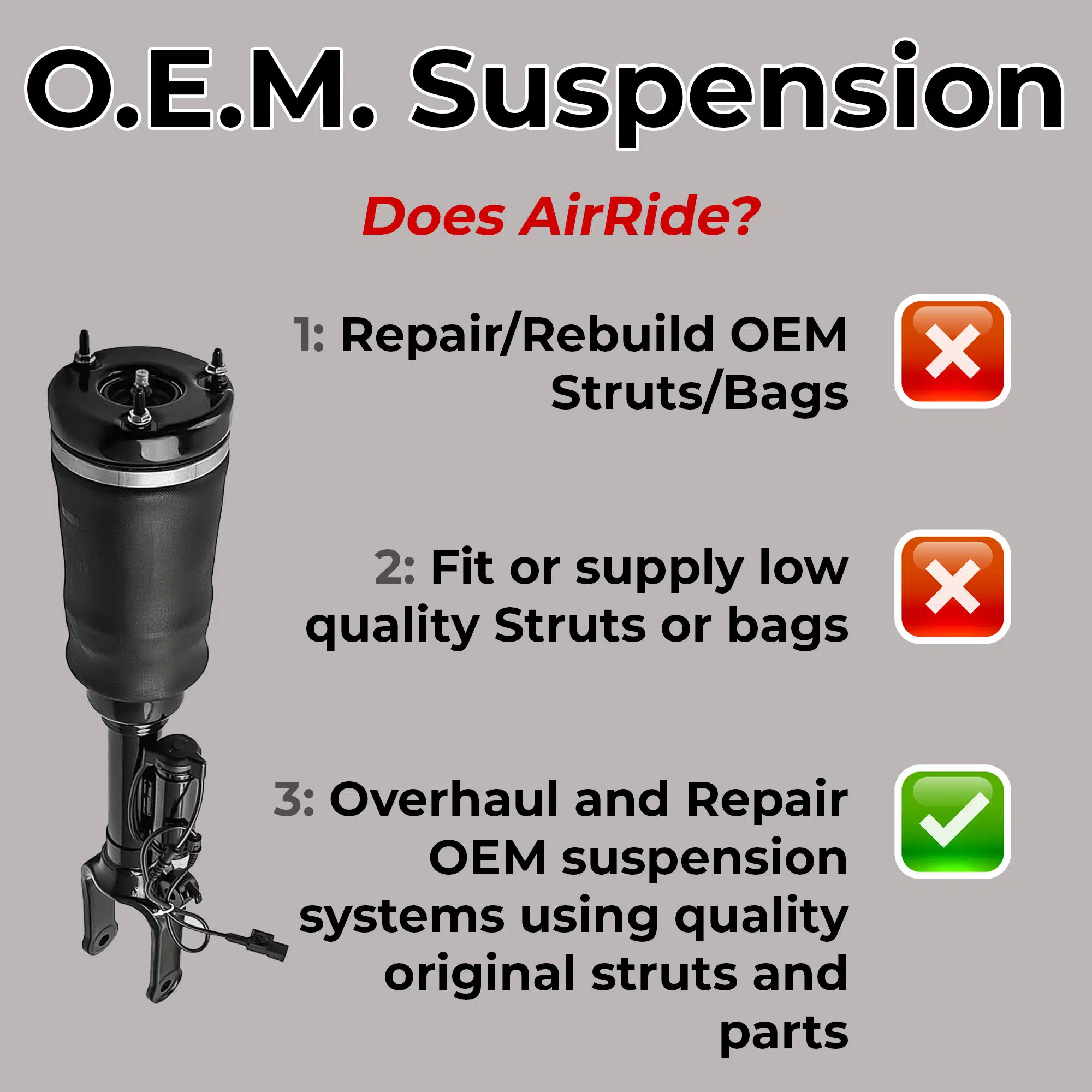
Original Equipment (OEM) Front struts and text
Silver Mercedes E Class at AirRide for OEM air suspension repair

Each week we are contacted by someone with OEM air suspension asking for help. What is OEM suspension and why are they contacting AirRide?

Well OEM stands for Original Equipment Manufacturer. What this means in terms of air suspension is that if your Mercedes, Audi, Range Rover, Porsche, Bentley,,,,etc left the factory when brand new with air suspension then you have OEM air suspension. Mercedes call it Airmatic but most others just call it air suspension. This is not our core market, but we might still be able to help.

We are a supplier of aftermarket air suspension for conversions from coil or leaf spring to air suspension. The two are very different and none of the parts are interchangeable. So if your car left the factory without air suspension then we are often able to supply conversions to give it air suspension. But our conversions are not the same, and are often not for the same purpose. Our kits tend to be for load support of heavy vans or motorhomes which need auxiliary air to stabilise and lift the vehicles, or for performance cars wanting a low stance and an adjustable suspension to make it practical (and legal) to drive on the road.

So why do people with OEM systems contact AirRide so often if its not our market? Put simply its because the replacement parts for OEMs tend to be very expensive and they are looking for a cheaper solution. When cars are new if they need £5k of repairs with new struts or a compressor and the car cost £60k or £100k then the money gets spent. Once the cars are 5-15 years old and worth 10k this becomes very hard to justify, so people seek out a specialist offering a more affordable solution. Sometimes the world of air is misunderstood and customers incorrectly consider that all air suspension is the same and that our parts are a direct replacement. Usually its cost related.

So what can we offer? Do we rebuild worn out struts with leaking bags etc? In short, its bad news – no we don’t, but we can still help. There are very few struts which can be rebuilt, and very few OEM’s offer parts for rebuilding them. There are a whole host of Chinese suppliers which are incredibly tempting as the costs can be in the order of 15-20% the cost of genuine OEM parts. The bad news is that the OEM parts still represent better value for money!! Most of the Chinese offerings are pure junk. We have tried quite a number of parts over the years (simply because they are so much cheaper) but have found that they don’t drive the same (compromising the ride at best and ruining it at worst) and in general they rarely last more than a few months before you are back in the same situation. For this reason our workshop never fits these Chinese parts to customers cars. We also never fit coil springs to replace air suspension as this just spoils the vehicle totally. A vehicle designed to have air suspension never works properly with a coil spring conversion – the saying goes “coil it and spoil it” , and its proven true. It is also classed as a modification which can and will effect your insurance.

We also don't often offer fittings for OEM equipment from our own range and just buy them direct. This is because most European manufacturers use metric or proprietary threads, whereas the aftermarket industry is dominated by American parts which are imperial (usually NPT)

What we do offer is highly experienced air suspension workshop which can often diagnose problems quicker than most franchised or independent single marque dealers because we only work on air suspension. We also charge less than a franchised dealer, but more than an independent per hour. When repairing systems we only use OEM parts. We have repaired some vehicles that have already been in for new bags and compressors at other garages (costing thousands of pounds) and needed cracked lines replacing which was  few hundred pounds. We have also repaired other vehicles which have already had expensive repair bills (in the thousands) which have not resolved the issues, and where the vehicle needed only an O ring costing less than a pound.

Repairing an OEM equipment suspension system will rarely be a low cost option, but the correct solution is to use safe, reliable parts which our experience shows us is to use only genuine OEM parts.

Please call us on 0800 772 0315 or send an email to  ENQUIRIES@AIRRIDE.UK if you need help with your vehicle although please note our location in central Norwich.

Posted by Phil

New! Ducato, Jumper, Relay, Boxer X290, X295 (2020-) load support kit

Close up of a new Fiat Ducato kit top bracket on blue background

Newer Fiat Ducato vans, campers and motorhomes need a different kit. This is because the later suspension design has less room between the chassis and leaf spring (near the bumpstop), and existing kits won't fit correctly. If your Ducato is 2020+ you will definitely need the new kit. If your Ducato was first registered between 2018-2020, you might need the new kit. It may also be required on some early vehicles where there is limited space.

We've seen examples where the standard kit does physically fit and has been installed on a vehicle but the bags are too compressed to do anything - meaning the ride quality has actually got worse!

Most sellers only offer one kit for all Ducatos from 1994 onwards. This could be because of a number of reasons. We do air suspension installation and servicing in our Norwich workshop so we spot any differences in suspension design when the vehicles come in. Therefore we're either able to source the parts customers need or modify existing kits. Other companies who sell air suspension in addition to their main business and don't offer installations do not have our level of knowledge. That's why they can't provide tech advice for customer queries before or after the sale: they only have the information that comes in the box. As for eBay sellers... There are some good ones out there but their kits are priced accordingly - just like ours. Sellers of cheap kits are an entirely differernt breed. They're not in the business of selling a kit that will fit your vehicle.  They're in the business of selling lots of cheap kits and it doesn't matter if they get a few unhappy customers stuck with parts they cannot use.

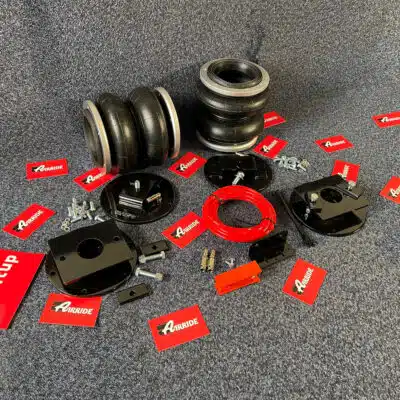
What's in the kit? Two double-convoluted air bags, brackets, bolts and fittings necessary for installation. The basic kit comes with Schrader valves but various on board air options are available.

AVAILABLE HERE

Any questions? Call us on 0800 772 0315 or send an email to ENQUIRIES@AIRRIDE.UK

Posted by Phil

Quality fittings are essential on air suspension

You can buy the best air suspension kit, quality airline, a top spec compressor and a sophisticated controller but none of that will matter if you don't also buy quality fittings. Low quality fittings cause leaks and leaks make the whole system unreliable and potentially dangerous.  If you buy your parts from us, you can be assured that we only supply products that we would (and do!) install on our own vehicles. Whether it's compressors or tank fittings: if we haven't tested it ourselves, we don't sell it!

Airbags should hold pressure for months, just like tyres. If they don't then you have a problem. Finding where exactly the leak is can be frustrating and time consuming, especially if you didn't install the air suspension yourself or bought the vehicle with airride already on.

Here's what you need to know when looking for fittings:

  1. Price. Our fittings start from £7.50 a piece. If someone is selling fittings much cheaper, you got to ask a few questions... Are they selling in bulk? Is there a handling charge and expensive shipping? Are the fittings sent from China and will take weeks to arrive? Or is it simply because they're low quality fittings?
  2. Measurements. Fittings should ideally be measured with a digital calliper. British Standard Pipe (NPT), a commonly used set of technical standards, can be a minefield when trying to source air suspension fittings. We've had customers ordering wrong size fittings because they measured the outside of the thread when they should have measured the inside thread. Yes, NPT can be awkward...
  3. Size. We get a lot of enquiries about fittings where customers don't provide sizes. There is no universal pack of fittings that will suit all installations. Therefore we really need to know whether the fitting you require is straight or 90 degree, male or female NPT and what size airline it's for.
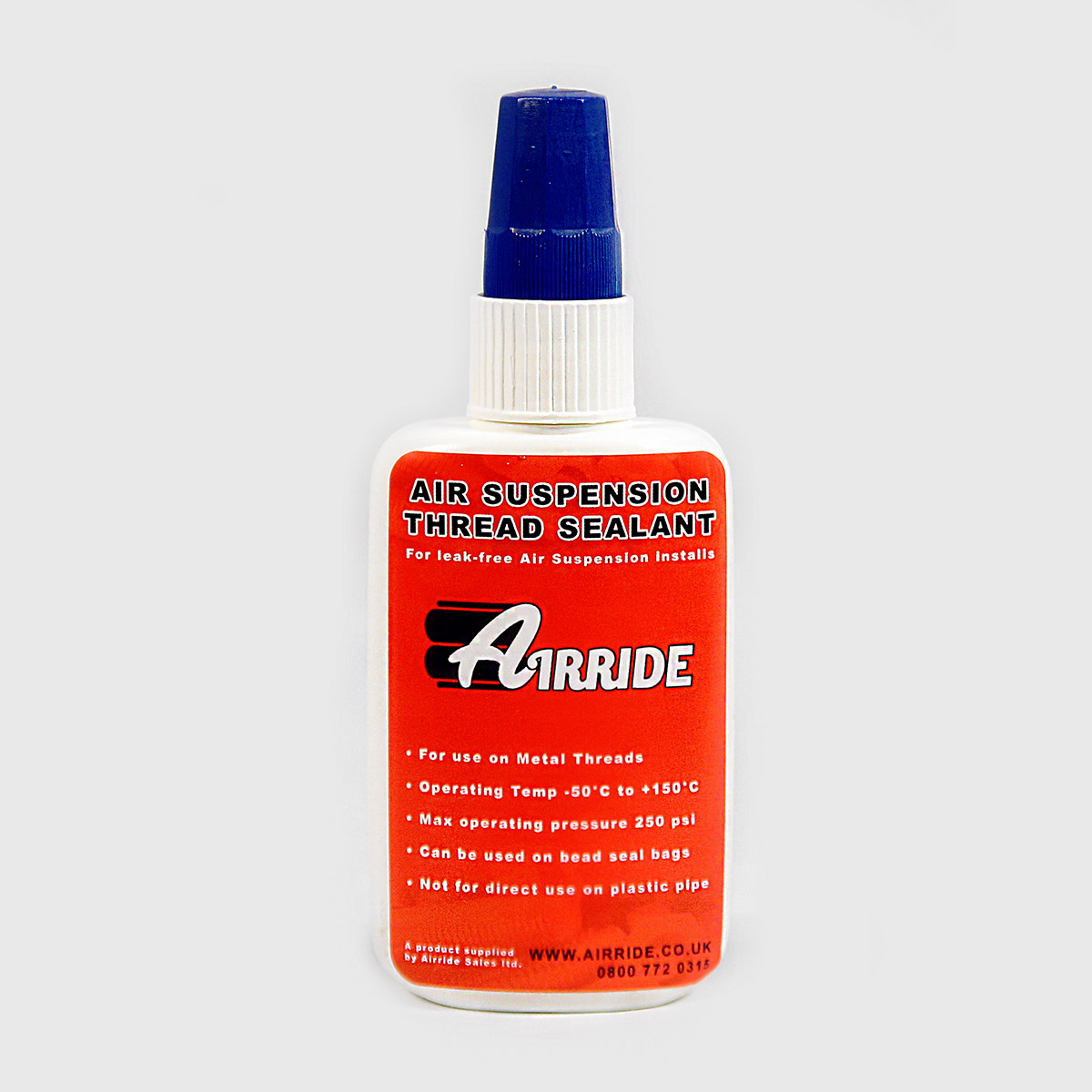
  4. Sealants. Only liquid thread sealant should be used. Do not use tape - you can read more about this in a previous post. PTC (Push to Connect) fittings should seal as soon as airline is connected and not require anything else to secure it. We once had a supplier who suggested using superglue. Ehm... No. Just buy fittings elsewhere and buy quality.

Of course, if you buy the air suspension kit and one of our air management packs we will sort out the fittings for you!

If you're putting together your own kit or need replacement parts then a selection of fittings is AVAILABLE HERE.

If you cannot see what you need, call us on 0800 772 0315 or send an email to ENQUIRIES@AIRRIDE.UK


Various air suspension fittings on blue background
Posted by Phil

What does bolt-on kit actually mean?

Front of Shiny Black Mercedes on Air Suspension
4 part full air suspension kit
front air suspension fitted to car

Like most air suspension specialist we sell a lot of kits, and we also sell a lot of bags. On occasion a customer will come back to us and say that they have a hole in their bag because it touched on something. Most customers are sensible, viewing it as an expensive learning experience and realise this is not a warranty issue. All manufacturers state clearly that it is the absolute responsibility of the installer to ensure that at no time can the airbag ever touch or even come close to metalwork. The result of not checking or taking action to avoid this is inevitable - a hole in your bag.

What can you do to avoid this?

Put simply - most kits require a clear 1 inch gap around the bag to be guaranteed never to touch. This is because when you go over a bump the pressure in the bag increases dramatically for a short period of time and this will make the bag wider for a short time. So even if it is clear when static it may not be under driving conditions. Secondly on front suspensions with McPherson struts you will find that they turn - sometimes not through the angles you would predict, which can make the situation worse.

If you have the clearance then you wont have a problem. Again its quite simple - bits of metal that could touch may need to be removed. On the Jaguar kits you can simply pack out the anti roll bar with washers for more clearance. Rear driveshaft's and gators can also be an issue - sometimes smaller diameter gators are available or the kit must be adjusted to clear. At speed gators get larger too!

How can this happen on a bolt-on kit?

A bolt on kit just means the kit bolts onto the vehicle - as opposed to a weld-on or fabricated/universal kit which will need a lot of work. It does not mean that the bags cannot touch, or that you don't have to do any work to make them clear or that you can close your eyes and never verify all is good. Wheels are bolt on, but when you modify a car and fit larger or smaller wheels it is down to the installer to ensure they don't catch on the arches when going over bumps or turning corners - that's what bolt-on means. You should not need to fabricate or modify the kit to fit, but you may well have to modify the car for it to fit - same as wide wheels/tyres.

Some of the kits we sell for older vehicles - such as Mercedes from 1960's to 2000's, The Jaguar XJ40/X300/X308 kit, Classic Mini and Ducato front struts all have very tight clearances. Some need small parts of the chassis to be cut away or a redundant bumpstop perches to be removed. All are bolt-on kits. Most modern vehicles have different suspension and its far less likely to be an issue, although some Hondas require the front arms to be shaved a little.

So what can you take away from this note - if it touches it will fail. Its not a matter that "it will be ok" - it will never be ok - more a matter of when not if.

Any questions? Call us on 0800 772 0315 or send an email to ENQUIRIES@AIRRIDE.UK

Posted by Phil

Air suspensions are not all the same

Here at AirRide we only sell parts that we would install on our own vehicles: high quality and built to last. Our kits are premium products which is reflected in the price. Every now and then we receive calls asking why our load supports kits are £700 for bags, brackets and Schrader valves when they've seen much cheaper products elsewhere. The very short answer is: because quality costs money!

We use some of the highest specification bags on the general market because many of our customers have motorhomes. Motorhomes are not vans, and need very different kits due to being heavily loaded all their life. We use 160 psi rated bags on most kits which have more laminations and thicker rubber than any we have seen available. They are also tested to an incredible 1000 psi for leaks - most of the bags used in the counterfeit kits explode (really they do) at significantly lower pressures.

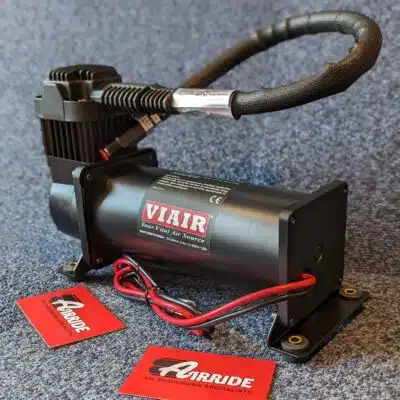
A proper air suspension grade compressor alone costs about £240 yet we’ve seen cheap kits that include an “all metal” (plastic emergency tyre inflators in reality) compressor designed for use once or twice a year – suspension compressors are designed for daily/weekly use.

Hint:- If a compressor has crocodile clips, or a cigarette lighter plug on it, then it's certainly not a suspension grade compressor!!

Any real air suspension compressor is never, ever connected to the lighter plug, and will require a relay as it draws a lot of power.

Then there are unbranded or counterfeit airbags, usually coming from China or Eastern Europe from other companies (particularly eBay). eBay sellers also fraudulently claim “VOSA” compliance – which is both false and non existent, plus “4000 Kg” capacity which is also totally untrue, and unsupported by basic mathematics. Poorly designed or counterfeit brackets can actually damage your vehicle given the loads that are involved in air suspension and heavy motorhomes. We only supply proper suspension grade compressors, proper genuine highest quality and highest specification air bags/springs, and 6mm thick steel brackets with proper braces and supports. We replace a lot of the low quality eBay kits for proper specification kits – so please be aware that all air suspension is not the same and if you buy cheap, you can often buy twice, which clearly is not cheaper!


Ducato rear kit laid out on blue background
Viair 444C on blue background
Posted by Phil

Motor Show 5th-11th Dec 2022

The AirRide Sales Office will be running a limited service due to staff attending the Essen Motor Show. You can still call and leave messages but its unlikely that either sales or technical staff will return your call until 12th December 2022.

You are welcome to call or to send your request by email to ENQUIRIES@AIRRIDE.UK

As always its best to leave details of your name, telephone number, vehicle make, model, year and brief details of what sort of air suspension you are looking for. This will enable us to ensure the best person to deal with your enquiries calls you back.

Posted by Phil

Please use our Freephone number

Icon for traditional Phone

Customers are reminded to use the 0800 772 0315 phone number at the top of each page and on each email. If we have called you on another number and you do not call the 0800 number there is a very good chance that you wont get through! Our company includes a sales and marketing office, a workshop, several stores, a manufacturing facility and a small call centre - each location has its own phone numbers which you may have been called from. For your own sake please use the 0800 number which is free and always has staff available during office hours Monday to Friday to take your call and/or advise.

We always aim to return your call within 2 working days, usually 1 working day, and often within a few minutes or hours. You are also welcome to send an email with your number requesting a call-back. In this case please send a short note on your email including your vehicle make and model, age and air suspension requirements to ensure the correct person calls you.

Technical advisers may call you back if your enquiry is more technical in nature, but you should always call the 0800 number to make contact. Its free from all UK landlines and mobiles.

Posted by Phil

Jubilee Break

The office will be closing at 5 PM on Wednesday 1st June and reopen at 9:30 AM on Monday 6th June.

Automated in stock orders placed via our website during this time may be dispatched over the Jubilee Holiday period but if something is needed urgently please email us beforehand.

We know that many customers install products on weekends and bank holidays so if you require technical assistance then please email us at  ENQUIRIES@AIRRIDE.UK using the subject ‘Technical’ and we will endeavour (but not promise) to reply to your query within 24 hours.

Happy  Jubilee everyone!

Jubilee Purple Flag image
Posted by Phil