10
Sep
2018
Use the Vehicle Finders to quickly find products for your vehicle.
01
Jul
2026
AirRide Gold – Performance Air Suspension for Over 1,300 Car Models
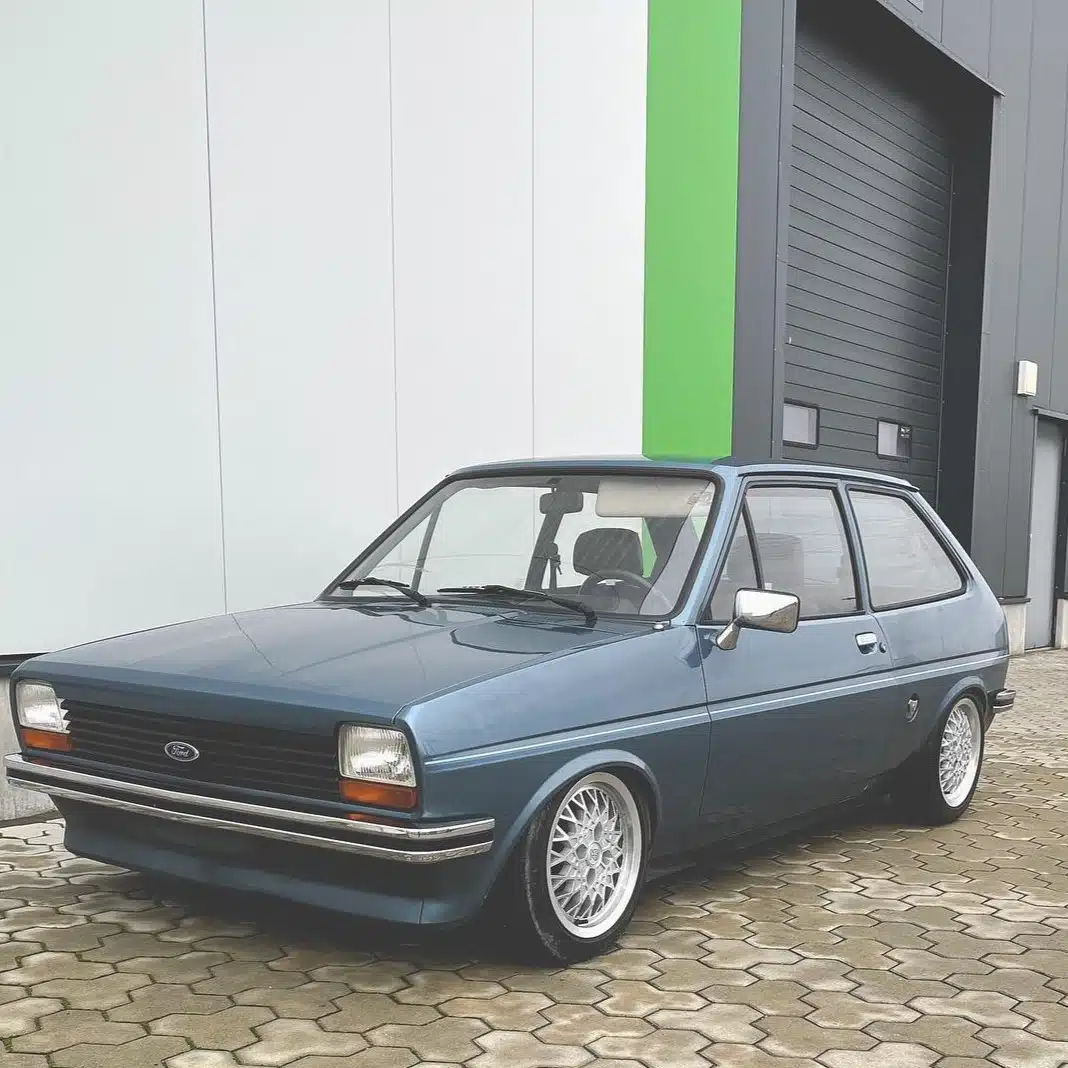
Whether you drive a Ford or a Ferrari, there's a good chance we already have an AirRide Gold conversion for your car. The range now covers more than 1,000 vehicle fitments, making it one of the widest ranges of direct-fit performance air suspension ranges on the market including everything from everyday hatchbacks to modern supercars.
If you want a car that sits properly low, still drives well, and can be raised when the road demands it, this kit is worth considering.
What Is AirRide Gold?
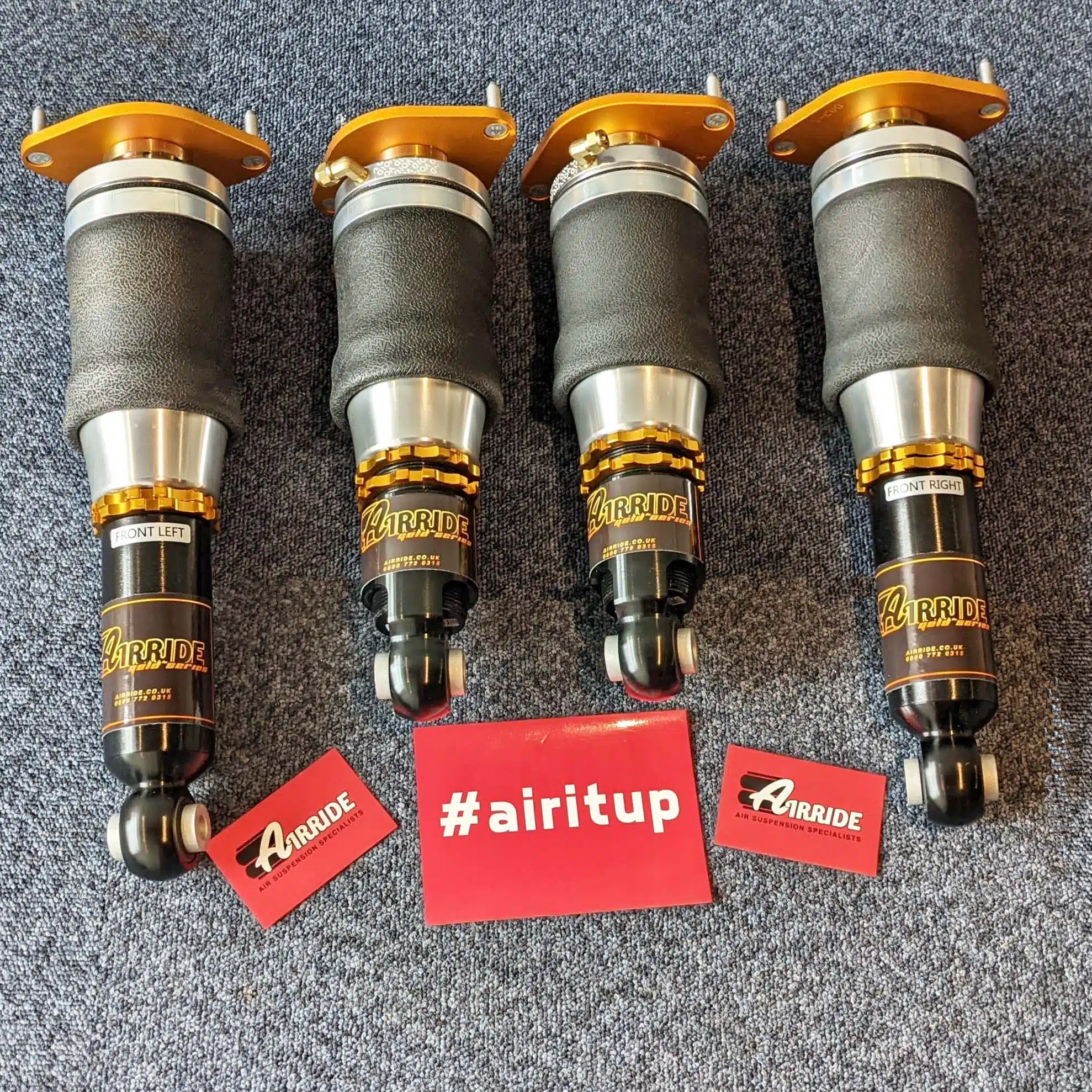
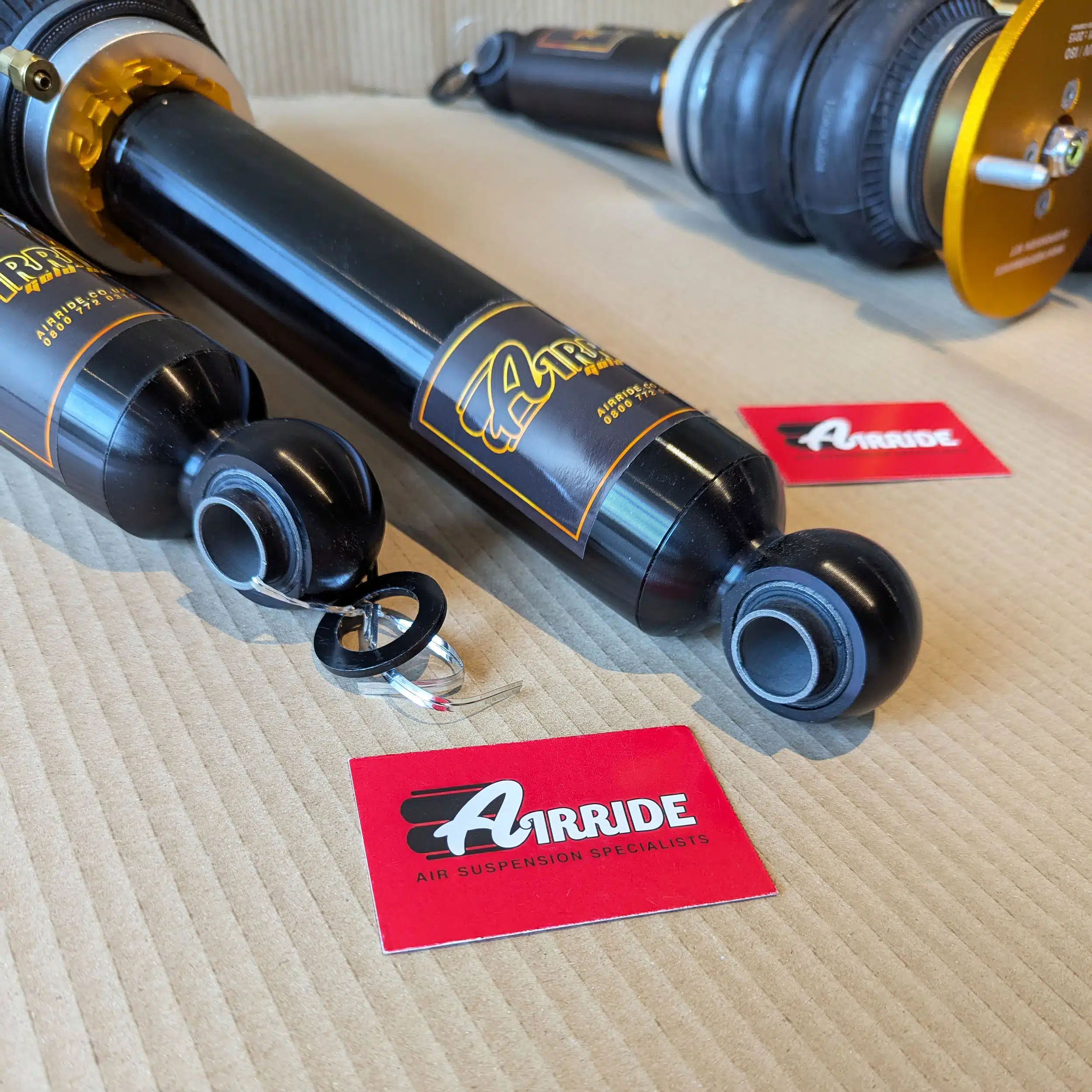
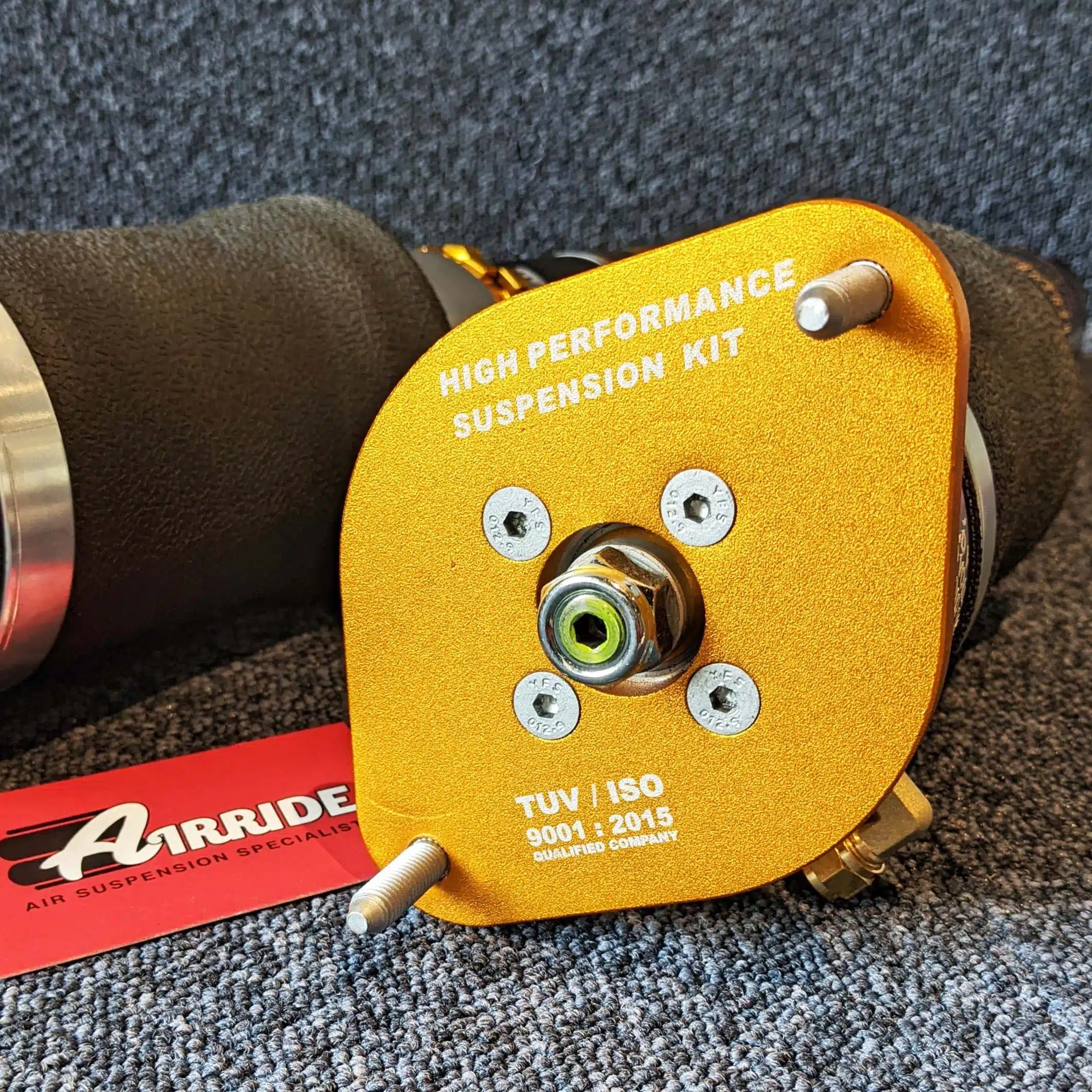
AirRide Gold is our premium range of bolt-on air suspension conversions. Each kit is designed for the specific vehicle it's listed for and bolts straight on.
It's worth being upfront about what this range is for. AirRide Gold is built primarily for sporty and lowered cars, and it's biased towards stance, handling and height adjustment rather than maximum softness. It won't give you the wafting, isolated ride of a Range Rover or Rolls-Royce - that's not the purpose of this kit. If that's what you're after, this isn't the kit for you.
What it will give you is a car that sits extremely low when parked while still retaining the ground clearance you need for driving, ramps, speed bumps and rough roads.
What's in a Kit
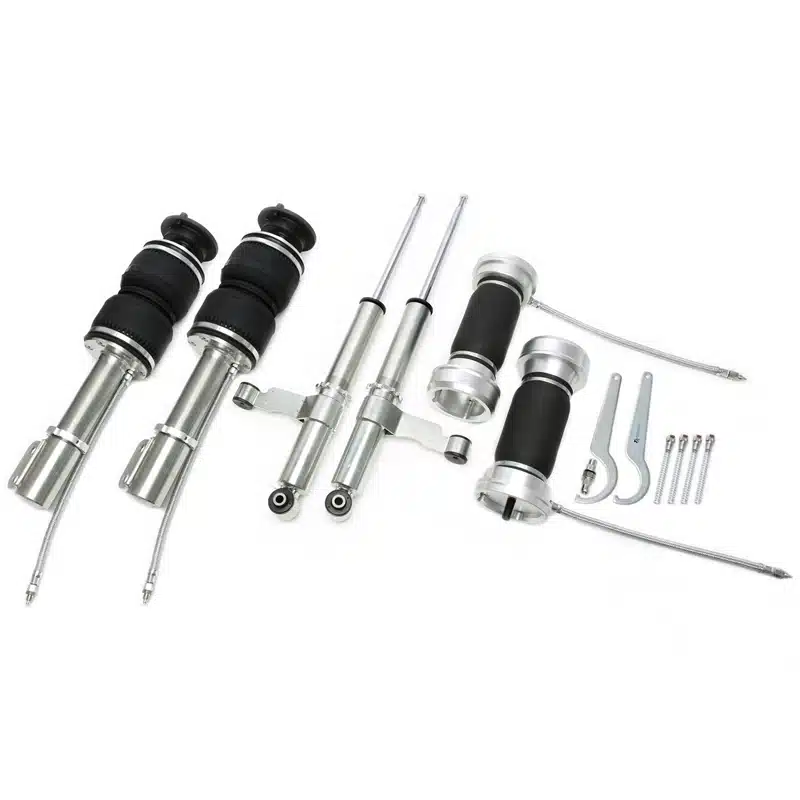
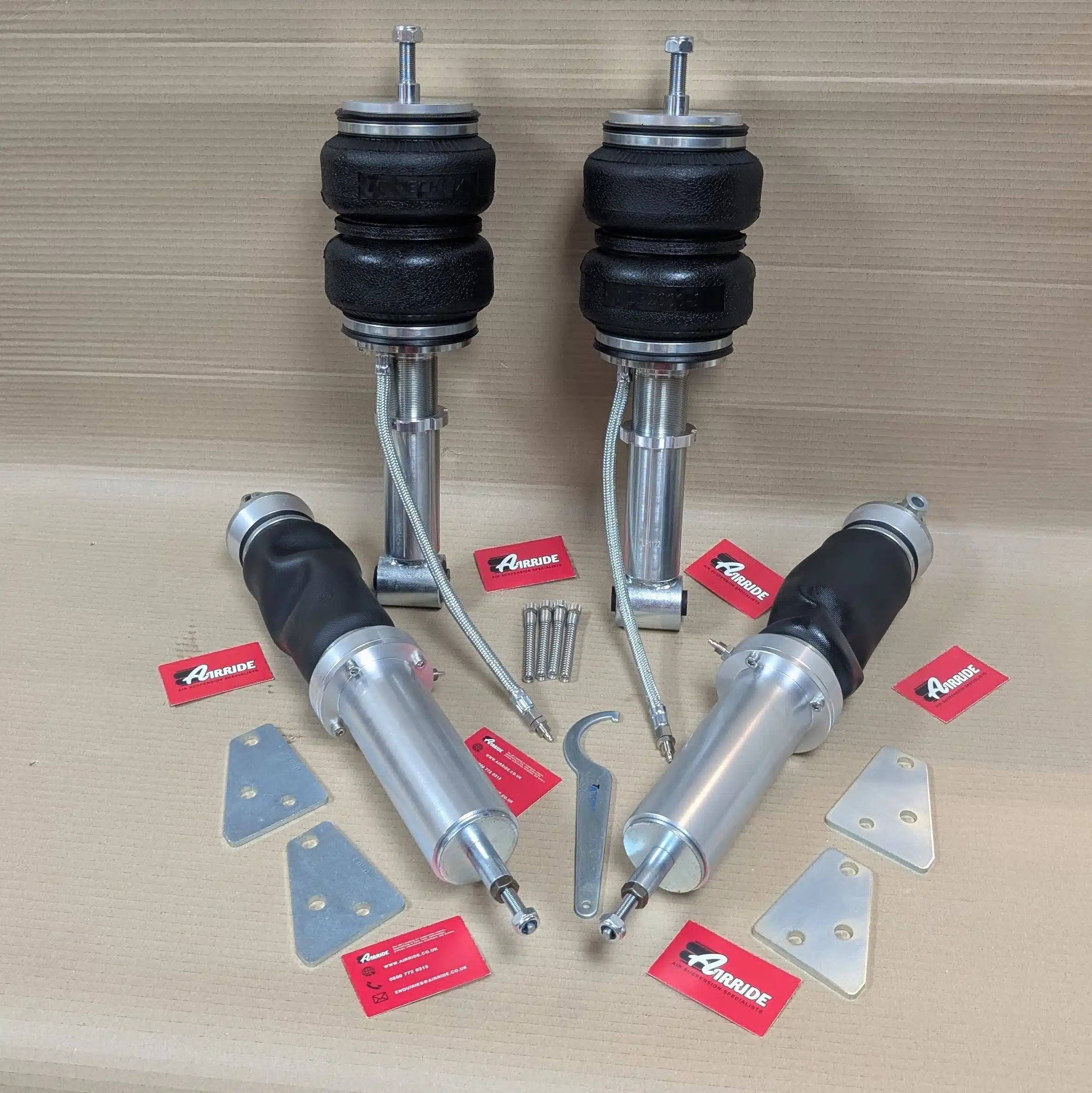
Contents vary by vehicle, but a typical AirRide Gold kit includes:
- Two front performance air struts
- Two rear air springs with vehicle-specific mounting brackets
- Rear shock absorbers, on most applications
- The bolts, fittings and hardware needed for the conversion
Air management - the system that controls pressure and lets you adjust ride height - is sold separately via the drop-down on each product page. Digital management is the most common choice these days: install time and therefore install cost are low, and they have sophisticated features not directly available on manual managements.
Why Air Over Fixed Suspension
This is really the whole point of the range. A fixed-height setup - springs or coilovers - locks you into one ride height. Get it low enough to look right parked up, and you risk grounding out on the first speed hump or steep driveway you meet. Compromise on height to stay practical, and you lose the look you wanted in the first place.
Air suspension sidesteps that. At its lowest setting, an AirRide Gold car gets the aggressive, wheel-tucked stance people want for shows and photos. Before driving, you raise it to a sensible road height, with more available if you need it for a particular ramp or entrance. Most AirRide Gold systems give you an operating range of around five inches, though this varies by vehicle.
How low the car can actually go - and how much it needs to be raised for the road - depends on more than the kit itself: suspension travel, wheel and tyre size, wheel offset, arch and chassis clearance, exhaust routing, and how the installation is finished. Air suspension doesn't remove the physical limits of the car; it just gives you the flexibility to work around them rather than being stuck with one compromise height.
Installation
AirRide Gold kits are designed as bolt-on conversions. It is installed using the vehicle's existing suspension mounting points, so a competent garage or experienced technician should be able to fit them. If you've got the mechanical know-how, you can fit it yourself too.
The trickier part, if there is one, is the management system - but modern digital setups keep wiring and plumbing to a minimum, which puts it well within reach of anyone reasonably competent.
If you'd rather have it done properly and don't fancy doing it yourself, we fit AirRide Gold systems at our workshop in Norwich - suspension conversion and management system together, planned as one job: compressor and tank position, control layout, air line routing. Before the car leaves, we check for leaks, confirm suspension clearance, and set an appropriate driving height. We've been doing this for over 25 years, and customers travel to us from across the UK for installs.
Finding Your Kit
With over 1,318 fitments in the AirRide Gold range, there's a good chance we've already got your car listed. If not, that doesn't mean we can't help - AirRide Gold sits alongside our Air Lift Performance and TA Technix ranges, and between the three we cover a huge spread of vehicles that is just over 2000 unique kits. Each is available with one of 6 common managements - so yes you could order 12,000 entirely different kits from us - just for cars!!
If your car isn't showing online, get in touch with:
- Manufacturer and model
- Year and exact version or chassis type
- Engine and drivetrain, where relevant
- Current modifications
- Wheel and tyre sizes
- What you're trying to achieve with the finished car
We'll check the wider range and come back with the best option for your vehicle.
Call us on 0800 772 0315 or email enquiries@airride.uk - and if you're ready to have a look, the AirRide Gold range is on the shop now.

03
Jun
2026
Broken Chassis – Why Kit Design REALLY Matters


This week we met a very nice chap with a very nasty problem.
His old air suspension was not working, the vehicle had failed its MOT, the van was urgently needed, and the chassis was cracked and broken from top to bottom on both sides, and between them in a giant U shape.
That is not a normal air suspension repair. It is not often that we have to weld up damaged chassis sections, but it does happen. In this case, the damage was not caused by rust. It appeared to have been caused by a heavy van fitted with a poorly designed air suspension kit that did not spread the loads correctly.
When Air Suspension Loads Are Not Spread Properly
Air suspension can put very significant loads into a vehicle chassis. That is not a problem when the kit is designed properly, the correct air bags are used, and the brackets spread the load into the chassis as intended.
The problem starts when a kit concentrates those loads into too small an area.
This particular kit was from a manufacturer whose products we have removed and replaced many, many times before. The kits are not designed with servicing and maintenance in mind, so we often end up having to cut them off the vehicle. This one was the same. Seriously rusty, seriously seized, seriously broken, not working, and it had seriously damaged the van. All held on by an exhaust clamp!
There are now plenty of kits finding their way onto popular sales channels that do not spread the loads correctly. At best, that can lead to MOT failure and an expensive repair. At worst, cracked and broken chassis sections can become a serious safety issue.
The Wrong Kit for the Vehicle
In this case, the vehicle was a heavy van with limited space available. It had been fitted with a kit that was too tall, using air bags that were also too large for the available space.
We suspect the customer had been upsold to larger air bags. That is something we see far too often. Bigger is not automatically better. In fact, fitting a larger air bag where there is not enough space can make the system worse, not better.
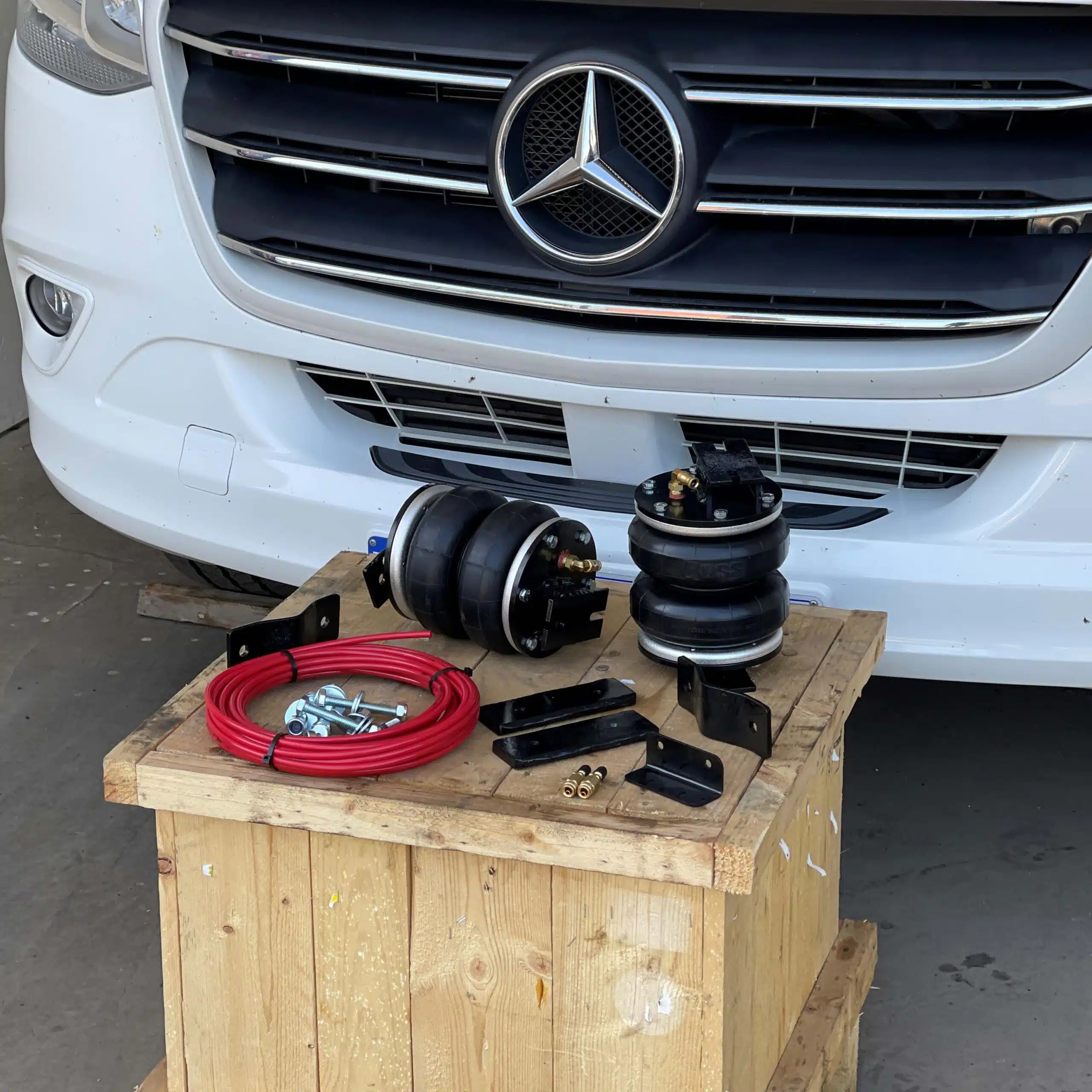
This is why AirRide will usually ask for the distance between the chassis and the axle before supplying certain kits. We are not asking to make life difficult. We are asking because the dimensions matter. The wrong bag, in the wrong space, on the wrong bracket, can damage the vehicle. This is more common on some models of Mercedes, but can happen on almost any van or motorhome.
Any seller supplying this type of kit without asking basic fitment questions probably does not care enough about what the kit does to your chassis.
Bigger Bags Are Not Always an Upgrade
There is generally one correct style and size of air bag for a particular vehicle and installation.
Paying extra for a different choice of bag only gets you a better kit if the original kit was deliberately under-specified in the first place. We have never really understood the logic behind that type of upsell.
At AirRide, we use the correct bag in the first place. The aim is not to sell the biggest bag. The aim is to use the right bag, in the right position, with brackets that spread the loads correctly.
Poor Kit Design Can Be Expensive
The seller involved in the kit we removed has been known in the industry for over a decade. In earlier days, they appeared to trade using a Gmail address and a mobile phone number, with no clear company name on paperwork. That sort of setup should make any buyer cautious.
Things may have moved on in terms of telephone numbers, websites and email addresses, but poor quality kits are still out there.
Worse still, in the last 12 months we have seen the development of foreign-made kits with even higher concentrated loads. Some of these designs appear to have been made primarily to reduce manufacturing cost. A single pressed bracket can be made very cheaply in one operation, which is great for cutting production costs. It is not so great if the entire suspension load is then concentrated into a tiny area of the chassis.
In some cases, the load-bearing area can be a fraction of what should be used for the job. In our view and experience, that makes chassis damage almost inevitable in the medium to long term, especially on heavily loaded vehicles.
Heavy Vans Need Proper Load Spreading
The loads generated by air suspension systems can be very significant. That is especially true if the kit is being asked to actively and constantly lift the vehicle, as it was in this case.
Some applications need large spreader plates in addition to the main kit. Not every vehicle needs them, but where they are needed, they really matter. The bracket design, air bag choice, available space and actual vehicle weight all need to be considered together.
Several factors help ensure that an air suspension kit does not damage the vehicle:
- The kit must be properly designed.
- The air bags must be correctly chosen.
- The brackets must spread the load correctly.
- The system must be matched to the actual vehicle dimensions.
- The installation must take into account how the vehicle is used.
Compromise in any of those areas can be costly for the buyer.
Repairing the Damage
This vehicle had already been welded in the past because of the kit overload. It then cracked again just past the welds. That tells its own story.
We removed the offending kit, repaired the chassis, and fitted the correct air suspension kit. The repair was time consuming, as chassis welding often requires internal items to be removed or protected before welding can safely take place. All underseal and seam sealer must be removed, and rust cleaned back to bright metal. We then use thick metal to plate over after welding the crack itself - not just covering it.
Happily, the customer left with the vehicle repaired and the correct kit fitted. We later noticed online that the van passed its MOT the next day.
That is always a good result, but it should not have needed to happen in the first place.
Buying Right Means Buying Once
Air suspension is not just about fitting an air bag between two points and hoping for the best.
A properly designed kit supports the vehicle, improves ride and stability, and works with the chassis rather than damaging it. A poorly designed kit can cause exactly the opposite. The lesson is simple. Buy the right kit the first time.
If a seller does not ask the right questions, does not understand chassis loading, does not design for servicing, and does not spread the loads properly, the cheap option can become very much the expensive option.
If it does not come from AirRide Limited or Airide Limited, then it is not AirRide. It is just air suspension.
Get in Touch
Need more information? Our team is here to help!
- Call us: 0800 772 0315
- Email us: ENQUIRIES@AIRRIDE.UK
29
May
2026
Motorhome, Van and Pickup Air Suspension Installed in Norwich
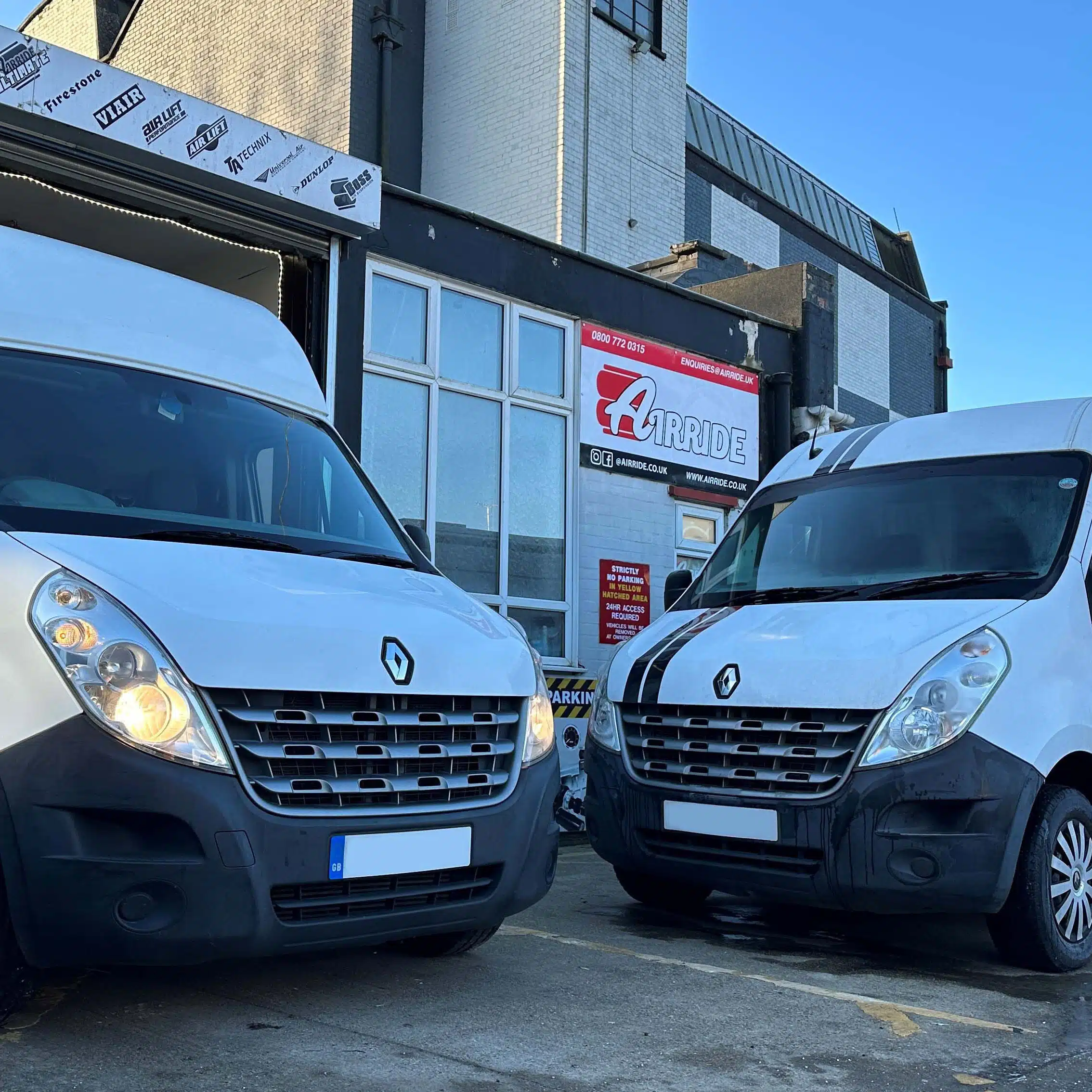
AirRide installs air suspension systems for motorhomes, vans and pickups at our Norwich installation centre.
These vehicles are a major part of what we do. Whether the issue is rear-end sag, poor ride quality, grounding, uneven loading, towing, heavy work equipment, heavy camper conversions, or simply wanting more control over the vehicle ride height, air suspension can make a significant difference when it is designed and fitted properly.
AirRide has been working with air suspension for around 25 years. We are not a general garage that occasionally fits air suspension. We are 100% air suspension. We design, manufacture and supply air suspension systems. We also install, test and support air suspension systems every day.
Fast, Practical Installations
Many motorhome, van and pickup systems can be fitted quickly at our Norwich workshop. Some kits can be installed in as little as a few hours, depending on the vehicle, the kit and the management system chosen.
Customers often drop their vehicle with us, then walk into Norwich city centre while we carry out the installation. Our workshop is only a few hundred yards from the centre of Norwich, so customers can enjoy the city while we get busy underneath the vehicle.
Booking is essential. We do not carry out walk-in installation work, because every job needs the correct parts, workshop time and preparation. We also have a very busy diary, so instant appointments are not usually available.
Schrader Valve Kits - Simple, Reliable and Effective
The quickest and simplest systems are usually Schrader valve kits.
A Schrader valve is basically a tyre-style inflation valve. The air bags are inflated manually using an airline, tyre inflator or suitable compressor, in much the same way that you would adjust tyre pressures.
For many motorhomes, vans and pickups, this is all that is needed. A Schrader valve system is simple, reliable, cost-effective and has very little to go wrong. If the vehicle carries a fairly consistent load and does not need frequent height adjustment, it can be a very sensible choice.
These systems are especially popular for customers who mainly want rear support, levelling or improved stability without adding an onboard compressor system.
Onboard Air Management - More Control, More Convenience
An increasing number of customers choose to add onboard air, often shortened to OBA, management.
An onboard air management system uses a compressor, controls and usually gauges or digital control to adjust the air suspension from the vehicle. This means the driver can change pressure without finding an airline or external compressor.
This is useful where the vehicle load changes, where the driver wants more convenient adjustment, or where ride height needs to be changed for different situations.
For vans, pickups and motorhomes, onboard air management can range from simple manual systems through to more advanced automatic systems. Our Premium On Board Air system is a popular option because it gives practical, easy control without overcomplicating the vehicle.
The advantage is simple: air suspension works best when it can be adjusted properly. Onboard air management makes that adjustment quick and convenient.
Which System Is Best For You?
The right system depends on how the vehicle is used.
If the vehicle has a fairly fixed load, is not suffering from grounding problems, and only needs extra rear support or levelling, then a Schrader valve kit may fully meet your needs.
If the vehicle suffers from grounding, has a long rear overhang, uses ferry ramps, steep drives, campsites or uneven ground, then onboard air is usually the better answer. Being able to raise or adjust the vehicle quickly can be the difference between scraping, damaging the vehicle, and clearing an obstacle properly.
If the vehicle is used commercially and the load changes significantly during the day, from job to job, or between loaded and unloaded use, then onboard air is usually the sensible choice. A fixed pressure will be right for one load but wrong for another.
For AL-KO chassis motorhomes, onboard air is especially important. AL-KO chassis vehicles often have limited suspension travel and can suffer badly from low rear ride height and grounding. For that reason, we do not fit or supply AL-KO air suspension kits without onboard air management.
Suspension Grade Compressors Only
We only use proper suspension-grade compressors.
We do not use emergency tyre inflators dressed up and marketed as air suspension compressors. Air suspension compressors need to be suitable for repeated use, proper duty cycles and the pressures involved in suspension work.
A compressor that is acceptable for occasional emergency tyre inflation is not automatically suitable for air suspension. We use proven compressor systems because reliability matters. The system needs to work when the customer needs it, not just look good on a parts list or price list.
Kits for Most Common UK Vehicles
AirRide supplies and installs air suspension systems for many of the most common vans, pickups and motorhomes on the UK market.
This includes vehicles such as Fiat Ducato, Peugeot Boxer and Citroen Relay motorhomes, Ford Transit and Transit Custom vans, VW Transporters, Mercedes Sprinters, Ford Rangers and other pickups, as well as many campervan and commercial vehicle applications.
We also work with AL-KO chassis motorhomes, where air suspension is often one of the most useful upgrades available.
Because AirRide has access to around 2,000 air suspension kit options across our own manufactured products and supplier ranges, we are not limited to a small handful of popular vehicles. We can often help with more unusual applications as well.
Designed for Home Fitment, Often Installed by Us
Many motorhome, van and pickup air suspension kits are designed so they can be installed at home or by a competent local garage.
However, a great many customers still choose to have AirRide install the kit. That gives them the benefit of experienced air suspension installers, correct setup, proper testing and practical advice on how to use the system.
For many customers, the value is not just in having the parts fitted. It is knowing that the system has been installed by people who work with air suspension every day. For vehicle re-rating, specialists often insist on a receipt showing professional installation.
Why Choose AirRide?
AirRide is a small, family-owned company, but air suspension is our entire business.
We are the sole exclusive UK distributor for Boss Air Suspension from Australia. Many of our own kits use Boss bags, which are among the toughest on the market. A motorhome and van can often have similar suspension layouts, but the needs are very different. Any kit may fit a lightweight empty van, but a heavy motorhome approaching the weight limit of the vehicle for its entire life is another thing entirely. It needs something heavy duty. It needs heavy duty brackets and really tough bags. Boss and AirRide meet those needs.
That is why proper advice matters.
Existing Air Suspension Problems
If your vehicle already has air suspension and you are having a problem with it, you are welcome to book a free 15-minute consultation.
We may be able to help with diagnosis, repair options, upgrades or replacement parts depending on the system fitted and the nature of the fault. Around a quarter of all our work is removing previously purchased, sometimes almost new, air suspension kits because they either do not work properly or have broken. Some of the particularly poor designs have to be cut off the vehicle because they have little to no rust proofing and have suffered severe corrosion. Buying right means you buy only once.
Installed in Norwich
AirRide installs motorhome, van and pickup air suspension systems at our Norwich workshop.
Some installations can be completed in as little as a few hours. Others take longer depending on the vehicle, the kit, the management system and the amount of work involved.
All installation work must be booked in advance. We do not offer walk-in fitting, because we need to make sure the correct parts, time and workshop space are available.
If you need air suspension for a motorhome, van, pickup, camper or commercial vehicle, AirRide can help you choose the right system and install it properly.
Get in Touch
Need more information? Our team is here to help!
- Call us: 0800 772 0315
- Email us: ENQUIRIES@AIRRIDE.UK


27
May
2026
Callout to a 1970s GMC Motorhome


A couple of weeks ago we received a callout request to a rather unusual vehicle - a 1970s GMC Motorhome.
At the time, I will admit I did not really know what it was. It looked intriguing straight away, with more than a hint of Scooby-Doo Mystery Machine about it, especially with the graphics. But once I started working on it, I went from intrigued to genuinely impressed.
This vehicle is around 50 years old, yet the suspension design is better thought out than quite a lot of what is currently available on the market. These GMC Motorhomes have a reputation for riding very well, and if you understand suspension, you can even see this illustrated in footage of them driving.
There is an interesting video here showing some of the history of these amazing vehicles:
Watch this video about the history of the GMC Motorhome
The rear suspension design is particularly unusual. Both rear wheels on each side work with a single air bag, rather than each wheel simply having its own separate air spring. The management system is also unusual, with automatic height control and full manual override, all operating through solenoids. Apparently, it had all been working until fairly recently.
My job was to get the system back up and running, understand how it had been plumbed and wired, and make recommendations for further work. That meant mapping the air suspension layout, checking the wiring and solenoid operation, and working out how the original system was meant to function.
Happily, I was able to leave the customer with functional air suspension, although further work will still be needed to bring everything fully back to where it should be.
It was a good reminder that interesting suspension design is not a new thing. Some older vehicles were extremely well engineered, and the GMC Motorhome is a great example. It is also the sort of job where specialist air suspension knowledge matters, because unusual systems are not always best approached by simply replacing parts and hoping for the best.
AirRide carries out air suspension callout work where suitable, including fault finding, temporary fixes, system mapping, repairs, upgrades and recommendations for further work. Whether it is a modern motorhome, a van, a pickup, a classic car, or something far more unusual, the first job is always the same: understand the system properly before deciding what needs to be done.
Get in Touch
Need more information? Our team is here to help!
- Call us: 0800 772 0315
- Email us: ENQUIRIES@AIRRIDE.UK
24
May
2026
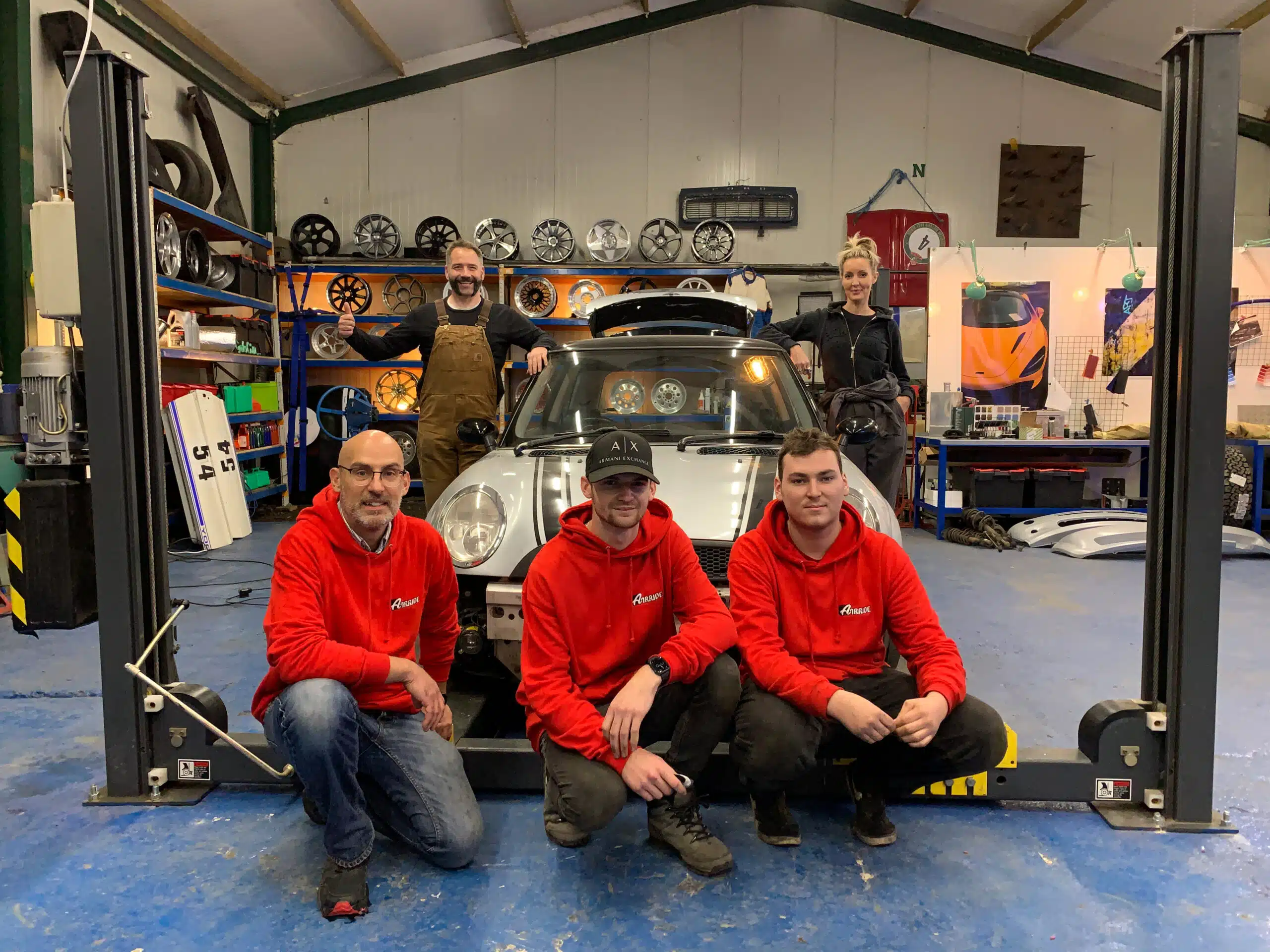
New Installer Joins the AirRide Team
We are pleased to announce that a new installer has joined the team at AirRide.
This is an important step for us because installation work forms a large part of what we do. Demand for properly fitted air suspension continues to grow, especially across cars, vans, pickups and motorhomes, and adding another installer gives us more capacity to deal with that work.
Air suspension is not something we have recently added to our services. It is not a sideline, and it is not something we are learning on customers’ vehicles. AirRide has been a dedicated air suspension specialist for around 25 years. We are 100% air suspension. We do not install stereos, we do not service VW/Audis, and we do not run a general repair garage. Air suspension is what we do.
Around 2,000 Air Suspension Kit Options
One of the things that makes AirRide different is the sheer range of air suspension products we can supply and install.
Based on our current supplier catalogues and our own manufactured systems, we now have access to around 2,000 different air suspension kits, covering well over 1,500 vehicle fitments. Each of those 2000 kits can come with various management options providing a range of at least 10,000 different kit packages.
That includes cars, vans, pickups and motorhomes, from popular modern vehicles to more specialist applications. The range includes common UK commercial vehicles such as Fiat Ducato, Peugeot Boxer and Citroen Relay motorhomes, Ford Transit and Transit Custom vans, VW Transporters, Ford Rangers and other pickups, as well as a huge number of car fitments from Alfa Romeo to Volvo.
We believe this gives AirRide one of the largest known ranges of air suspension kit fitments available from a UK or European specialist. More importantly, these are not just names in a catalogue. We supply, fit, test, support and repair air suspension systems every day.
The Brands We Work With
AirRide works with a carefully selected and limited range of air suspension manufacturers and product lines.
This includes Boss Air Suspension from Australia, for which AirRide is the sole exclusive UK distributor. It also includes TA Technix, which gives us access to a large European focused air suspension range with extensive vehicle coverage.
We are also an authorised dealer for Air Lift Performance and Air Lift Company, and we work with Universal Air Suspension for specialist and universal applications.
Alongside those supplier ranges, we also manufacture and supply our own exclusive systems under the AirRide, AirRide Gold and AirRide Ultimate names.
The result is a product range that covers far more than a small selection of popular cars. We can support air suspension installations for modern vehicles, modified cars, classic cars, vans, pickups, campers and motorhomes.
Management Options From Simple to Sophisticated
The air suspension kit, which we term the suspension pack, is only part of the system. Each vehicle can usually be matched with a number of different air management options, depending on how the vehicle is used, the customer’s budget, and the level of control required.
For vans, pickups and motorhomes, a simple Schrader valve system is sometimes the most sensible option. It is reliable, cost-effective and ideal where the system is mainly used for load support or levelling. It is a good starting point, and management can always be added later. Management will always get the absolute best out of the air suspension by being able to instantly adjust it.
For customers wanting onboard adjustment, we can add compressors, gauges, switches and tanks. For more advanced installations, we can fit full digital management systems such as Air Lift 3P, Air Lift 3H or the newer ALP4 systems.
For cars, we can provide anything from straightforward manual management to high-end digital systems with height or pressure control. Many modern car installations can use neat boot-mounted management boards, while many van and motorhome systems are installed with the equipment hidden underneath the vehicle to keep the load space clear.
Installed at Our Norwich Workshop
Any of these products can be installed at our Norwich base by experienced air suspension installers.
The addition of a new installer helps us handle more installation work and gives customers better access to fitting appointments, especially for the most common van, pickup and motorhome systems.
Some products and some vehicles can be completed as one-day installations, subject to the vehicle, the chosen management system and workshop availability. More involved systems, hidden installs, full car conversions and bespoke work naturally take longer. All bookings are subject to notice and workshop scheduling.
Most modern installations are bolt-on, especially where a proper vehicle-specific kit is available. Classic car installations are often different. Older vehicles may require bespoke design, fabrication, additional labour and more careful planning. A full air suspension installation on a classic car can easily take significantly longer than a modern European vehicle with a bolt-on kit, and the price has to reflect that extra labour. It is very often double.
Quality Parts Matter
We do not use unbranded or unknown parts simply because they are cheap.
Air suspension systems rely on compressors, valves, switches, fittings, bags and electronic management working properly. A small saving on a poor component can quickly become a much larger problem if the vehicle is unreliable, leaks air or leaves the customer stranded.
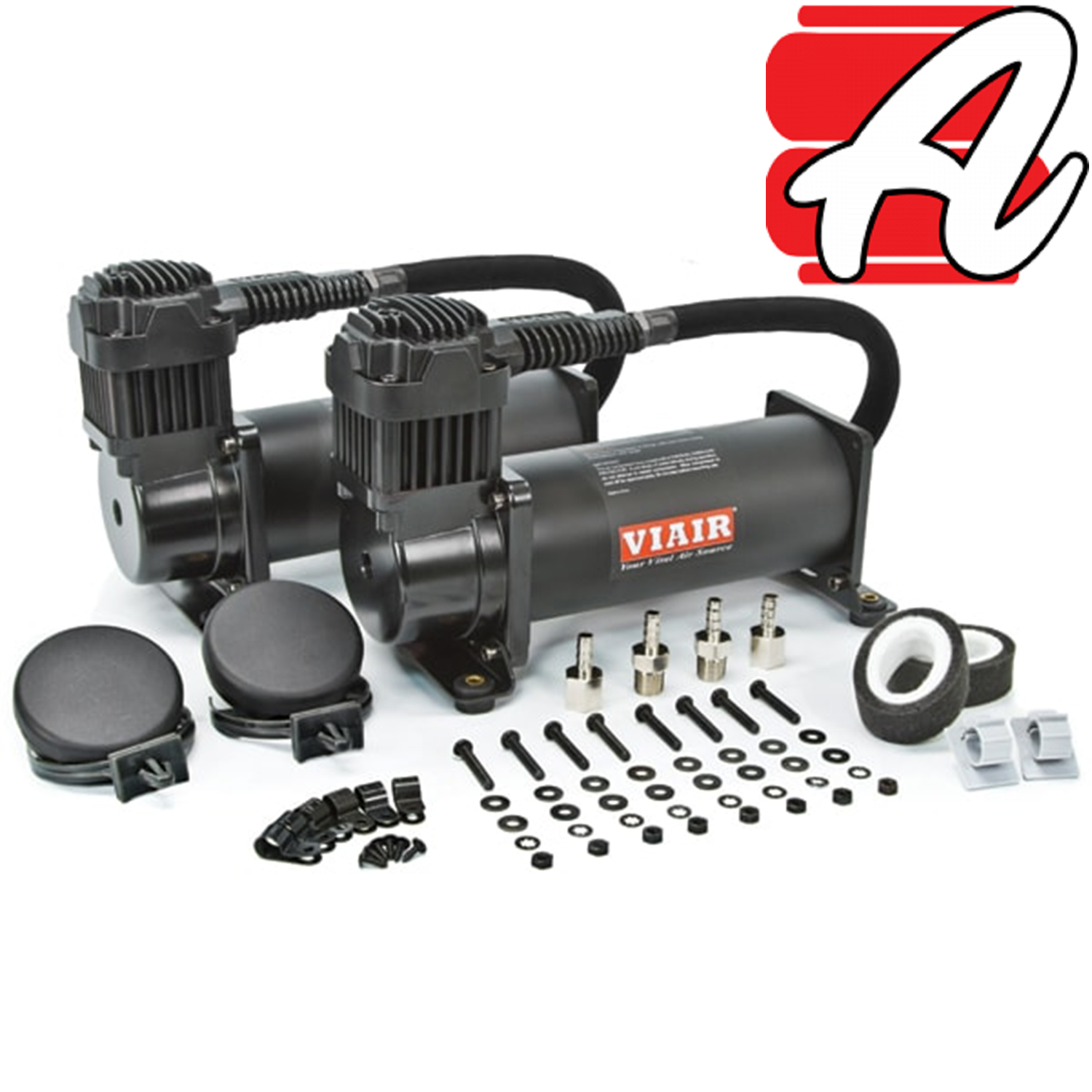
A good example is compressors. There is a growing use of low-cost replica compressors in the industry, often with claims that they are “the same as Viair” or “made in the same factory”. We have heard these stories for many years. We are contacted by overseas compressor manufacturers very regularly, but we continue to use Viair because they work, they are reliable, and they represent good value over time.
We take the same approach with other parts. We are slow to adopt new suppliers, and we test carefully before putting parts into regular supply. Everything we sell through our mail order business or install through our workshop has to earn its place - usually on our own personal vehicles first. If we are not confident in a product, we do not use it.
We recently trialled several foreign-made paddle switches which looked very similar to well-known branded parts. They looked right, but they were not right. Of 20 switches supplied by four different overseas suppliers, every single one leaked. That is exactly why we test parts before trusting them on customer vehicles.
OEM Air Suspension Repairs
We can also repair some original equipment air suspension systems, including certain Audi, Bentley, Range Rover, Mercedes, VW and similar factory air suspension vehicles.
However, we are very careful about the parts we use. In our experience, many low-cost aftermarket replacement parts for high-end OEM air suspension systems are simply not good enough, so we generally only use original manufacturer parts where quality and reliability matter.
We also do not convert factory air suspension vehicles to coil springs. Air suspension is fitted to many vehicles for very good reasons, including ride quality, load control, levelling and vehicle design. Our view is simple: if the vehicle was designed to use air suspension, the right repair is normally to repair the air suspension properly, not remove it. Coil it and Spoil it is a true maxim here.
A Small Specialist Company With a Very Large Range
AirRide is a small, family-owned company, but our product range and experience are unusually broad.
We combine our own manufactured systems with major specialist brands, international distribution arrangements and 25 years of air suspension knowledge.
Whether you need air suspension for a Fiat Ducato motorhome, a Ford Transit Custom, a VW Transporter, a Ford Ranger, a BMW, an Audi, a Mercedes, a Bentley, a classic car or a more unusual specialist vehicle, AirRide can usually supply and install a suitable system.
The addition of a new installer helps us continue to grow that service. More capacity means more vehicles completed, shorter waiting times where possible, and better support for customers who want air suspension fitted properly by people who work with it every day.
Get in Touch
Need more information? Our team is here to help!
- Call us: 0800 772 0315
- Email us: ENQUIRIES@AIRRIDE.UK


18
May
2026
Get your AL-KO Chassis motorhome ready for summer!


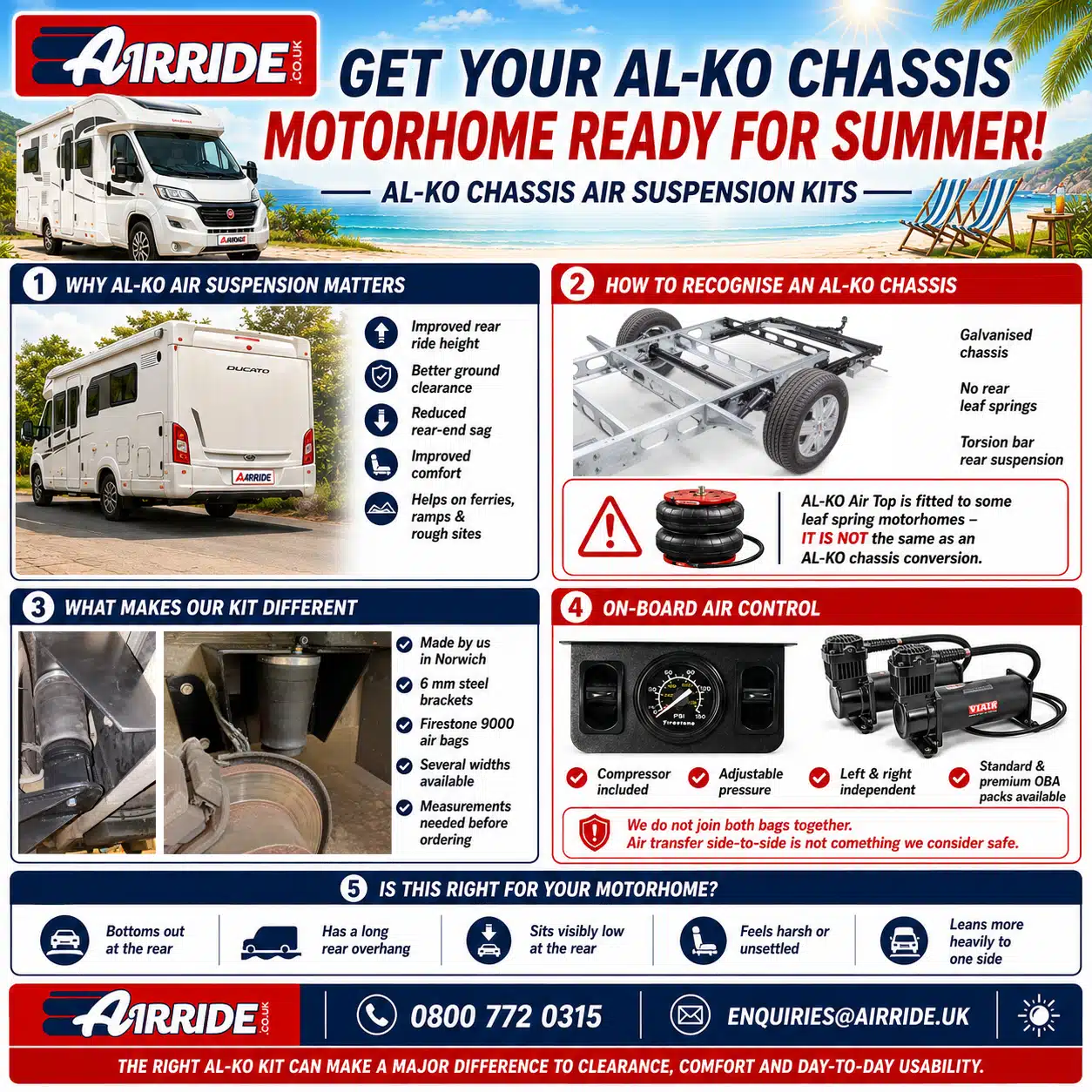
AL-KO Chassis Air Suspension Kits
Many motorhomes are built on an AL-KO chassis because it can provide extra floor space and, in some cases, an increase in payload thanks to its lighter construction compared with the standard chassis. However, that lower floor height can also create problems.
Low-floor AL-KO motorhomes can be more prone to grounding out, especially on ferries, steep drives, petrol station entrances, rough campsites and uneven tracks. Heavily loaded vehicles can also compress the torsion bar rear suspension significantly. As this type of suspension has limited travel, the result can be a poor ride quality, reduced clearance, and a vehicle that feels harsh or unsettled on the road. Larger motorhomes with a long rear overhang often suffer the most, as the combination of low ride height and extended rear bodywork makes rear-end grounding a real issue.
This is where the right AL-KO air suspension kit can make a real difference. It helps lift the rear of the motorhome, improves ground clearance, and can make a major difference to both ride quality and handling. On some vehicles it can also form part of a chassis uprating package, allowing you to legally carry more weight where appropriate.
Why AL-KO Air Suspension Matters
Rear air suspension on an AL-KO chassis is not just about lifting the back of the vehicle. When properly designed and installed, it can help with a wide range of common motorhome problems and make the vehicle more usable in real-world conditions.
Typical benefits can include:
- Improved rear ride height and ground clearance.
- Reduced rear-end sag when heavily loaded.
- Better control and stability.
- Improved comfort on poor road surfaces.
- The ability to fine-tune the vehicle for different loads and conditions.
- Reduced bangs and crashes over bumps, potholes and rough road surfaces.
- Improved side-to-side adjustment where one side of the motorhome carries more weight than the other.
Because the left and right air bags remain independent, the system can also help compensate for uneven loading side to side, which is very common on motorhomes with kitchens, washrooms, garages, water tanks or heavy storage concentrated on one side.
Air suspension can make a major improvement, but it is not a substitute for correct loading, good tyres, sound dampers and a properly maintained base vehicle.
How to Recognise an AL-KO Chassis
When customers contact us about air suspension for their Fiat Ducato, Citroen Relay, Citroen Jumper or Peugeot Boxer motorhome, the first thing we ask is whether the vehicle has leaf springs or an AL-KO chassis.
If you are not sure, the simplest way is to look underneath the vehicle. We cannot identify this accurately from the registration number or VIN alone.
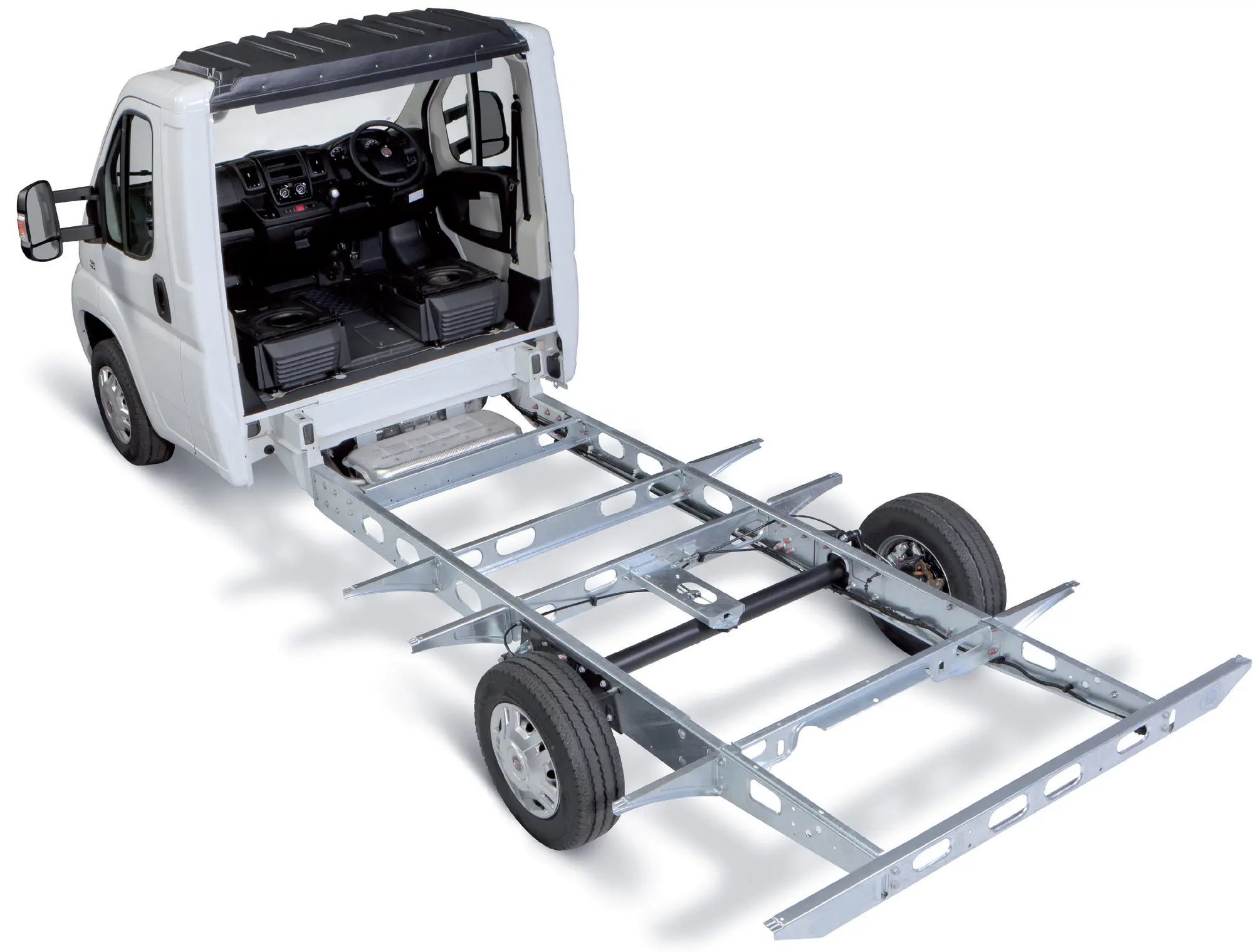
A standard chassis with rear leaf springs will have two curved steel springs running along the rear axle area. On heavily loaded vehicles these springs may look quite flat, which is very common.
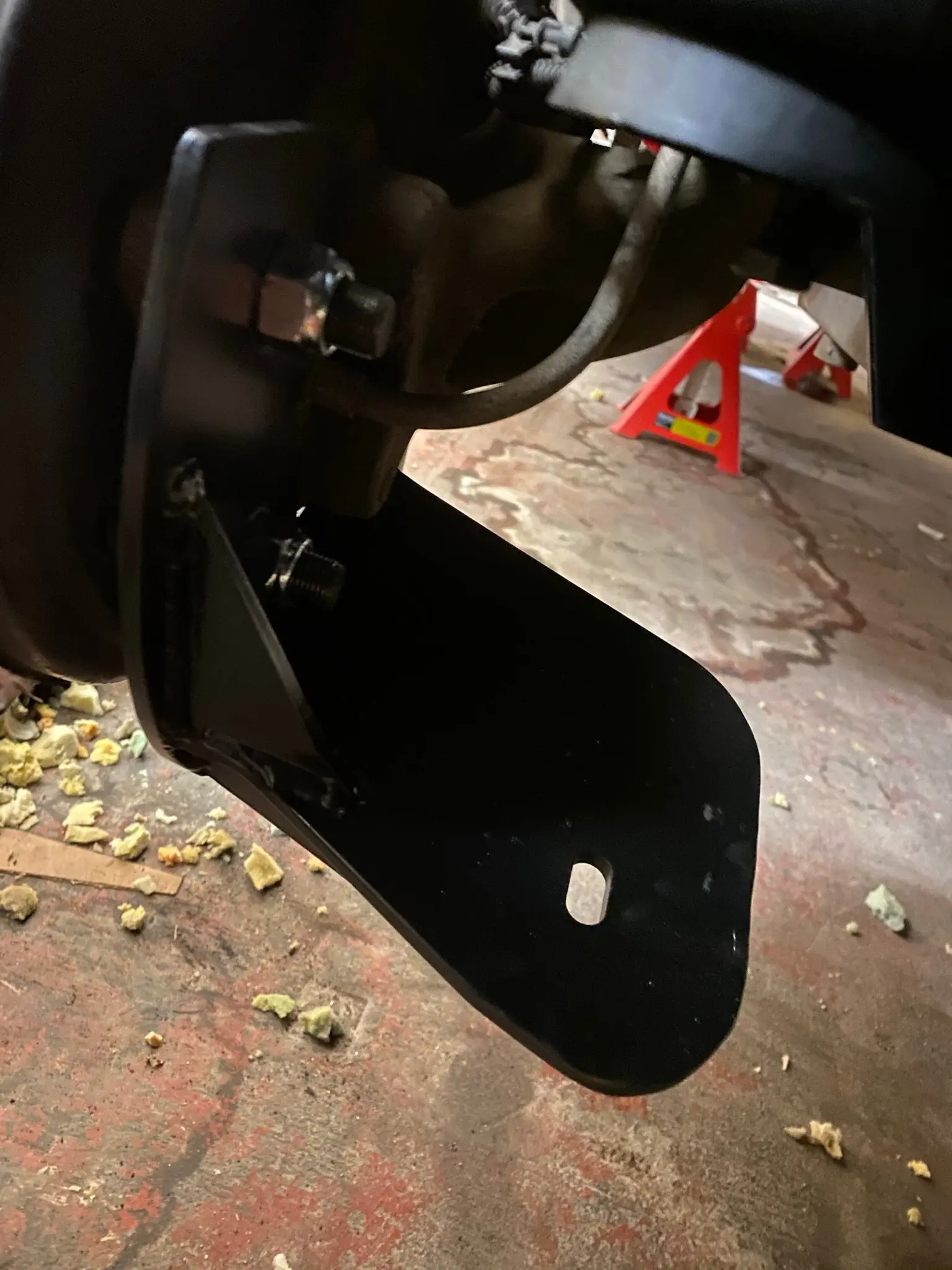
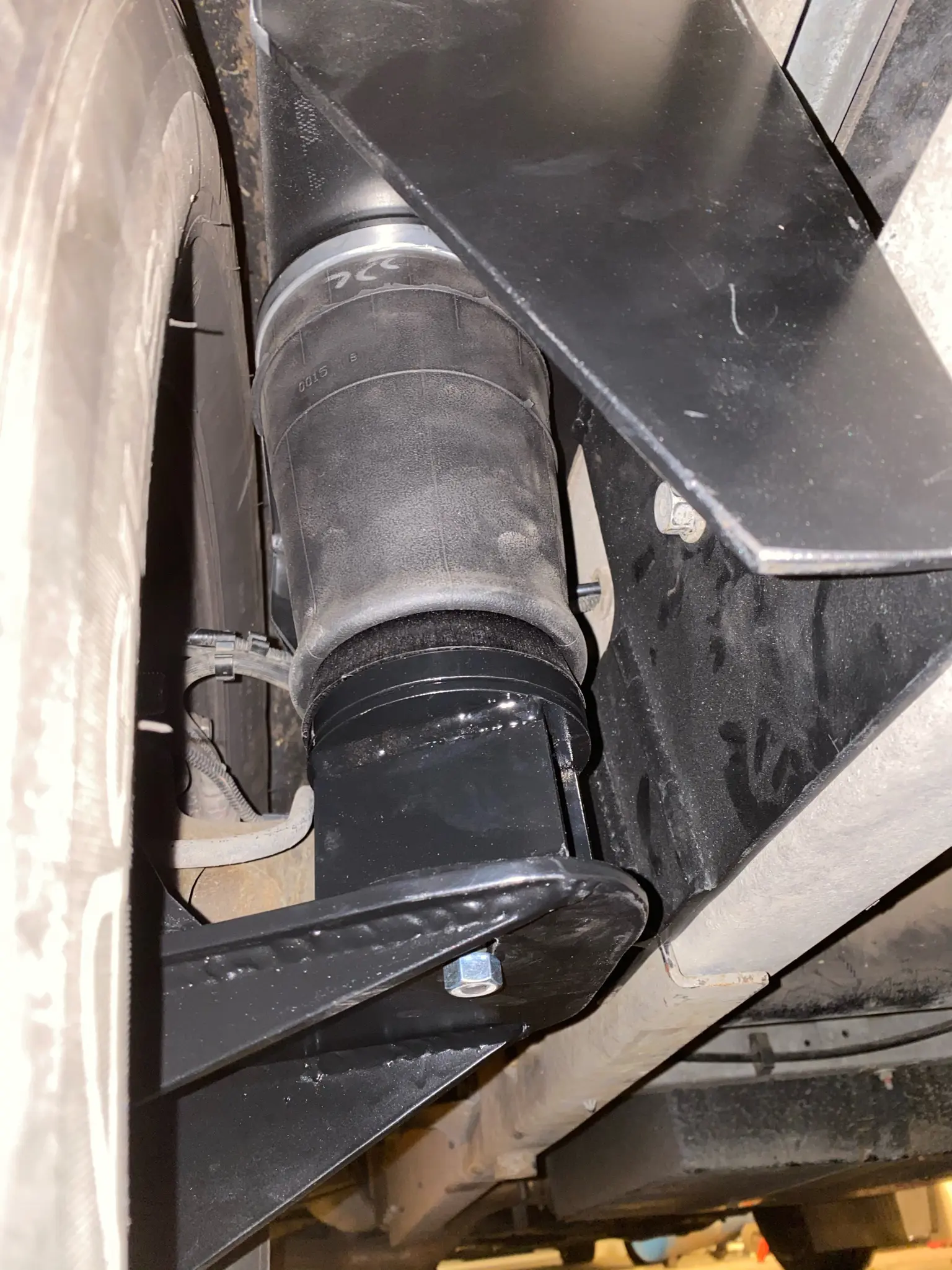
An AL-KO chassis is different. If there are no rear leaf springs and the vehicle has a galvanised C-section chassis, it is usually the torsion bar type AL-KO chassis. We have included several photos in this post to show the AL-KO chassis from different angles.
It is also important not to confuse AL-KO air top with AL-KO chassis. They are not the same thing. AL-KO air top air bags are fitted to some leaf spring motorhomes and usually have a distinctive red or orange rim. We are regularly contacted by owners needing replacement bags after the bag has caught on the bracket. If you have an AL-KO air top system and need advice, please get in touch.
If you have a tag axle vehicle with two rear axles, also called twin rear axles, and therefore 4 separate wheels on the rear (total of six on the vehicle) then it is more likely that you have an AL-KO torsion bar suspension set up. We can still offer air suspension for these vehicles, but due to the limited distances between front and rear axles it is sometimes necessary to modify the mounting brackets, or to move the inner shock mount. Feel free to call for more info.
What Makes Our Kit Different
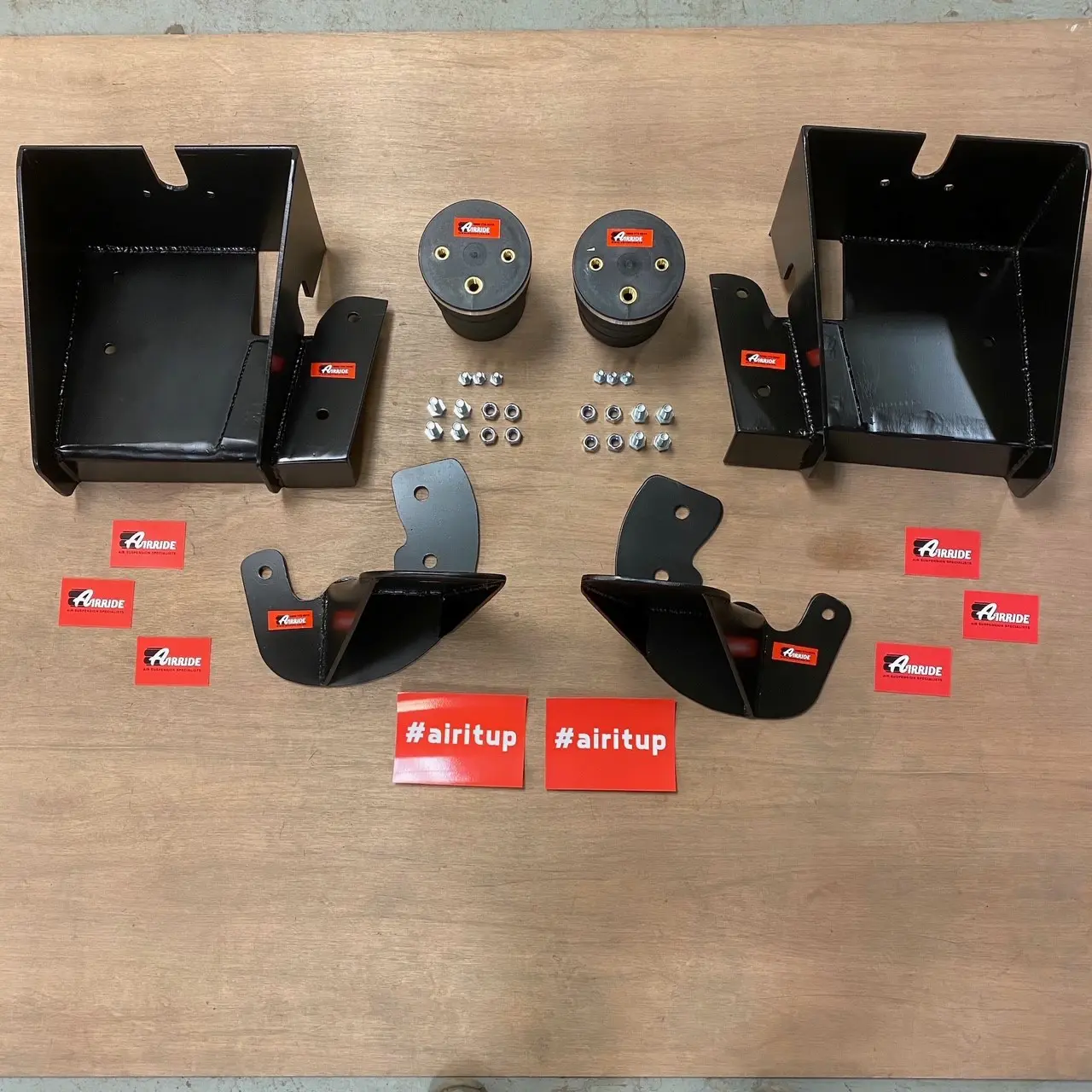
Our AL-KO kits are made by us in small batches here in Norwich using thick 6 mm British-sourced steel, then powder coated for durability.
The heavy-duty brackets are fitted in addition to the existing torsion bar suspension and are supplied with Firestone 9000 air bags. They may look simple, but they are extremely capable and well suited to this application.
One important point with AL-KO chassis is that there is not just one version. There are 23 known AL-KO chassis variants, so our kits are available in several widths to suit different applications. To make sure the kit fits properly, we ask customers to provide a few simple chassis measurements before ordering.
Our rear AL-KO kit is designed for Fiat Ducato X250, X290 and X295 based motorhomes, and also fits the equivalent Citroen Relay, Citroen Jumper and Peugeot Boxer models of the same generation.
It is not designed for Mercedes, Renault or VW AL-KO rear chassis applications, but if you send us measurements we will always try to help where possible.
When we first started making AL-KO kits around ten years ago it was a steep learning curve, and development took many iterations to perfect. As is often the case, competitors see what we are doing and offering and try to emulate it. That is flattering, but it can prove costly for customers. The loads on AL-KO suspension are higher than on leaf spring vehicles in some key areas. On alternative offerings we have seen failed welds, broken brackets and very commonly bent and distorted brackets. If a product is copied without fully understanding the application, then this is an inevitable consequence, and it often proves costly for the end user. We have had to repair, replace and upgrade many competitors' AL-KO chassis air suspension kits that were simply not up to the job. Some did not actually do anything noticeable.
Front Air Suspension Options
We can also supply front air suspension struts for Fiat Ducato, Citroen Relay, Citroen Jumper and Peugeot Boxer from 1994 onwards.
Although we cannot currently supply the rear AL-KO kit for all other base vehicles, we can also help with front suspension on some VW T5/T6, Mercedes and Renault based AL-KO motorhomes where the front suspension uses struts.
We do not have air suspension for motorhomes with a transverse leaf spring on the front, such as Iveco and Sprinter.
Schrader Valves or On-board Air?
We are sometimes asked whether the AL-KO kit can be run on simple Schrader valves. In this case, the answer is no.
Our AL-KO rear kit includes a compressor as standard because there is no single fixed pressure that delivers all the benefits in all situations. Motorhome loading, terrain, road conditions and access angles vary too much. To get the best from the system, you need to be able to adjust the pressure when required, and that is far more often than on a leaf spring vehicle.
For customers who want proper in-cab control with an air tank, we recommend our Standard OBA pack, which is our most popular option for motorhome owners and ideal for regular adjustment. This pack includes:
- A 25% duty cycle compressor.
- A small 2 US gallon steel tank.
- A twin button and gauge controller.
- An on-board air hook-up kit to match the compressor.
The left and right air bags remain independent, so they can be set to different pressures if needed.
We do not join the bags together, unlike some systems on the market. Linking both sides can allow air to transfer across the vehicle during cornering and movement, which is not something we consider safe and therefore also not legal.
If you want a more powerful setup with a lighter tank, our Premium OBA pack includes a 100% duty cycle compressor and an aluminium tank.
Uprating and Re-rating
On some vehicles, the kit may be used as part of an uprating package, but uprating is always vehicle-specific.
If you are buying the kit as part of a re-rating process, speak to your chosen re-rating company first.
Our kits are often used as part of that process, but we do not offer re-rating ourselves and we do not get directly involved in it.
Is This the Right Type of Kit for Your Motorhome?
This type of kit is especially worth considering if your motorhome:
- Bottoms out at the rear.
- Struggles with ferry ramps or steep entrances.
- Has a long rear overhang.
- Feels harsh or unsettled when loaded.
- Sits visibly low at the rear.
- Crashes and bangs over bumps, potholes and poor road surfaces.
- Leans more heavily to one side because of layout or loading.
Need Advice?
Not sure whether your motorhome has an AL-KO chassis or a standard leaf spring rear suspension? Send us a few clear photos from underneath the rear of the vehicle, along with a few basic measurements, and we will do our best to point you in the right direction. If your vehicle has a tag axle, or you want to discuss front and rear air suspension options, please call or email.
17
May
2026
How to wire a compressor for an OBA system.
How to Wire a 12V Air Suspension Compressor Using a Relay
Wiring a 12V air suspension compressor is not complicated, but it does need to be done correctly. A compressor draws a lot more current than a normal switch circuit, especially when it first starts, so it should not be wired directly through a small dashboard switch.
The correct way is to use a relay. The dashboard switch, ignition live feed or pressure switch only has to control the relay. The relay then handles the heavier current needed to run the compressor.
This is the same basic wiring principle used on many of our On Board Air, or OBA, kits for vans, pickups, motorhomes and air suspension systems.
Why You Should Not Wire the Compressor Directly Through a Switch
A compressor is a high-current electrical load. When it starts, the current draw can be much higher than people expect.
If you wire the compressor directly through a small on/off switch, the switch may overheat, burn out, melt internally, fail, or in the worst case create a fire risk. Even if it works briefly, it is not good practice.
The switch should only be used to trigger the relay. The relay then switches the heavier current to the compressor.
In simple terms:
- The switch controls the relay.
- The relay controls the compressor.
- The fuse protects the wiring.
- The pressure switch controls when the compressor should run.
Why a Pressure Switch Is Needed
A pressure switch is what allows the compressor to turn on and off automatically.
Without a pressure switch, the compressor would simply keep running until you switched it off manually. That risks over-pressurising the tank, or in some systems, over-pressurising the bags depending on how the system is plumbed.
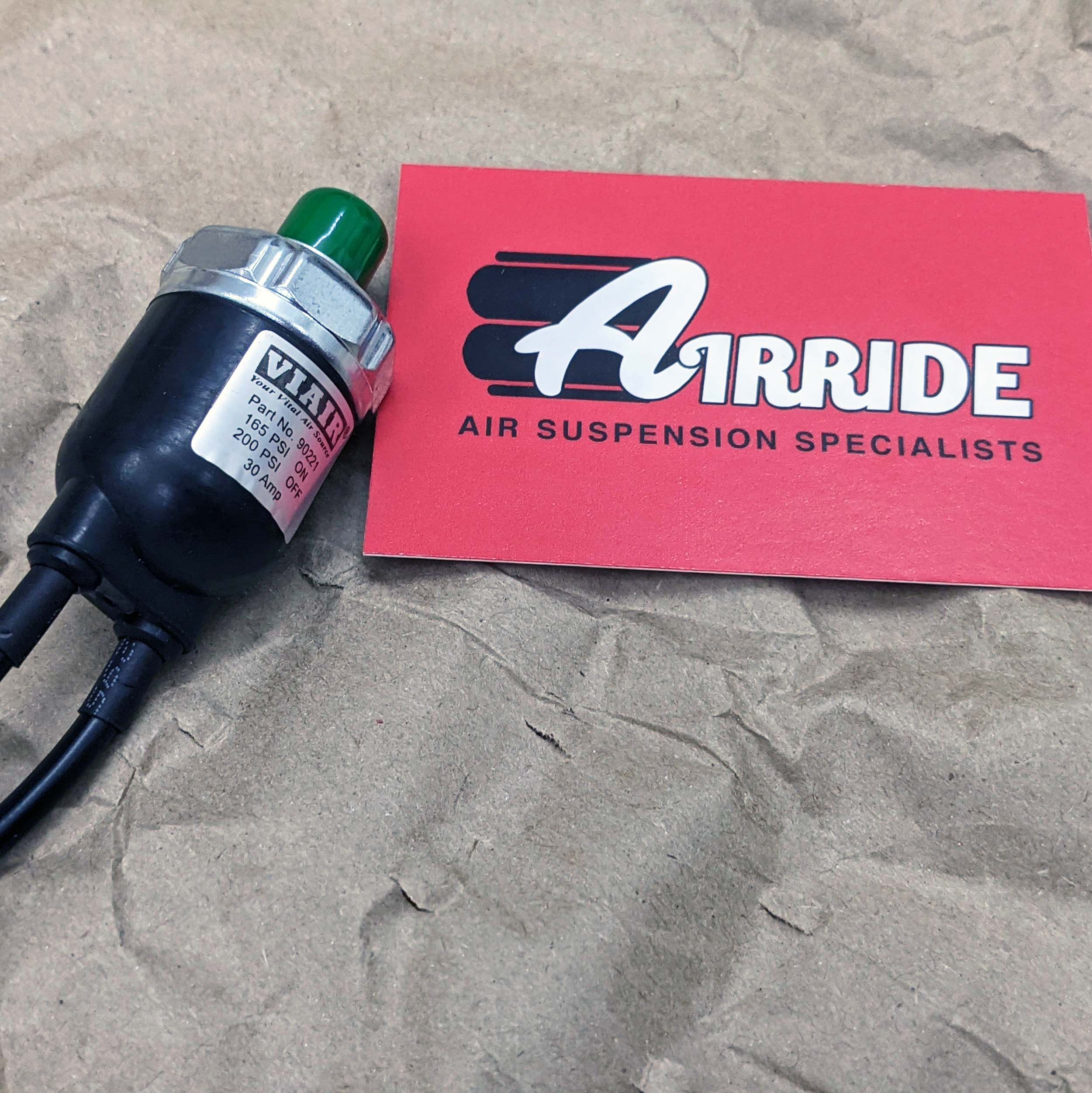
A normal tank-based onboard air system needs a pressure switch so the compressor cuts in and cuts out at sensible pressures. For example, a pressure switch might turn the compressor on at around 110 PSI and off at around 145 PSI.
The compressor should not be left to run without pressure control.
Why a Relay Is Used
A relay is simply an electrically operated switch. It allows a low-current circuit to control a high-current circuit.
That means you can use a small dashboard switch, ignition live supply, or pressure switch to control the compressor safely without sending the compressor's full current through those small control components.
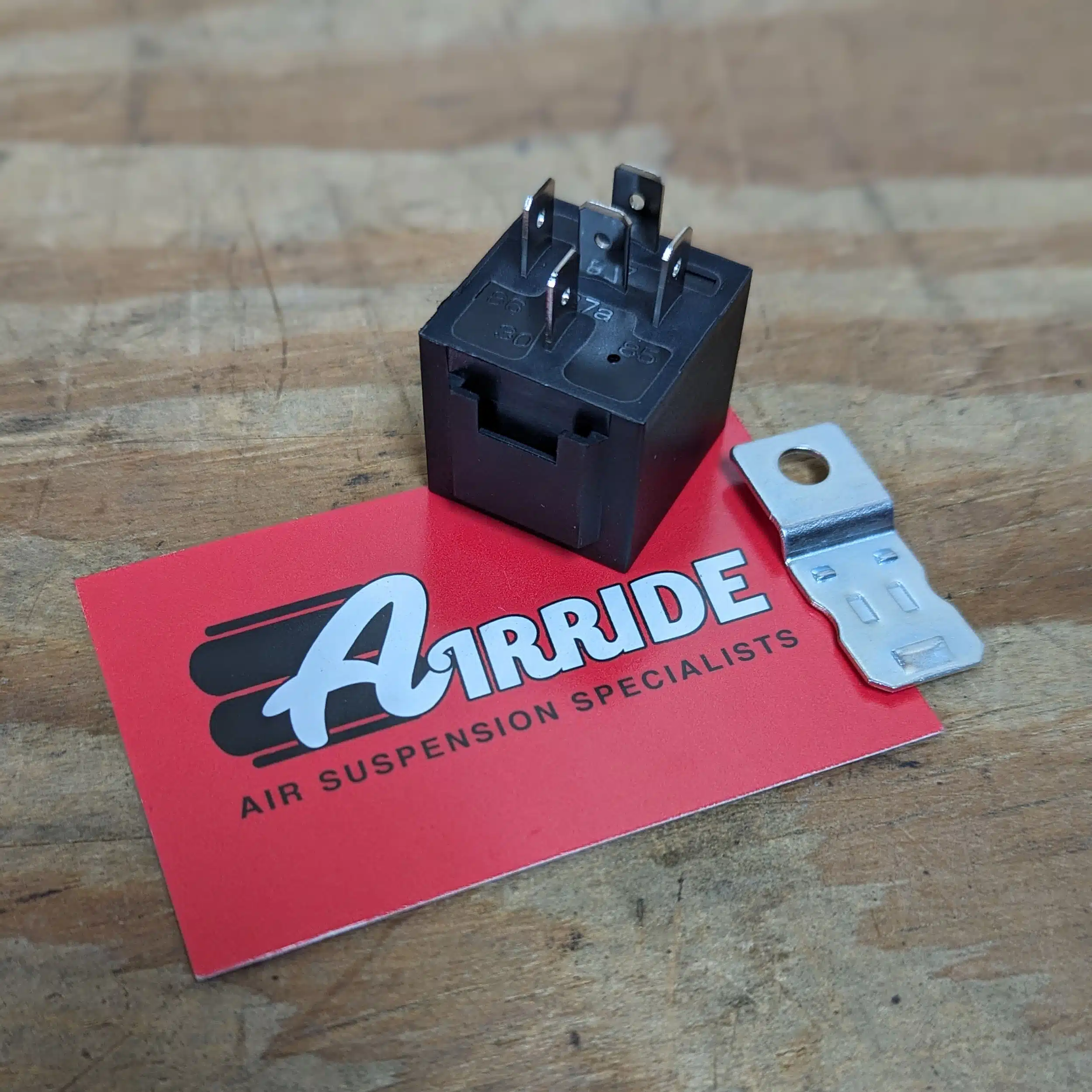
A standard automotive 30/40 amp 4-pin relay is commonly used for this type of compressor wiring.
The Four Relay Pins Explained
Most standard automotive 4-pin relays use terminals 30, 87, 85 and 86.
Pin 30 - Power In
Pin 30 connects to the positive battery supply through the main fuse.
This is the high-current power feed for the compressor circuit. The fuse should be fitted close to the battery so the cable is protected as early as possible.
For a single Viair 12V compressor such as a 444C, a 30 amp fuse is commonly used, but always check the compressor specification and the instructions supplied with your kit.
Pin 87 - Power Out to Compressor
Pin 87 connects to the compressor positive feed.
When the relay is triggered, power flows from pin 30 to pin 87, then on to the compressor. On Viair compressors, this is normally the red compressor wire.
The compressor then needs a good earth connection from the black wire to the vehicle chassis or directly back to the battery negative.
A poor compressor earth is a very common cause of unreliable operation.
Pin 86 - Trigger Feed
Pin 86 is the trigger feed for the relay coil.
This can be supplied through a dashboard on/off switch, or in some installations from an ignition live feed. The purpose of this feed is to tell the relay when the system is allowed to operate.
Because this is only a relay trigger circuit, it does not need the same heavy cable as the compressor feed.
Pin 85 - Trigger Earth Through the Pressure Switch
Pin 85 completes the relay coil circuit to earth, usually through the pressure switch.
When tank pressure drops below the pressure switch cut-in point, the pressure switch closes the circuit to earth. This energises the relay, which then sends power to the compressor.
When the tank reaches the pressure switch cut-off pressure, the pressure switch opens the circuit and the relay switches the compressor off.
Pin 85 can be connected to a clean, unpainted chassis earth through the pressure switch, or taken back to the battery negative. Running it back to battery negative takes more wire, but can sometimes be more reliable, especially where chassis earth points are poor.
Why There Are Two Fuses
The diagram shows two fuses because there are two different parts of the circuit.
The larger fuse protects the compressor power feed. This is the high-current cable supplying power from the battery to relay pin 30, and then from relay pin 87 to the compressor. For many single compressor installations this is typically around 30 amps, depending on the compressor and wiring length.
The smaller fuse protects the control circuit. This is the lower-current side that supplies the on/off switch, pressure switch and relay trigger circuit. A 5 amp fuse is normally sufficient for this because it is only operating the relay coil, not powering the compressor itself.
Do not assume that one fuse protects everything properly. Each circuit should be protected according to the wire size and the current it is expected to carry.
Wire Size Matters
Correct wire size is important.
The compressor feed must use cable suitable for the current draw and the length of the run. A good rule of thumb is to use at least the same size cable as the compressor already has fitted. For a Viair 444C, this is likely to be around 14 gauge.
If the cable run from the battery to the relay or compressor is long, it may be sensible to go up a size. In American Wire Gauge terms, going up one size means the number gets smaller, so 12 AWG is larger than 14 AWG.
The trigger wiring for relay terminals 85 and 86 does not need to be as thick because it is only carrying the small current needed to energise the relay. In many cases, light automotive cable is fine. Speaker wire is electrically capable for low-current relay switching, although proper automotive cable is neater and generally preferred for vehicle work.
Single Compressor or Twin Compressors?
The diagram is for a single 12V compressor.
If you are running two compressors, do not simply double everything onto one relay without checking the current draw. The better method is normally to use two relays, with each compressor having its own properly fused power feed and relay-controlled supply.
Twin compressor systems need more care because the current draw is much higher. Fuse size, cable size, relay rating and earth quality all become even more important.
On/Off Switch or Ignition Live?
The diagram shows a manual on/off switch. This allows you to enable or disable the compressor system.
In some installations, this can be replaced or supplemented by an ignition live feed so the compressor only runs when the vehicle ignition is on. That can be useful because it prevents the compressor running unexpectedly when the vehicle is parked.
The best arrangement depends on the vehicle and how the air system is used. For many onboard air and air suspension systems, having a clear manual isolation switch is still useful.
Good Earths Are Essential
A weak earth can cause all sorts of problems. The compressor may run slowly, fail to start, blow fuses, overheat wiring, or behave inconsistently.
All earth points should be clean, solid and secure. Remove paint, rust and dirt where needed, use proper terminals, and make sure the connection cannot work loose.
Where possible, earth cables should be short and direct. For critical circuits, running a dedicated earth back to the battery negative can be more reliable than relying on a questionable chassis earth.
Use Proper Terminals, Crimpers and Protection
A wiring diagram is only part of the job. The quality of the actual installation matters just as much.
Use proper terminals, good crimpers and heat shrink where appropriate. Poor crimping is one of the most common causes of electrical faults. A crimp should be mechanically secure and electrically sound, not just squeezed flat with pliers.
All wiring should be secured properly with cable ties or clips and protected with conduit where it passes under the vehicle or near moving parts.
Do not allow wires to chafe against metal edges. If a wire passes through a hole, use a grommet. If it runs near heat, sharp edges, suspension movement or road debris, protect it properly.
Basic Wiring Summary
For a standard single compressor relay setup:
- Battery positive feeds the 30 amp fuse.
- The 30 amp fuse feeds relay terminal 30.
- Relay terminal 87 feeds the compressor positive wire.
- The compressor negative wire goes to earth or battery negative.
- Battery positive also feeds the 5 amp fuse for the control circuit.
- The 5 amp fuse feeds the on/off switch.
- The on/off switch feeds the pressure switch.
- The pressure switch feeds the relay trigger circuit.
- Relay terminal 86 and 85 form the relay coil circuit.
- Relay terminal 85 or 86 must complete to earth depending on the exact wiring layout used.
- The pressure switch controls whether the relay is energised.
- Good earths are essential.
The exact wiring layout can vary slightly depending on whether the pressure switch is switching live or earth, but the principle is the same: the relay handles the compressor current and the switch circuit only controls the relay.
Final Thoughts
Wiring a 12V compressor is simple enough, but it is not something to guess. Use the correct fuse ratings, correct wire size, a proper relay, good earths and secure connections.
Do not wire the compressor directly through a small switch. Do not omit the pressure switch. Do not leave wiring loose under the vehicle. Do not allow wires to rub through on metal edges.
Done properly, a relay-controlled compressor circuit is reliable, simple and easy to understand. Done badly, it can cause endless faults or become unsafe.
This principle applies to many of our On Board Air kits for vans, pickups, motorhomes and air suspension systems. If you are unsure which compressor, pressure switch, relay or wiring arrangement is right for your system, please get in touch before cutting wires.



11
May
2026
Pressure Switches and Pressure Relief Valves – What They Do and Why Both Matter

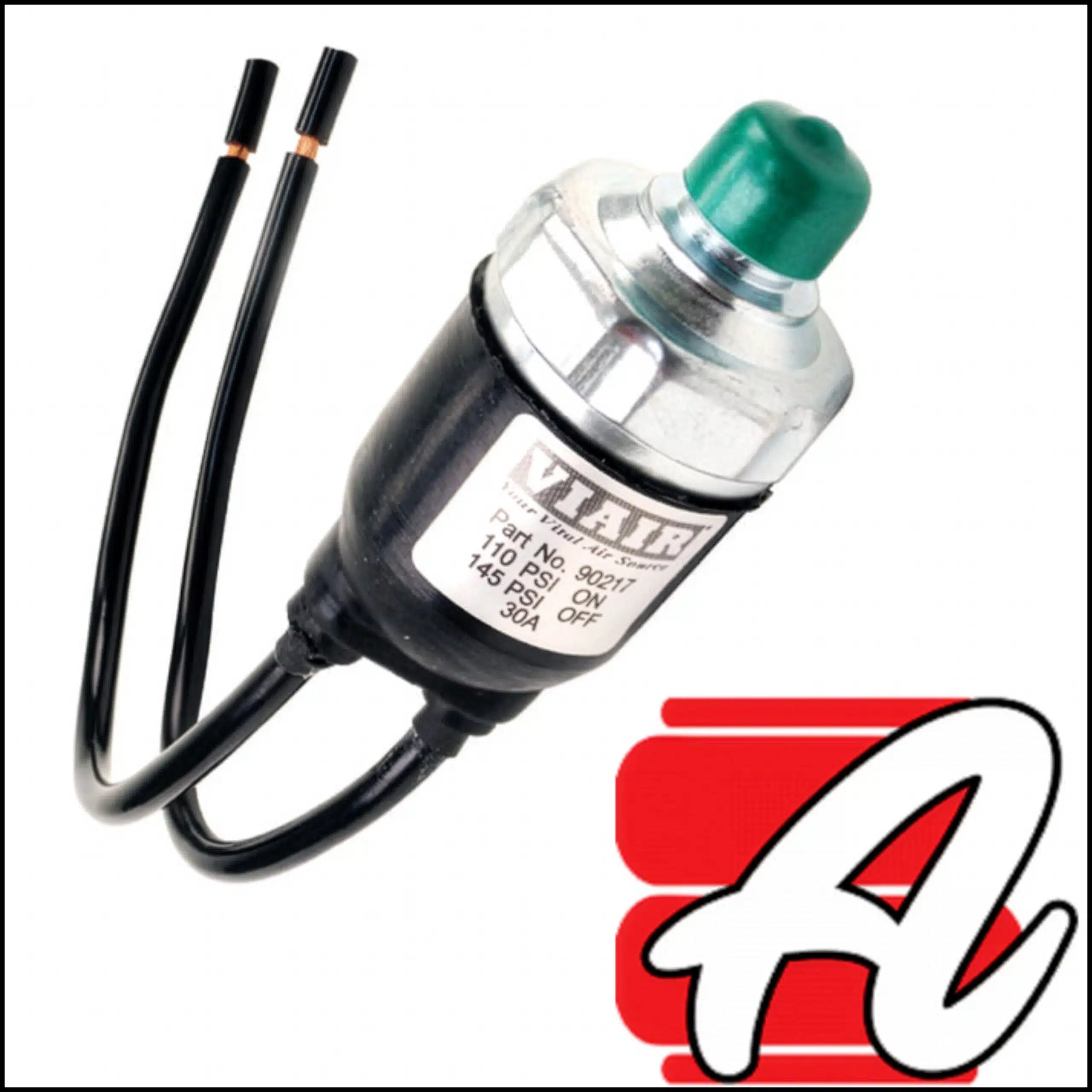


We sell quite a lot of pressure switches, usually shortened to PS, and closely related to them, pressure relief valves, usually shortened to PRV. They are simple parts, but they are important ones. A lot of confusion surrounds both, especially when customers are repairing older systems, replacing failed parts on budget installations, or putting together a non-digital setup themselves.
This blog post explains what each part does, how they work together, where they should be fitted, and a few common mistakes to avoid.
What Does a Pressure Switch Do?
A pressure switch, usually shortened in our diagrams and instructions to PS, turns the compressor on and off automatically based on tank pressure, via a relay.
It has two pressure figures associated with it:
- The lower number, where it switches the compressor on - cut-in pressure, or CIP.
- The upper number, where it switches the compressor off - cut-off pressure, or COP.
For example, a 110 - 145 PSI pressure switch should switch the compressor on at about 110 PSI and switch it off at about 145 PSI. When you first install the system and there is no pressure in the tank, the pressure is below the cut-in pressure, so the switch signals the compressor, via a relay, to start and fill the tank. When the tank reaches around 145 PSI, the switch opens and the compressor stops. As air is used, nothing happens until tank pressure drops below the cut-in pressure again, at which point the compressor starts and the cycle repeats.
This is what allows an onboard air system to maintain tank pressure without the compressor running all the time. In simple terms, the pressure switch is the automatic compressor control on a non-digital, tank-based setup.
What Does a Pressure Relief Valve Do?
A pressure relief valve, usually shortened to PRV, is a safety device.
Its job is not to control normal compressor operation. Its job is to protect the tank and system if something goes wrong and the air pressure gets too high. This can be caused by a pressure switch failure, but in our experience it is more commonly caused by installer wiring errors, which we have seen many times, or by an abnormal situation such as accident damage, a crushed tank, or fire exposure. The valve is there to vent the pressure before it becomes a danger.
If the system exceeds the relief valve setting, the valve opens and releases air to atmosphere. On most PRVs this is accompanied by a very obvious and very loud discharge of air.
In other words:
- The pressure switch controls normal operation.
- The pressure relief valve is the back-up safety device.
You should have both on any tank-based onboard air system.
Why Both Are Needed
Some people assume that if they have a pressure switch they do not need a pressure relief valve. This is wrong.
Pressure switches are mechanical items and, like any mechanical or electrical component, they can fail. Wiring can also be wrong. Relays can stick. Compressors can be modified or miswired.
The PRV is there to protect the system in the event of a situation that should never happen, but sometimes does.
Understanding the Numbers on a Pressure Switch
Customers often ask what the two numbers actually mean.
Using a common example:
110 - 145 PSI
This means:
- Compressor on at around 110 PSI.
- Compressor off at around 145 PSI.
The first figure is the cut-in pressure.
The second figure is the cut-off pressure.
That upper number is the important one when selecting the pressure relief valve.
Pressure Switch Accuracy and Why PRV Setting Matters
Most pressure switches are not laboratory instruments. On most air suspension pressure switches, a tolerance of around 5% is normal, and up to 10% should be anticipated.
That means the actual cut-off point can vary slightly from the stated figure. A 145 PSI switch may not always cut off at exactly 145 PSI. It may be a little under or a little over.
That is why the pressure relief valve should not be set too close to the switch cut-off pressure.
As a rule, the PRV should be at least 10 - 15% higher than the maximum pressure switch cut-off figure, and often a little more is sensible. So if your pressure switch cuts off at 145 PSI, the PRV wants to be comfortably above that, not almost the same.
If you set the PRV too close to the pressure switch maximum, normal variation in the switch can cause nuisance venting, where the PRV opens during ordinary operation. That is not what it is for. It is also very annoying indeed because it is very loud.
The pressure relief valve is there for fault protection, not for day-to-day regulation.
Where Should They Be Fitted?
Pressure Switch Location
Pressure switches should be fitted into the air tank where they can read true tank pressure. They should not be fitted somewhere random in the system where pressure may be delayed, restricted, or not represent actual tank pressure properly.
Just as importantly, they should not be fitted in the bottom of the tank. This matters a lot.
Compressed air creates condensation. Water accumulates in the tank. The bottom of the tank is where moisture collects, and if you fit the pressure switch there, moisture will sit in it. Sooner or later that tends to kill it. If you want pressure switches to last, keep them out of the lowest point and drain the tank properly and regularly.
Pressure Relief Valve Location
The same basic rule applies to the pressure relief valve. It should be fitted where it is directly protecting tank pressure, but not in the bottom of the tank.
Again, the bottom of the tank is where water collects. A PRV sitting in water is not ideal, and neither is anything else. Moisture is bad news for air suspension systems full stop.
Drain Your Tank - Seriously
If you have onboard air with a tank, you need to drain it.
This gets neglected all the time and it causes all sorts of avoidable trouble. Moisture in the tank contributes to pressure switch failure, contaminates valves and fittings, and in colder conditions can create freezing problems too.
A tank should be drained regularly. Exactly how often depends on use, climate and the quality of moisture control in the system, but "never" is not the answer.
If you do not drain the tank, eventually the water will start finding the weak points for you. Water can also cause the pressure switch to fail and the PRV to seize or behave unreliably.
The PRV is not a drain tap. That may sound obvious, but we once had a customer who thought the ring on the end of the PRV was there to drain water from the tank. It is not. Pulling that ring manually opens the valve to test that it functions. It is a test feature, not a drain. If you want to remove water from the tank, use a proper drain point and actually drain the tank.
How to Test a Pressure Switch
Testing a pressure switch is fairly simple in principle.
The best way is to have:
- A tank.
- A working compressor.
- A gauge you can trust.
Then watch what happens.
The compressor should run until the upper pressure is reached, then switch off. If you vent pressure from the tank back down, the compressor should switch back on at the lower pressure point.
A gauge does not have to be complicated or expensive, but without one you are largely guessing what the pressure switch is actually doing.
What you are checking is:
- Does it switch off roughly where it should?
- Does it switch back on roughly where it should?
- Does it do it consistently?
Do not expect the exact stated number to be perfect every time. As noted above, most switches have a tolerance of around 5%.
If the compressor keeps running far beyond the expected cut-off point, switch the system off and investigate immediately. Do not assume it will sort itself out.
How to Test a Pressure Relief Valve
A PRV can be tested in two ways.
The first is the basic manual test. Most have a ring which can be pulled briefly to confirm the valve opens and releases air. This shows that it is not stuck shut.
The second is by verifying that the valve opens at the correct pressure if the system pressure rises too high, but this is not something to do at home unless you know exactly what you are doing and the system is set up safely for it.
For most users, the sensible test is the manual one:
- Make sure there is pressure in the tank.
- Pull the ring briefly.
- Confirm that air is released.
- Release the ring and confirm the valve reseats.
- At low pressure, or when empty, the ring will be hard to pull. When full, the ring will be easier to pull.
Again, this is a function test, not a way of draining condensate.
Viair Pressure Switches - Why We Use Them
Our pressure switches are Viair items with 1/8 NPT male threads.
Could we get cheaper ones? Yes, easily.
Do we want to? No.
Viair pressure switches work extremely well and have proved extremely reliable for us. We have been using them for around 25 years and cannot recall failures on our own systems. In the real world that matters far more than saving a few pounds buying something that only looks similar.
A lot of customers contact us because they are trying to replace failed cheap switches on systems built with budget parts that look broadly the same but are very different in quality. Others are putting together non-digital management systems themselves and want parts they can trust.
In our view this is one of those areas where buying the proper part makes sense. The pressure switch is a small component, but if it fails it can make the whole system unreliable or unsafe.
What Systems Use a Pressure Switch and PRV?
These parts are typically used on tank-based, non-digital systems.
They are common on:
- Motorhome onboard air setups.
- Pickup onboard air setups.
- Non-digital manual systems.
- Simple compressor and tank installations.
They are generally not used in the same way on computer-controlled systems such as Air Lift 3P or ALP4, where pressure sensing and compressor control are handled by the electronic management system.
About 25 years ago the kinds of switches and valves discussed here were used on pretty much all car installs as well, because digital control was nowhere near as common as it is now. These days, for cars, they are mostly limited to non-digital systems, whereas for motorhomes, pickups and general onboard air they remain very common.
Common Mistakes to Avoid
A few of the most common errors we see are:
- Fitting the pressure switch in the bottom of the tank.
- Fitting the PRV in the bottom of the tank.
- Never draining the tank.
- Using the PRV as if it were a drain valve.
- Choosing a PRV setting too close to the pressure switch cut-off pressure.
- Assuming two similar looking switches are interchangeable when they are not.
- Buying very cheap parts for a system that depends on reliability.
- Fitting either into an airline instead of the tank.
Air suspension is full of components that look similar in photos. That does not make them equal.
Final Thoughts
Pressure switches and pressure relief valves are not glamorous parts, but they are essential ones on many onboard air systems.
- The pressure switch controls when the compressor runs.
- The pressure relief valve protects the system if pressure rises too high.
- Both need to be fitted properly.
- Neither should be fitted in the bottom of the tank.
- And if you have a tank, you need to drain it.
If you are replacing tired parts on an existing setup or building a non-digital system from scratch, it is worth understanding how these components work together rather than just fitting whatever looks about right.
As with many things in air suspension, small details make a big difference. Quality components make a difference. If you need more information for your own install, please get in contact.
03
May
2026
How to make a small leak much worse
Air suspension is very reliable when it is installed properly, but air has one annoying habit - it likes to escape.
Most leaks are small. Common causes include:
- Damaged airline.
- Cheaply made, poor-quality fittings, air bags, valves, or other components.
- Poorly cut pipe.
- Old components.
- Threaded fittings that need cleaning and resealing.
The important thing is not to panic and not to make the problem worse.
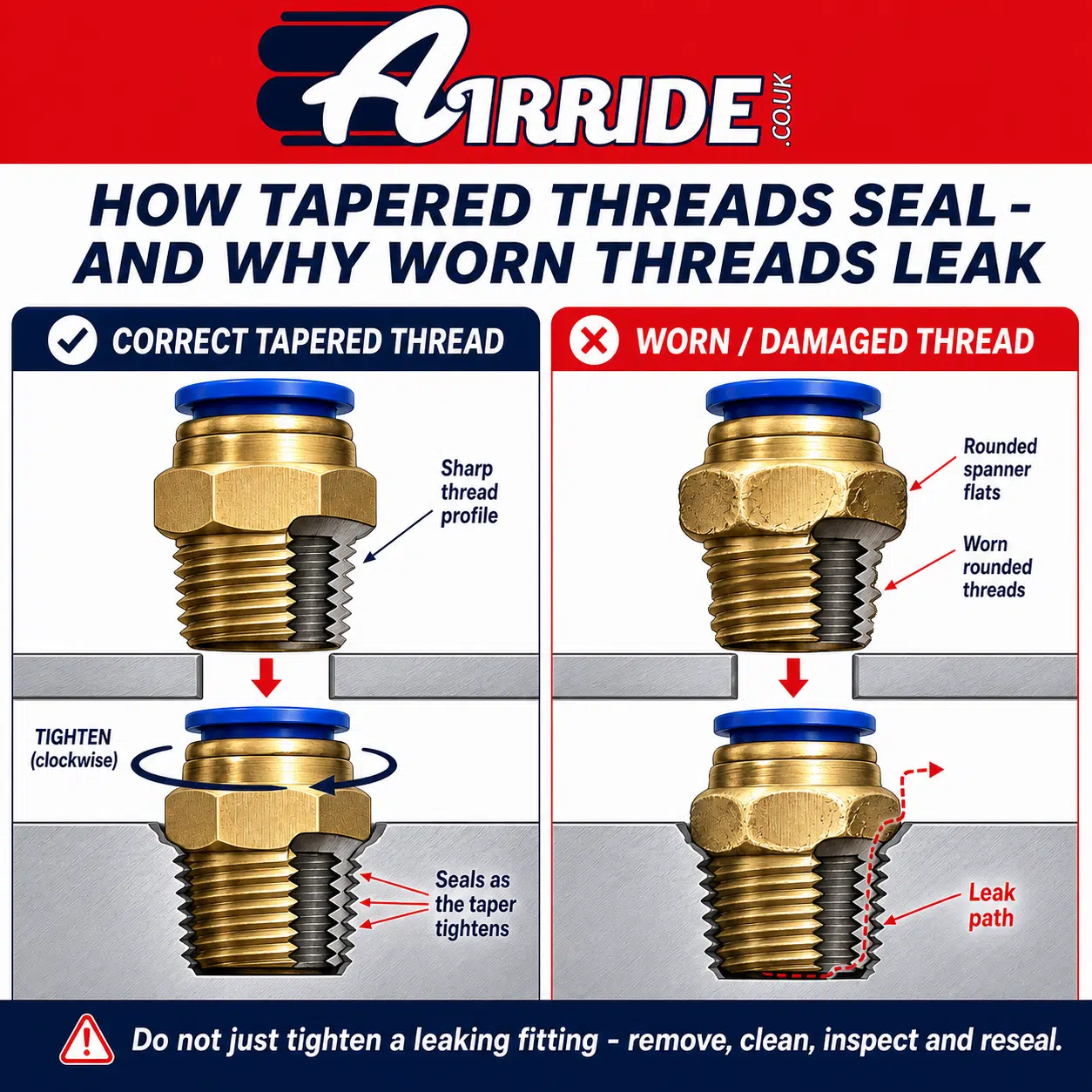
One of the most common mistakes is also one of the most tempting: do not simply tighten the union.
It feels logical. If air is leaking from a fitting, surely tightening it a little more will help? It is a tapered thread on most fittings, so that will work, won't it?
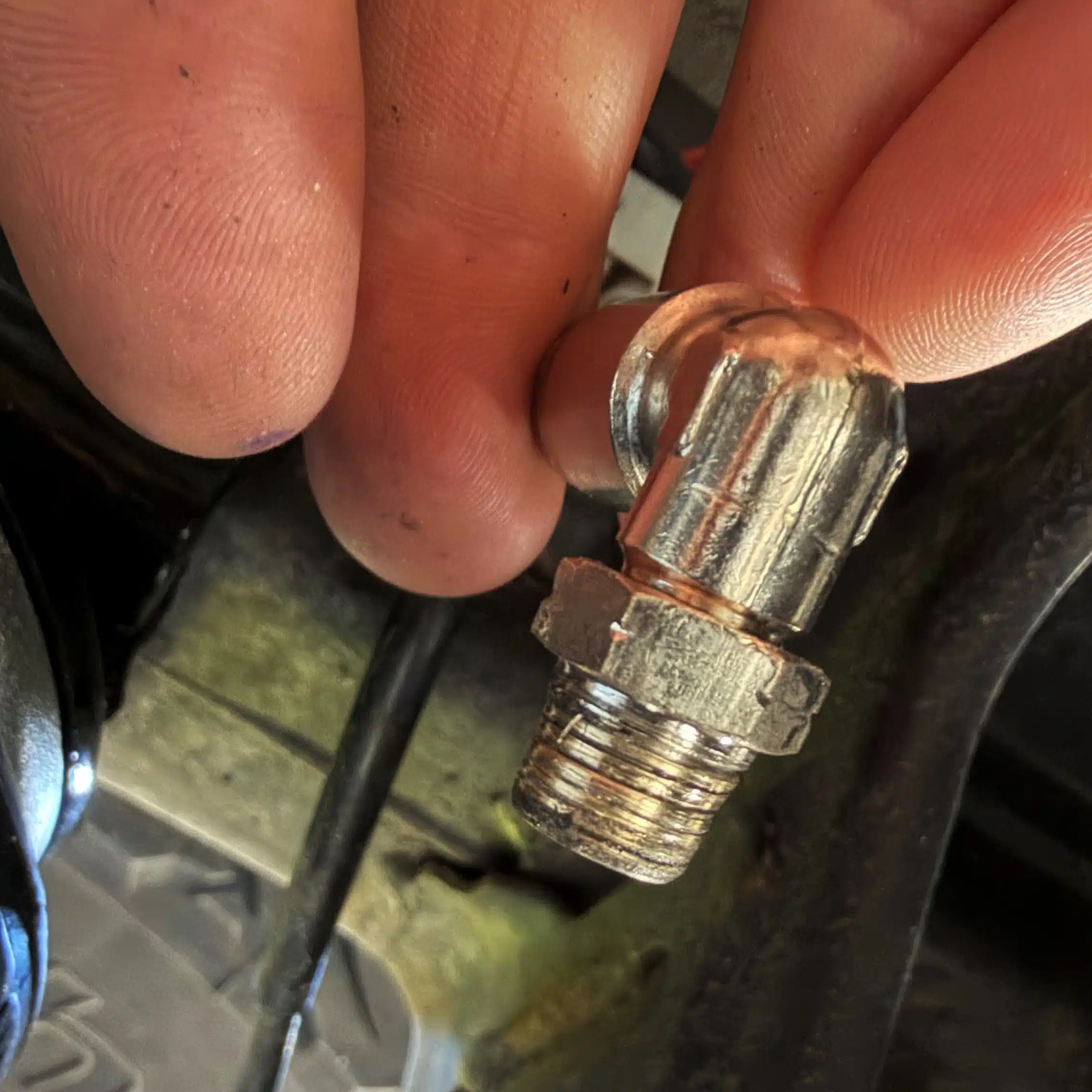
In reality, it rarely does. More often, it damages the fitting, damages the thread, or both. At AirRide, the fittings we install are normally sealed using liquid PTFE thread seal. When installed correctly, these unions are extremely reliable. However, no air system is completely immune from leaks forever. If a leak does appear, the right repair is not brute force. The right repair is to remove, clean, inspect, reseal, and reassemble.
Why Tightening the Fitting Is Usually the Wrong Answer
Most threaded air suspension fittings are not designed to be endlessly tightened.
If a fitting is leaking from the thread, there is usually a reason. It may have disturbed sealant, contamination in the thread, a damaged fitting, an old seal, or a thread that needs cleaning. Simply turning the fitting tighter often does not fix the underlying problem. It will regularly make the situation worse.
What it can do is:
- Round off or damage the fitting.
- Crack or distort the fitting body.
- Damage the tapered thread.
- Tear material out of the component the fitting screws into.
- Turn a simple resealing job into a much more expensive repair.
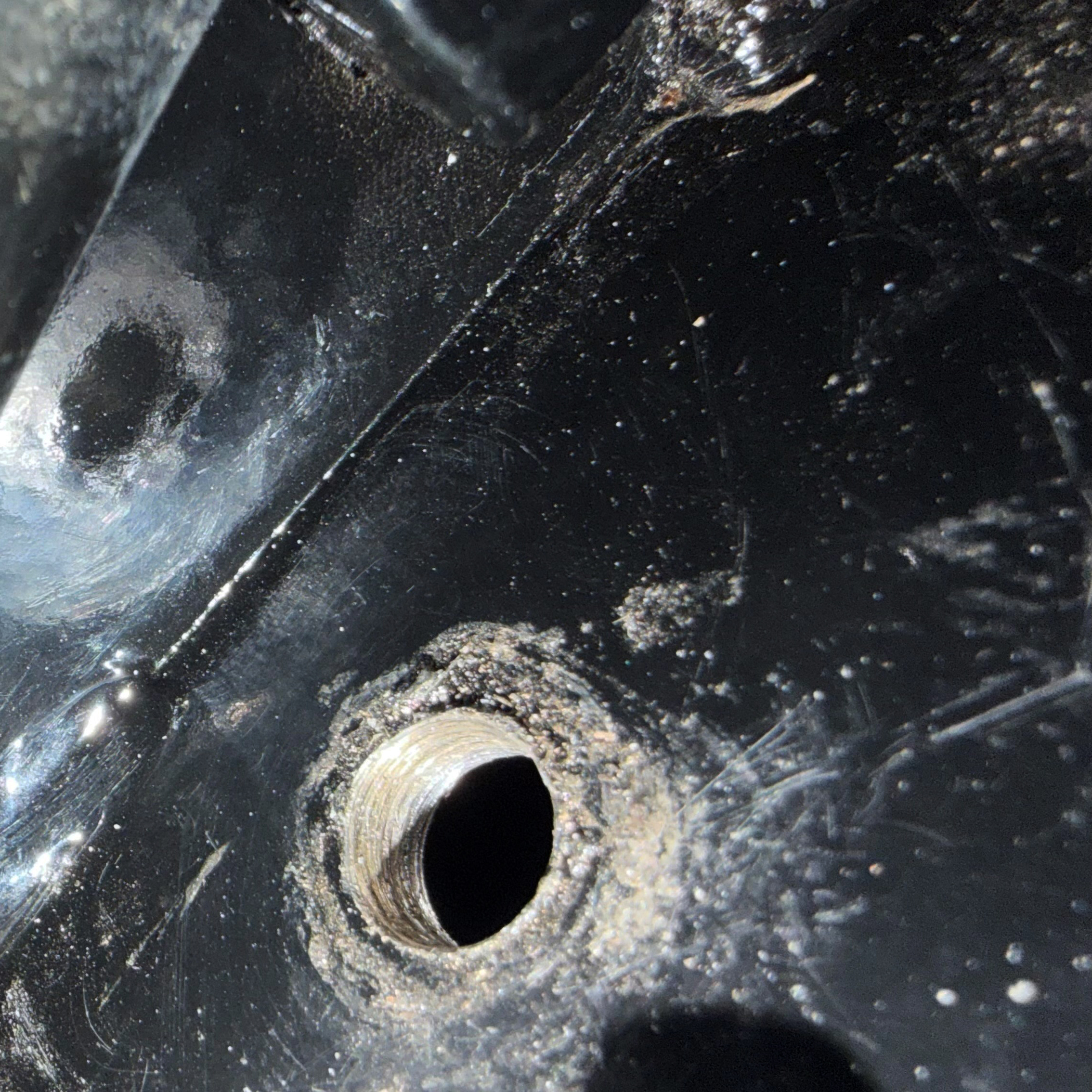
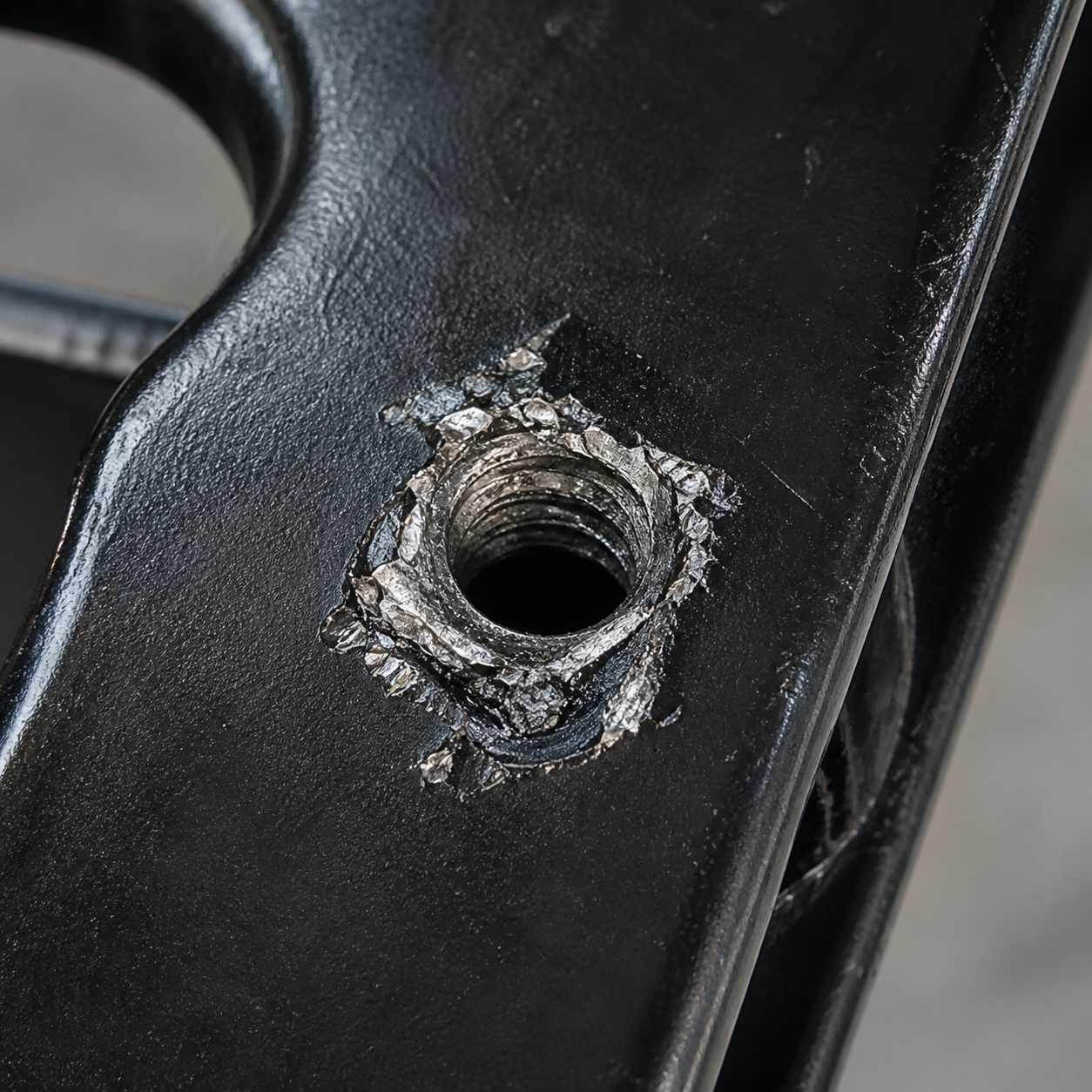
A damaged fitting is normally easy enough to replace. A damaged thread in a tank, suspension bracket, valve block, or strut is a different matter. That can be awkward, time-consuming, and expensive to repair. It may require replacement of the component.
This article was prompted by a real example. A customer recently had a small leak. Rather than removing and resealing the fitting, he tried tightening it. The result was a damaged fitting and, more seriously, a torn-out thread. What should have been a simple cleaning and resealing job became a much bigger problem.
Most Air Suspension Threads Are Tapered
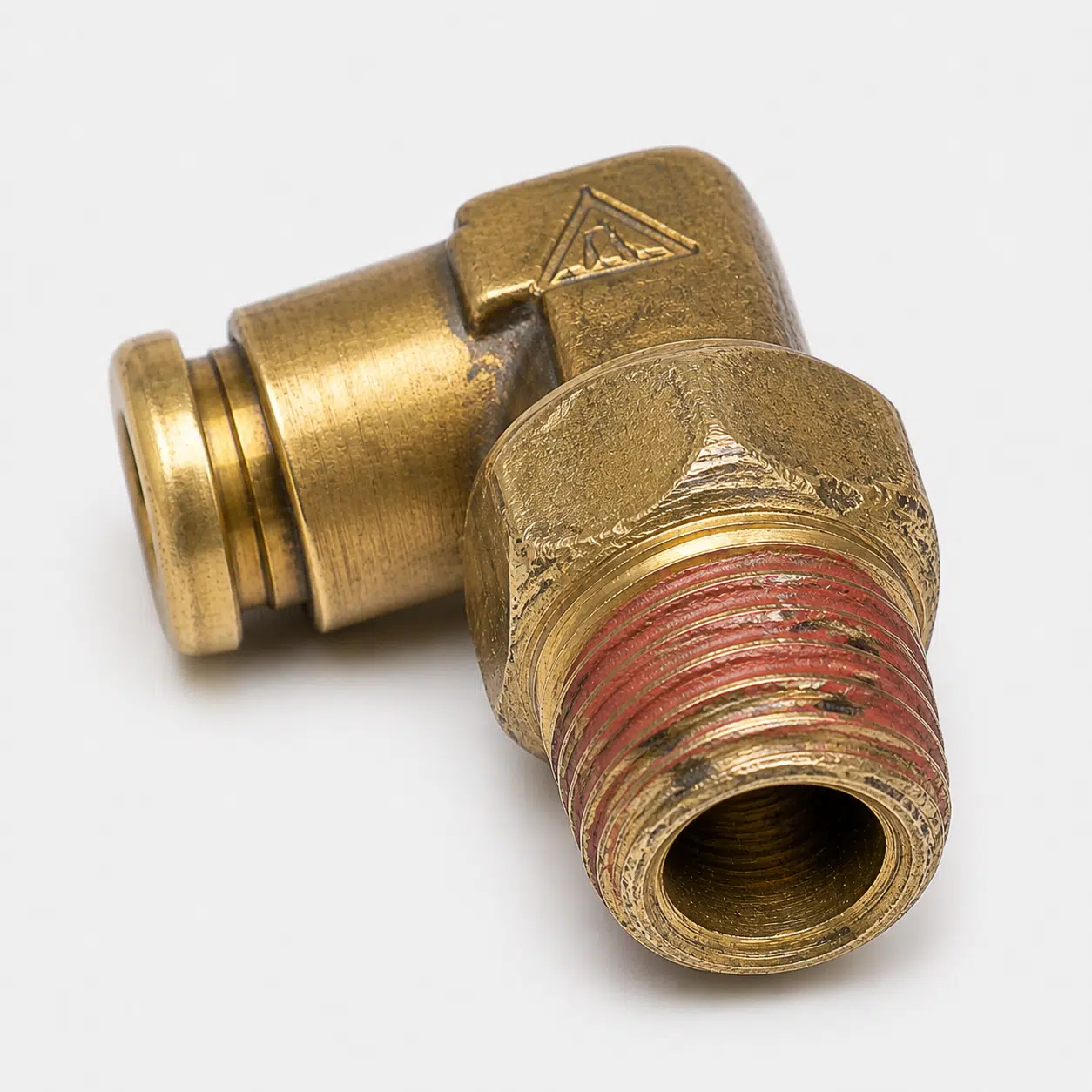
Many of the fittings used in air suspension, and almost all used on our AirRide suspension systems, are either 1/8 NPT or 1/4 NPT. NPT is a tapered thread. That means the thread tightens progressively as it screws in. It does not work like a normal parallel bolt thread where you simply tighten it against a face.
Because the thread is tapered, over-tightening can force the fitting too far into the component. This can damage the female thread, split softer materials, or tear the thread out completely.
This is why technique matters.
The Correct Way to Repair a Leaking Threaded Fitting
If you suspect a leak from a threaded fitting, the correct repair method is straightforward.
1. Depressurise the System Safely
Before working on any air suspension component, make sure the system is safely depressurised. Do not remove fittings from a pressurised system. Air pressure can eject fittings, airline, or debris with force.
2. Remove the Fitting
Remove the leaking fitting fully. Do not just move it a quarter turn and hope for the best.
Once the fitting is out, you can properly inspect it and the thread it screws into.
3. Clean the Fitting
Remove old thread sealant, dirt, corrosion, and any loose material from the fitting. You can do this with a wire brush and, where suitable, some solvent. If you have one, an NPT die can also assist.
Check carefully for damage. Look for:
- Rounded spanner flats.
- Damaged or flattened threads.
- Cracks in the fitting body.
- Distortion from over-tightening.
- Old hardened sealant stuck in the thread.
If the fitting looks damaged, replace it. Fittings are relatively inexpensive. Damaging the part it screws into is not.
4. Clean the Female Thread
The female thread also needs to be cleaned. This is the part in the tank, bracket, strut, valve block, or other component.
Old sealant can sit inside the thread and prevent the fitting from seating properly. Dirt or damaged material can do the same. A suitable NPT tap can be used carefully to clean the thread. These taps are readily available online, and even a cheap tap can often clean out a thread well enough to save it.
The aim is not to aggressively cut a new oversized thread. The aim is to clean the existing one and remove debris, sealant, and minor damage.
Remove all swarf and loose material - ideally with a vacuum, not an airline, which can blow debris deeper into the system. You may need to remove the tank or other part you are repairing so it can be cleaned properly.
5. Inspect Both Parts
Once everything is clean, inspect the fitting and the female thread. Ask yourself whether the fitting will still screw in dry and tighten smoothly by hand.
If the thread is badly damaged, stop. Forcing another fitting into a damaged thread may make the repair harder.
6. Identify the Correct Replacement Fitting
If the fitting needs replacing, make sure you order the right one.
You will need to know:
- Is it a straight fitting or a 90-degree elbow?
- Is the thread 1/8 NPT, 1/4 NPT, or something else?
- What size airline does it accept?
- Is the airline 1/4 inch, 3/8 inch, 1/2 inch, or metric?
- Is it push-to-connect, compression, barbed, or another fitting type?
At AirRide, we only use push-to-connect, or PTC, type fittings, which seal on the outside of the airline. Some other manufacturers use barbed fittings. The most common airline size in many air suspension systems is 1/4 inch, but you should always check. Guessing can easily lead to ordering the wrong part.
7. Apply Liquid PTFE Thread Seal
Before reinstalling the fitting, coat the thread with liquid PTFE thread seal. We use liquid PTFE because it works as both a lubricant and a sealant. It helps the fitting screw in smoothly and helps create an airtight joint.
It is also quite forgiving of slight damage, although we would always recommend changing a damaged fitting as the preferred solution. We cannot guarantee that sealant will seal a damaged thread.
Even if the fitting already has manufacturer-applied sealant on it, we still recommend liquid PTFE. The pre-applied sealant is not always enough on a new fitting, and this is especially true if the fitting has been removed and refitted.
Do not apply excessive sealant inside the fitting where it could enter the air system. Apply it to the thread in a sensible, controlled way.
Do not, under any circumstances, use plumber's PTFE tape. In our experience, it does not seal as reliably, is not as reliable over time, and bits can break off and enter the system. We do not use PTFE tape on any system we install. We recommend use of our sealant available HERE. We supply it free with all complete systems we sell.
8. Reassemble Carefully
Refit the union carefully.
Start it by hand to make sure it is not cross-threaded. If it does not start cleanly, stop and inspect it again. Tighten it enough to seal, but do not force it. With tapered threads, tighter is not always better. The fitting should be secure, correctly positioned, and sealed, not driven in until something gives way.
9. Allow Time for the Sealant to Cure
If possible, leave the joint for at least an hour before pressurising the system.
If you have plenty of time, leave it for 24 hours. This gives the sealant more time to cure and gives the best chance of a reliable repair. In the real world, repairs sometimes need to be done more quickly, and this is acceptable, but where time allows, a better seal will be achieved.
Our sealant cures in the absence of air - in other words, inside the threads. The outside air-exposed part may remain sticky. The sealant is not an adhesive, and it will still allow the components to be removed in the future.
10. Test the Repair
Once reassembled and cured, pressurise the system and test for leaks.
A soapy water test is still one of the simplest and most useful methods. Spray the area and watch carefully for bubbles.
If bubbles appear, do not simply tighten the fitting again. Depressurise the system, remove the fitting, and inspect it or replace it.
A Small Leak Is Usually a Small Job - Until It Is Made Worse
A small air leak is annoying, but it is usually not a disaster.
The problem comes when a small leak is attacked with a spanner instead of repaired properly. A damaged fitting can be replaced. A torn thread in a tank, bracket, strut, or valve block is much more serious.
So the rule is simple:
If a threaded fitting leaks, do not just tighten it. Remove it, clean it, inspect it, reseal it with liquid PTFE, refit it carefully, allow it to cure if possible, and then test it.
That approach takes a little longer, but it can save a lot of money, damage, and frustration.

01
Apr
2026
Happy Easter 2026

Easter Opening Hours
Our sales office and phone lines will be closed on Good Friday and Easter Monday, so there will be no telephone service during the Easter weekend.
There will be limited support available by email, but please note that most enquiries will be responded to when our sales office reopens on Tuesday 7 April.
Orders and Dispatch Over Easter
Automated in-stock orders placed through our website during this time may still be dispatched over the Easter period where possible.
Please note that some courier companies may accept shipments during the Easter period but will not deliver them on public holidays. This means tracking may update before the parcel is actually delivered.
Technical Support During the Bank Holiday
We know that many customers install products at weekends and during bank holidays. If you require technical assistance during the Easter weekend, please email us using the subject line Technical.
We will endeavour to reply to technical enquiries within 24 hours, although this may depend on the nature of the query and the availability of the relevant team member.
Get in Touch
Need to contact us over Easter?
- Email us: ENQUIRIES@AIRRIDE.UK
Happy Easter from the AirRide team.
17
Mar
2026
Fiat Ducato Air Suspension – Heavy Duty Rear Kits for Ducato, Boxer, Relay and Jumper
If you own a Fiat Ducato, Peugeot Boxer, Citroen Relay or Citroen Jumper based van, camper or motorhome, there is a good chance that air suspension will make a very worthwhile difference to the way it drives, sits and copes with load. These vehicles have been one of the most important bases for European motorhomes for many years, and for AirRide they remain one of the biggest parts of our van and motorhome air suspension business.
In fact, our rear load support kits for the Ducato platform are our single most popular load support kits, accounting for around a third of all the load support kits we sell. For much of the last twenty years, Ducato based motorhomes made up the majority of the market. That is changing somewhat now as more manufacturers move towards Ford based vehicles, but the Ducato, Boxer, Relay and Jumper platform is still one of the most common and most important vehicle families on the road.
With the weather improving and more owners starting to think about weekends away, holidays, touring and getting their vehicle ready for the season ahead, now is a very good time to upgrade. We currently have good stock of popular Ducato air suspension kits and can also advise on front struts and AL-KO applications.
Why Fiat Ducato motorhomes and vans so often benefit from air suspension
The Fiat Ducato and its sister vehicles are used for panel vans, camper conversions, coach built motorhomes, A-class motorhomes, minibuses and commercial vehicles. That flexibility is one of their strengths, but it also means many of them work hard and carry a lot of weight. Water tanks, passengers, tool kits, mobility equipment, bikes, tow bars, scooter racks, luggage and general conversion weight can all take their toll on the rear suspension.
Many motorhomes are effectively running too close to the bump stops for comfort. When that happens, you lose suspension movement, ride quality gets harsher, the rear end can sag, the vehicle can feel less settled and the whole thing becomes more susceptible to wallowing, crosswinds and the buffeting effect of large passing vehicles.
A good rear air suspension kit for a Fiat Ducato, Peugeot Boxer, Citroen Relay or Jumper can help recover lost suspension motion, improve ride quality, improve stability, reduce sagging and help the vehicle sit and drive more as it should.
The toughest Ducato rear load support kit we know of
We believe the Boss bagged rear load support kit we supply for lifted Fiat Ducato, Peugeot Boxer, Citroen Relay and Jumper applications is the heaviest duty kit on the market that we know of.
- Heaviest duty bags we know of
- Heaviest duty brackets we have seen
- Proper high quality fittings
- Extremely simple bolt-on fitting
- Designed specifically for hard-working vans, campers and motorhomes
That matters because all air suspension kits are not the same. The internet is full of low-priced air bag kits, unbranded bags, weak brackets and poor fittings. In this market, cheap often means compromised. Suspension parts are carrying real load on heavy vehicles, so bracket design, steel thickness, bag quality and fittings quality all matter a great deal.
Boss Extreme air bags - serious specification for serious vehicles
This rear kit uses two Boss Extreme double convoluted air bags. These are rated in use at 1136 Kg per side (max 2000 Kg per side) and have been government approved tested to over 750 psi. They can be used up to 400 psi and are recommended at a maximum of 160 psi in service. Most owners will never need anything like those figures in normal use, but that huge reserve of capacity tells you a lot about the specification of the bags.
In normal motorhome use, pressures are often far lower than the bag is capable of, which is exactly how we like it. It means the kit is working well within a robust design range rather than near its limit.
Heavy duty 6 mm brackets and proper support
The brackets are just as important as the bags. Our Ducato based rear kits use proper heavy duty steel brackets made from 6 mm steel with real braces and supports where required. A good air bag fitted to a poor bracket is still a poor kit. Brackets must be designed to carry the load safely and properly without slipping, bending or creating issues elsewhere.
We do not use pressed single-piece brackets of the type known to cause chassis damage on this application (due to not spreading the heavy load over a large enough area). Our brackets are properly designed for the job, built for strength and support, and this kit is made in Norwich.
Over the years we have replaced or advised against a lot of poor quality kits. That is one of the big differences between dealing with an air suspension specialist and buying blind from a generic seller. We do not just move boxes. We have years of practical experience in supplying, fitting and supporting air suspension systems.
Easy to fit - no drilling, no nonsense
One of the biggest selling points of this Fiat Ducato rear air suspension kit is that it is also one of the easiest to fit. On the correct vehicles, it replaces the bump stops with heavy duty brackets and bags, and the installation is extremely straightforward. Remove the bump stop and fasten the new assembly in place. That is it.
No unnecessary complexity, no elaborate fabrication and no drilling for the basic mechanical installation. That makes it attractive for capable DIY owners, local garages and professional installers alike.
What are the real world benefits?
A properly chosen and properly fitted air suspension assistance kit for a Fiat Ducato, Peugeot Boxer, Citroen Relay or Jumper can help with a wide range of common complaints.
- Improves ride quality
- Helps recover lost suspension movement
- Lifts a sagging rear end
- Improves stability and handling
- Reduces wallowing
- Helps with crosswinds and passing lorries
- Improves behaviour with bike racks, carriers and towing
- Helps reduce grounding on ramps, ferries and awkward driveways
- Can make the vehicle feel more controlled and more comfortable
For many motorhome owners, the biggest difference is that the vehicle simply feels more composed and more pleasant to drive.
Important - not every Ducato based vehicle takes the same rear kit
This is where real experience matters. Many sellers advertise one kit as fitting everything from the mid-1990s onward. In our experience, it is not always that simple.
Newer Fiat Ducato, Peugeot Boxer, Citroen Relay and Jumper models, particularly post-2020 vehicles, often need a different lower profile rear kit because there is less room between the chassis and leaf spring near the bump stop area. Some earlier vehicles may also need the lower kit if there is limited space, especially on heavier conversions.
We have seen examples where a standard style kit can be physically installed but the bags end up too compressed to work properly. In that situation, ride quality can actually get worse rather than better. That is why choosing the correct kit matters.
As a general guide, if there is less than 200 mm of room between the chassis and the leaf spring at the intended ride height, you may need the lower or later type of kit. If you are unsure, contact us and we will help you identify the correct option.
We are also often asked about later vehicles with an electronic handbrake and vehicles fitted with composite rear leaf springs. This kit can be fitted to both, and always has been able to. If you are unsure about your exact suspension specification, just contact us and we will be happy to advise.
We also offer Fiat Ducato front struts
AirRide also offers front struts for all post-2006 Fiat Ducato based vehicles and for some post-2000 vehicles as well. These front strut solutions are ideal for owners wanting more control over front ride height, better balance, improved front end behaviour or a more complete air suspension solution.
If your vehicle is heavier than average, is an A-class motorhome, or you want a more advanced setup than rear assistance alone, please ask us about front air struts.
AL-KO chassis Ducato, Boxer, Relay and Jumper kits also available
Many motorhomes based on the Fiat Ducato, Peugeot Boxer, Citroen Relay and Jumper platform use AL-KO chassis rather than the standard rear suspension arrangement. We also offer kits for AL-KO based vehicles, but the fitment details can vary and some applications need additional advice before ordering.
If you have an AL-KO based motorhome, please contact us for more details and we will point you in the right direction.
Why buy from AirRide?
We are air suspension specialists with one of the largest product ranges in the market and more experience in this field than any company we know of. We deal with real installations, real customer problems and real vehicle differences. That practical knowledge makes a big difference when you are trying to choose the correct kit for a specific van or motorhome.
We do not compromise safety or specification just to get the price down. Even our basic kits are chosen and supplied with reliability, fitment and proper support in mind.
Get your Ducato air suspension sorted before the season gets busy
If your Fiat Ducato, Peugeot Boxer, Citroen Relay or Citroen Jumper is sitting low, riding poorly, grounding out, feeling unstable or simply not performing as it should, now is a very good time to sort it out. We currently have good stock of popular Ducato rear load support kits and can also advise on later vehicles, front struts and AL-KO applications.
Call AirRide on 0800 772 0315 or email enquiries@airride.uk for advice on the correct kit for your vehicle.
Whether you know it as a Ducato, Boxer, Relay or Jumper, we can help you choose a proper heavy duty air suspension solution that is built to do the job properly.
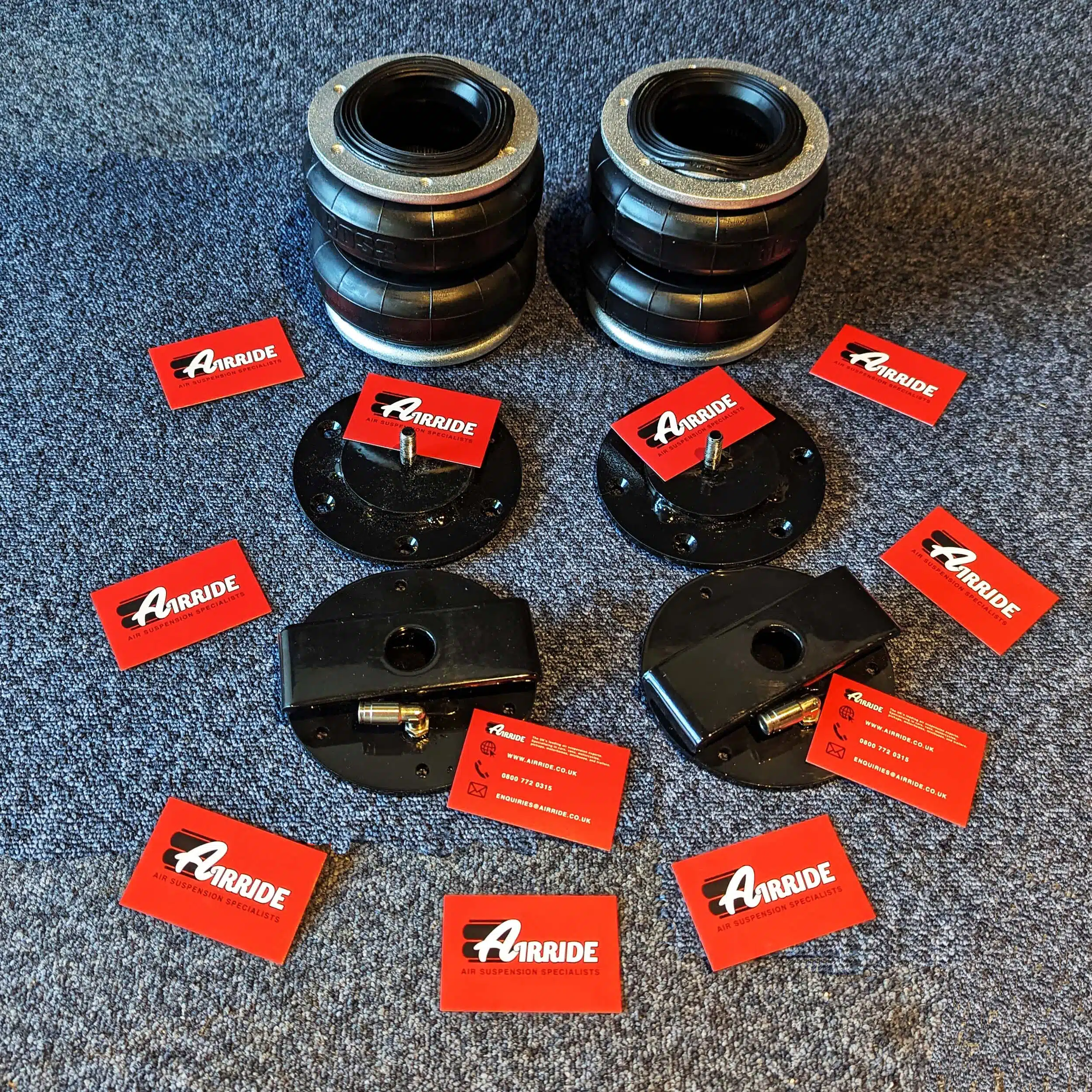

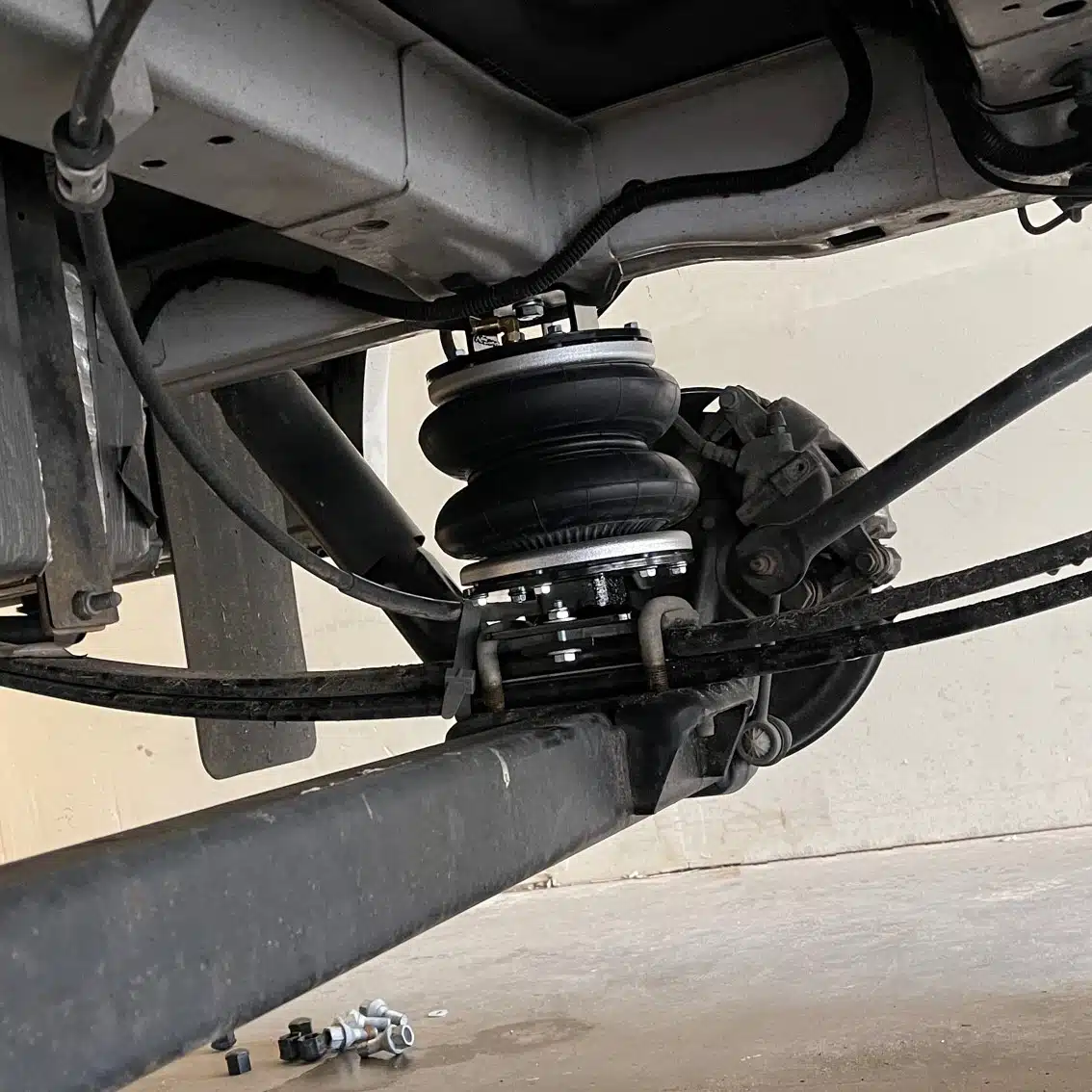
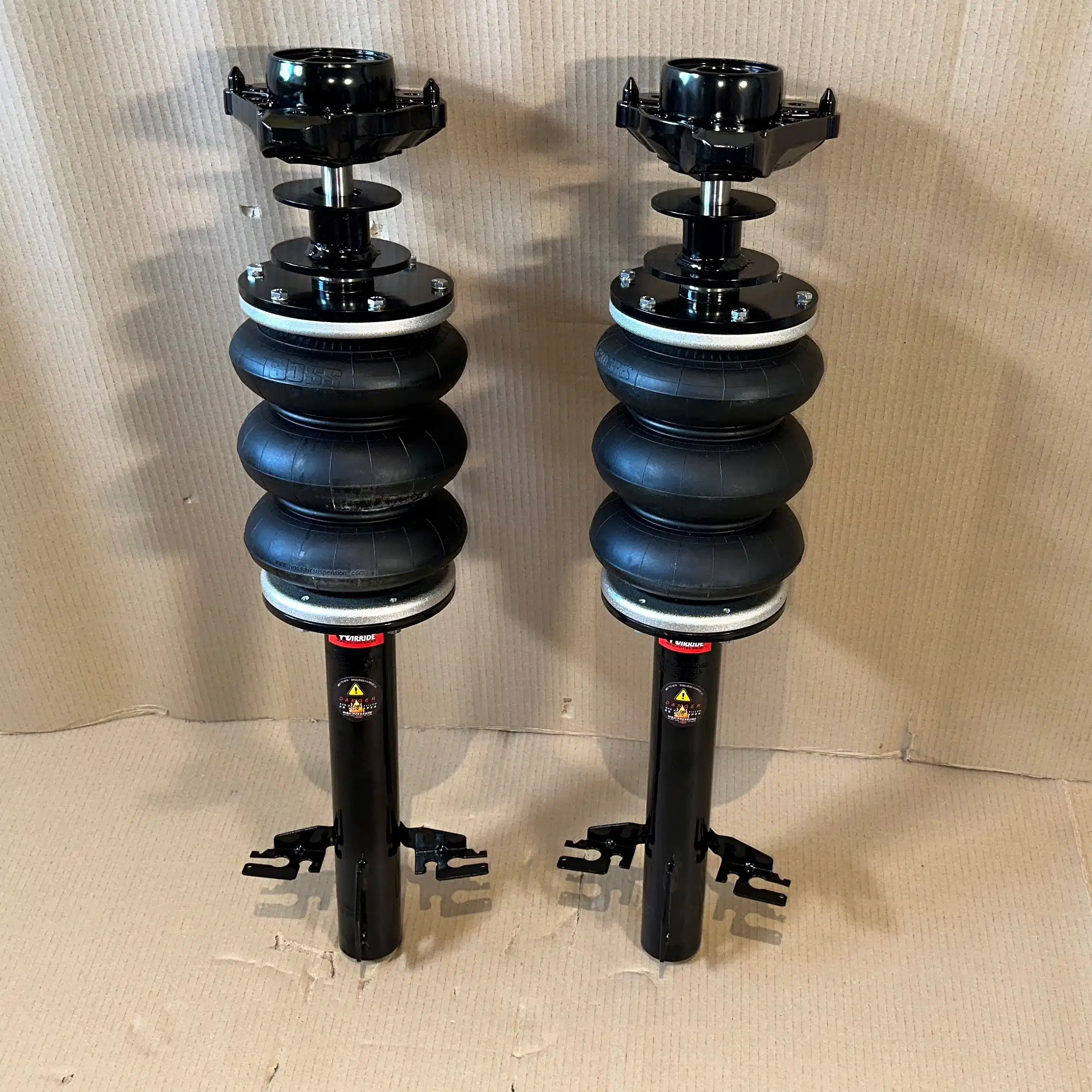
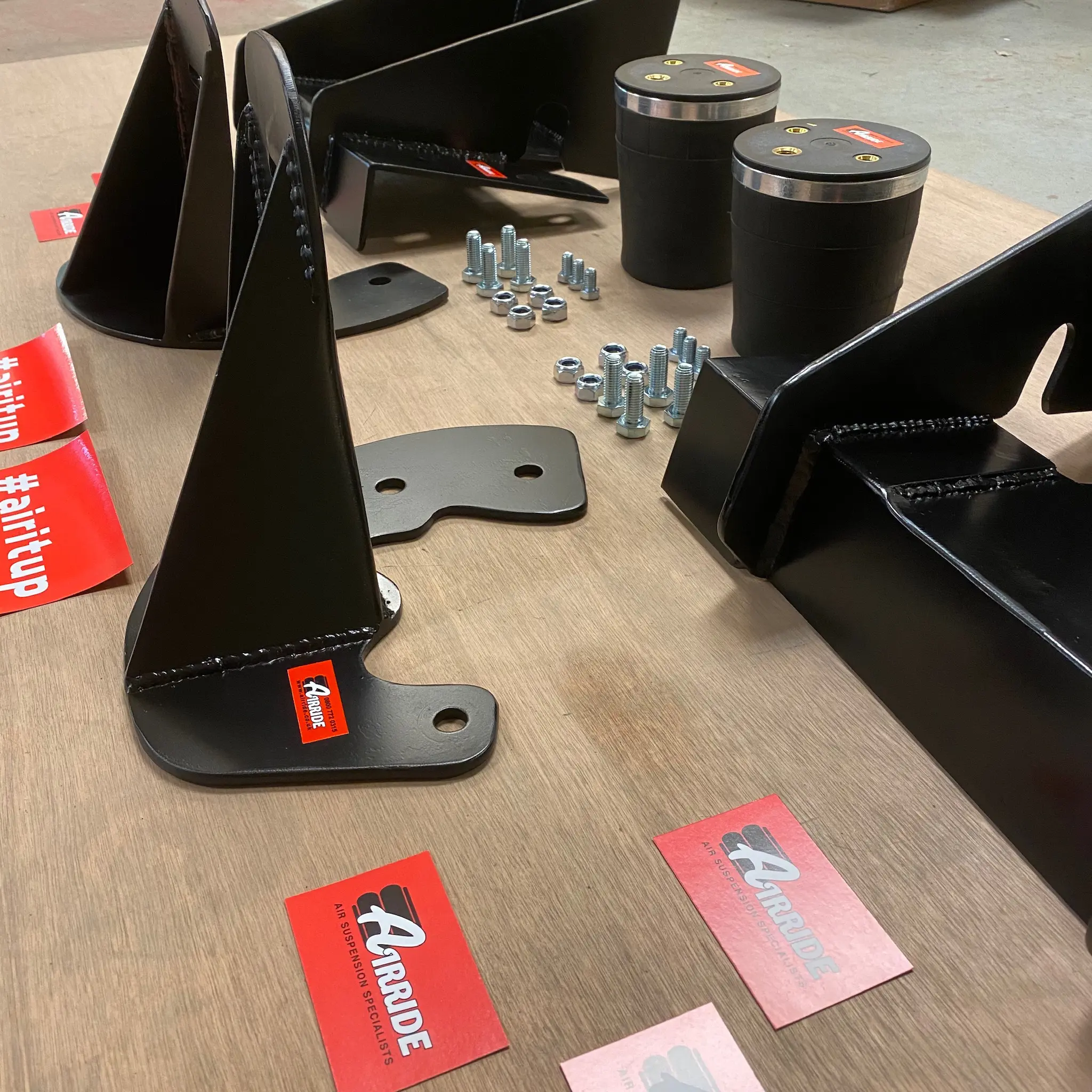
10
Feb
2026
ALP4 has arrived!


AirLift Performance has recently added a new controller, ALP4, to their range of products. It retains all of the benefits of the iconic 3P whilst introducing new features and being the most advanced and most customizable air suspension system ALP has ever built.
As the company state on their website, 'From the moment you install it to the way you dial in your setup, every detail is made to give you more control, more style, and a better ride.'
With ALP4 you get the all-in-one smart manifold AirLift Performance is famous for plus a customisable LED top cover with 15 colour options. A sharp 3.5-inch display gives you full system control with a tap. Four programmable buttons let you instantly access presets, air-out, and other custom functions. Power management wise, you get advanced standby mode and ultra-low power draw, whereas new options include Valet Mode and Adjustable Pulse Rate - it's a setup that that looks as good as it performs.
The complete ALP4 digital controller pack is available here. ALP4 can also be used as a drop-in upgrade for 3P and 3H users with no need to rewire and is available on its own here.
What is happening to 3P/3H, you might ask. Nothing: both are readily available and will co-exist with the new ALP4.
Need more information? Please call us on 0800 772 0315 or send an email to ENQUIRIES@AIRRIDE.UK
06
Jan
2026
Winter is here! Air suspension in cold weather
After a very mild December, winter has arrived. Us East Anglians mostly see snow on TV but at the moment we ourselves are scraping ice off windscreens and driving on snowy roads. As a result, we've had enquiries from people concerned about their air suspension so here are a few tips for the current weather conditions...
Cold weather can present challenges in cold weather, especially for retrofit or aftermarket systems. These challenges primarily arise from two factors: moisture freezing inside the system and reduced elasticity of rubber components in low temperatures. Proper maintenance and preparation can help you ensure your air suspension system functions reliably, even in the harshest winter conditions.
Key Challenges and Solutions
1. Moisture Freezing Inside the System
Condensation is a natural by-product of air compression, but in cold weather, any moisture inside your system can freeze, leading to blockages in airlines, valves, and fittings.
How to Prevent Freezing Issues:
-
- Drain the Air Tank Regularly: Water accumulates in the tank over time. Draining it monthly - or more often in humid climates - prevents water buildup that could freeze.
- Add Airbrake Antifreeze: Specifically designed for pneumatic systems, airbrake antifreeze can be added to the airlines to prevent freezing in extreme conditions. This is especially important if your vehicle is used in subzero climates.
- Install a Water Trap, Dryer, or Cooling Coil: Water traps capture condensation before it enters the airlines, while air dryers actively remove moisture. Cooling coils can also help by condensing and collecting water vapor before it freezes. These are effective upgrades to ensure a dry air supply year-round.
2. Reduced Elasticity of Rubber Components
At low temperatures, rubber becomes less elastic, which can impact the flexibility and performance of air bags.
How to Maintain Rubber Components:
- Use Branded, Subzero-Rated Air Bags: Most high-quality branded air bags are rated for temperatures between -30° C and 70° C, making them suitable for year-round use. Choose air bags with these ratings to ensure durability in freezing conditions.
- Inspect Regularly for Damage: Check for cracks, hardening, or brittleness in the air bags and hoses. Catching issues early can save you from unexpected failures in extreme weather.
Air suspension systems are used all over the world. Vehicles like Range Rovers and Bentleys, which often come with factory-installed air suspension, are designed to operate in freezing conditions. Additionally, many buses, lorries, motorhomes, and 4x4s use air suspension in cold environments, such as the Baltic States, Nordic countries, and ski resorts.
The key to reliability in these conditions is proper moisture control and quality components. With regular maintenance, freezing issues can be entirely avoided - even in temperatures as low as -30° C.




23
Dec
2025
Christmas hours
We can't believe it's that time of the year again! Where did 2025 go?! It seems like time just keeps accelerating... We've had another really busy year so our festive break will be very brief.
December 24 - CLOSED (calls will be answered by our call centre staff 9am - 3pm)
December 25 - CLOSED
December 26 - CLOSED
December 29 - business open as usual
December 30 - business open as usual
December 31 - open half day (calls will be answered by our call centre staff 9am - 3pm)
January 1 - CLOSED
January 2 - open 10am - 3pm
Please note that our call centre staff cannot assist beyond taking messages and we won't be able to do any callbacks before Dec 29. Emails will not be monitored between Dec 25-26. There will be limited email support available between Dec 31 - Jan 2.
Automated in stock orders placed via our website will be dispatched over the Bank Holiday period but if something is needed urgently please email us beforehand. Made-to-order items will be manufactured in the New Year.
We know that many customers install products over the festive period so if you require technical assistance then please email us at ENQUIRIES@AIRRIDE.UK using the subject 'Technical' so we could spot and get back to you quicker.
Merry Christmas and a Happy New Year everyone!

26
Nov
2025
New TA Technix kits added
We've recently added 2 new TA Technix kits to our website: Ford Fiesta Mk1 and Audi 100 C1.
The Mk1 Fiesta launched in the UK in 1977 and was the first Ford car to feature a transverse engine and front-wheel-drive layout. Praised for its affordability and low running costs, it was an instant success in the fast-growing supermini category - a trend accelerated by the 1973 oil crisis. Over a million Mk1 Fiestas were sold during its production run!
As for the Audi 100, it has got quite a history. Originally developed in secret by Ludwig Kraus, the chief engineer at Auto Union, which was acquired by Volkswagen in 1964, defying a direct order from then-VW boss Heinrich Nordhoff and named in reference to the 100 PS (74 kW) horsepower output of its engine, the car became a huge success with demand outstripping supply. Over 800 000 units were produced and the C1 helped to establish Audi's reputation for high-quality vehicles. Why had Nordhoff forbidden the development of any new Auto Union vehicles? Turns out it was his lack of faith in the product team.
Why choose TA Technix? The paths of AirRide and TA Technix first crossed at a car show many moons ago, and we were impressed by their engineering and value for money. The drop is impressive, the handling is maintained, and the kits are the cheapest in our AirRide range, making them perfect for budget conscious racer boys and girls.
We try to add the latest kits to our website, however, if you can't see what you're after, please call or email. We can supply any TA Technix kit, as well as spare parts.
Please note that car kits/spares are not held in stock and would need to be ordered in - contact us for lead times.
Need more information? Call us at 0800 772 0315 or send an email to ENQUIRIES@AIRRIDE.UK!