Air suspension is very reliable when it is installed properly, but air has one annoying habit - it likes to escape.
Most leaks are small. Common causes include:
- Damaged airline.
- Cheaply made, poor-quality fittings, air bags, valves, or other components.
- Poorly cut pipe.
- Old components.
- Threaded fittings that need cleaning and resealing.
The important thing is not to panic and not to make the problem worse.
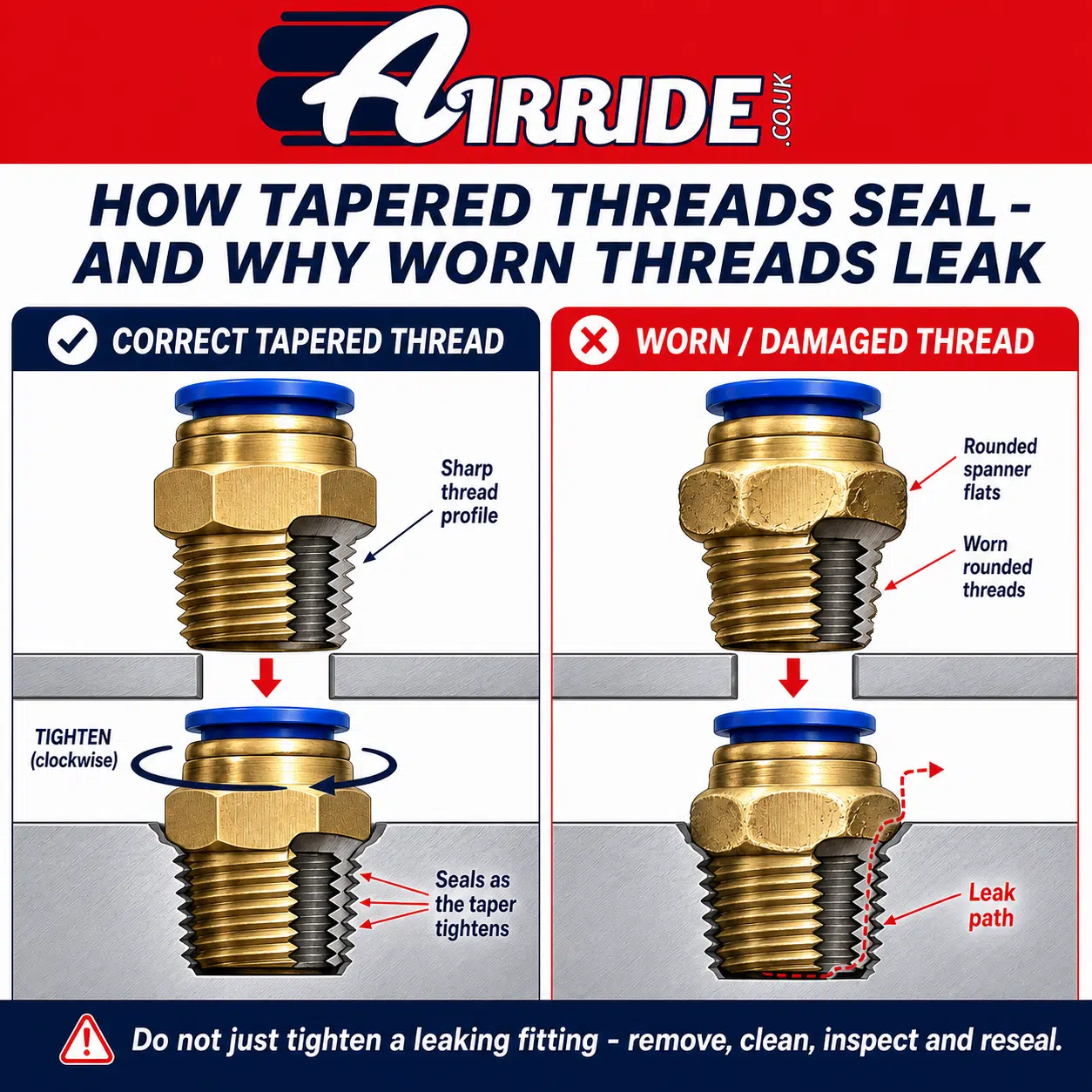
One of the most common mistakes is also one of the most tempting: do not simply tighten the union.
It feels logical. If air is leaking from a fitting, surely tightening it a little more will help? It is a tapered thread on most fittings, so that will work, won't it?
In reality, it rarely does. More often, it damages the fitting, damages the thread, or both. At AirRide, the fittings we install are normally sealed using liquid PTFE thread seal. When installed correctly, these unions are extremely reliable. However, no air system is completely immune from leaks forever. If a leak does appear, the right repair is not brute force. The right repair is to remove, clean, inspect, reseal, and reassemble.
Why Tightening the Fitting Is Usually the Wrong Answer
Most threaded air suspension fittings are not designed to be endlessly tightened.
If a fitting is leaking from the thread, there is usually a reason. It may have disturbed sealant, contamination in the thread, a damaged fitting, an old seal, or a thread that needs cleaning. Simply turning the fitting tighter often does not fix the underlying problem. It will regularly make the situation worse.
What it can do is:
- Round off or damage the fitting.
- Crack or distort the fitting body.
- Damage the tapered thread.
- Tear material out of the component the fitting screws into.
- Turn a simple resealing job into a much more expensive repair.
A damaged fitting is normally easy enough to replace. A damaged thread in a tank, suspension bracket, valve block, or strut is a different matter. That can be awkward, time-consuming, and expensive to repair. It may require replacement of the component.
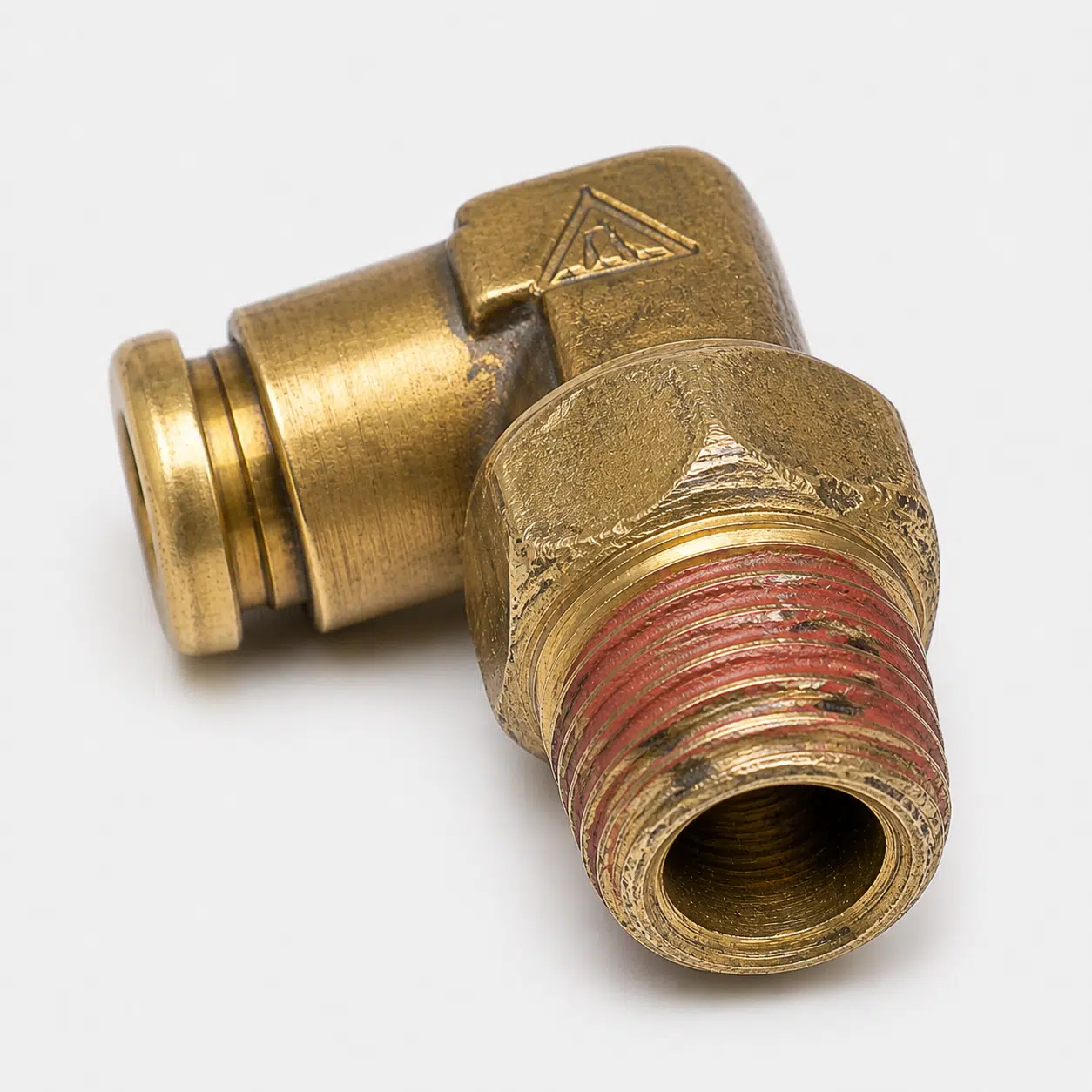
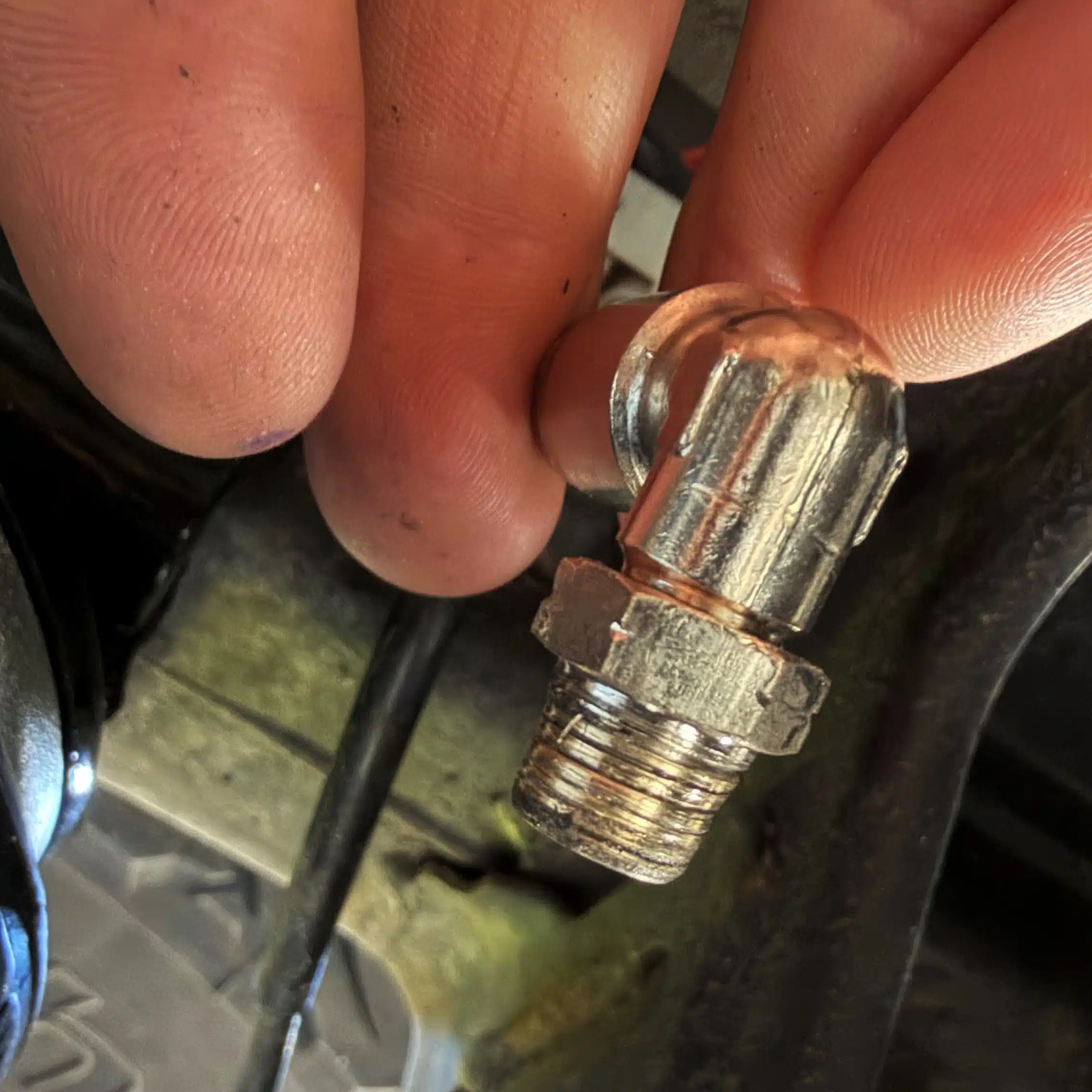
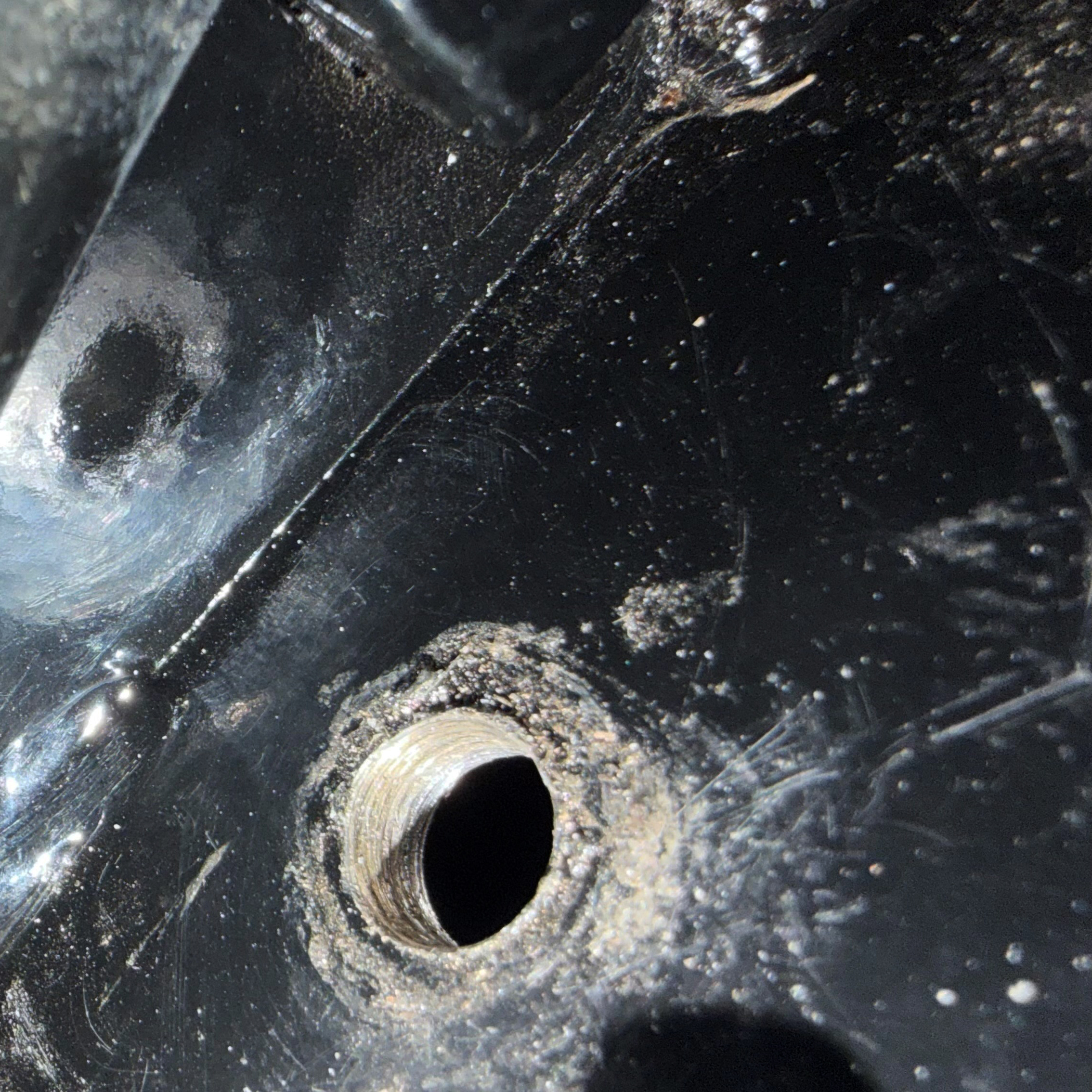
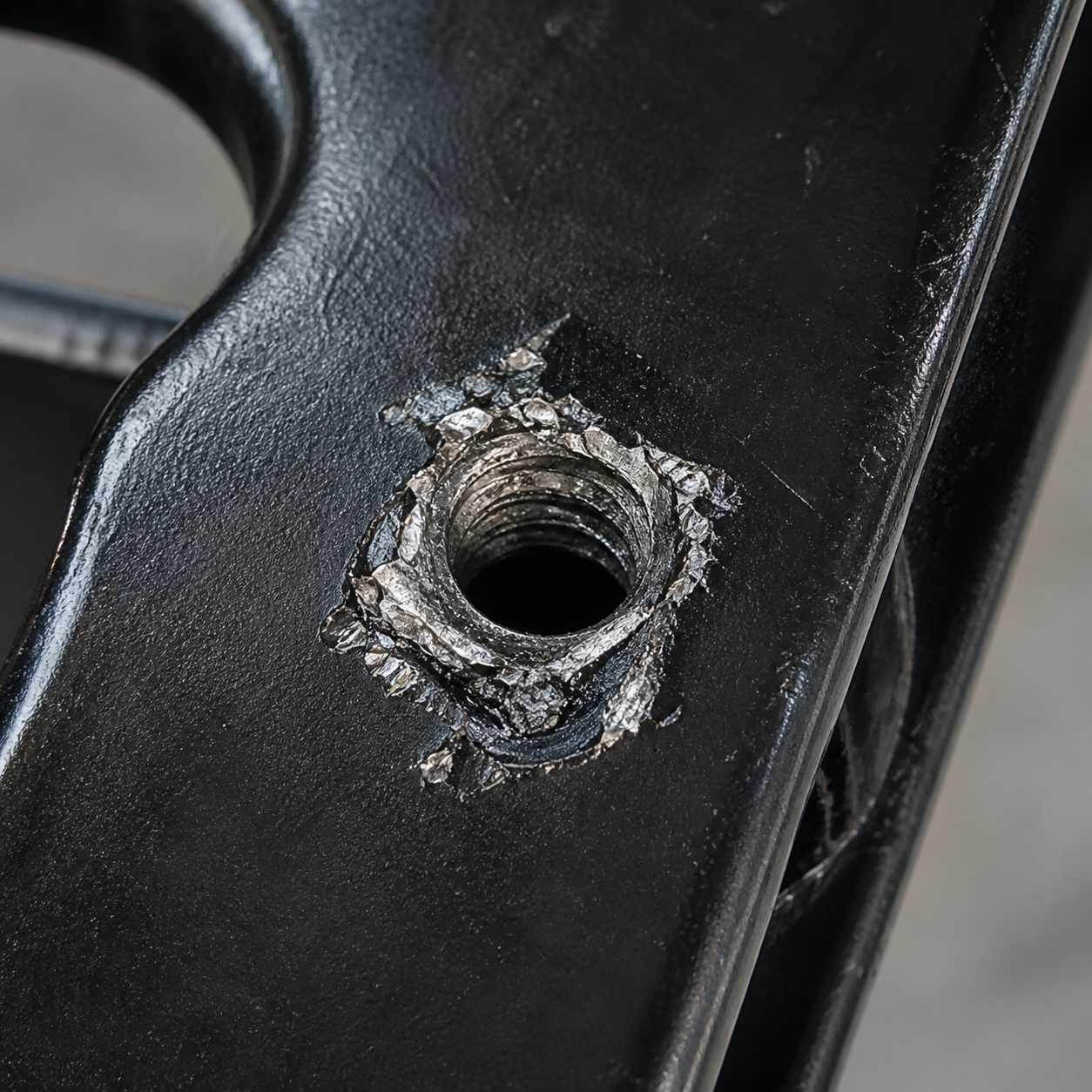
This article was prompted by a real example. A customer recently had a small leak. Rather than removing and resealing the fitting, he tried tightening it. The result was a damaged fitting and, more seriously, a torn-out thread. What should have been a simple cleaning and resealing job became a much bigger problem.
Most Air Suspension Threads Are Tapered
Many of the fittings used in air suspension, and almost all used on our AirRide suspension systems, are either 1/8 NPT or 1/4 NPT. NPT is a tapered thread. That means the thread tightens progressively as it screws in. It does not work like a normal parallel bolt thread where you simply tighten it against a face.
Because the thread is tapered, over-tightening can force the fitting too far into the component. This can damage the female thread, split softer materials, or tear the thread out completely.
This is why technique matters.
The Correct Way to Repair a Leaking Threaded Fitting
If you suspect a leak from a threaded fitting, the correct repair method is straightforward.
1. Depressurise the System Safely
Before working on any air suspension component, make sure the system is safely depressurised. Do not remove fittings from a pressurised system. Air pressure can eject fittings, airline, or debris with force.
2. Remove the Fitting
Remove the leaking fitting fully. Do not just move it a quarter turn and hope for the best.
Once the fitting is out, you can properly inspect it and the thread it screws into.
3. Clean the Fitting
Remove old thread sealant, dirt, corrosion, and any loose material from the fitting. You can do this with a wire brush and, where suitable, some solvent. If you have one, an NPT die can also assist.
Check carefully for damage. Look for:
- Rounded spanner flats.
- Damaged or flattened threads.
- Cracks in the fitting body.
- Distortion from over-tightening.
- Old hardened sealant stuck in the thread.
If the fitting looks damaged, replace it. Fittings are relatively inexpensive. Damaging the part it screws into is not.
4. Clean the Female Thread
The female thread also needs to be cleaned. This is the part in the tank, bracket, strut, valve block, or other component.
Old sealant can sit inside the thread and prevent the fitting from seating properly. Dirt or damaged material can do the same. A suitable NPT tap can be used carefully to clean the thread. These taps are readily available online, and even a cheap tap can often clean out a thread well enough to save it.
The aim is not to aggressively cut a new oversized thread. The aim is to clean the existing one and remove debris, sealant, and minor damage.
Remove all swarf and loose material - ideally with a vacuum, not an airline, which can blow debris deeper into the system. You may need to remove the tank or other part you are repairing so it can be cleaned properly.
5. Inspect Both Parts
Once everything is clean, inspect the fitting and the female thread. Ask yourself whether the fitting will still screw in dry and tighten smoothly by hand.
If the thread is badly damaged, stop. Forcing another fitting into a damaged thread may make the repair harder.
6. Identify the Correct Replacement Fitting
If the fitting needs replacing, make sure you order the right one.
You will need to know:
- Is it a straight fitting or a 90-degree elbow?
- Is the thread 1/8 NPT, 1/4 NPT, or something else?
- What size airline does it accept?
- Is the airline 1/4 inch, 3/8 inch, 1/2 inch, or metric?
- Is it push-to-connect, compression, barbed, or another fitting type?
At AirRide, we only use push-to-connect, or PTC, type fittings, which seal on the outside of the airline. Some other manufacturers use barbed fittings. The most common airline size in many air suspension systems is 1/4 inch, but you should always check. Guessing can easily lead to ordering the wrong part.
7. Apply Liquid PTFE Thread Seal
Before reinstalling the fitting, coat the thread with liquid PTFE thread seal. We use liquid PTFE because it works as both a lubricant and a sealant. It helps the fitting screw in smoothly and helps create an airtight joint.
It is also quite forgiving of slight damage, although we would always recommend changing a damaged fitting as the preferred solution. We cannot guarantee that sealant will seal a damaged thread.
Even if the fitting already has manufacturer-applied sealant on it, we still recommend liquid PTFE. The pre-applied sealant is not always enough on a new fitting, and this is especially true if the fitting has been removed and refitted.
Do not apply excessive sealant inside the fitting where it could enter the air system. Apply it to the thread in a sensible, controlled way.
Do not, under any circumstances, use plumber's PTFE tape. In our experience, it does not seal as reliably, is not as reliable over time, and bits can break off and enter the system. We do not use PTFE tape on any system we install. We recommend use of our sealant available HERE. We supply it free with all complete systems we sell.
8. Reassemble Carefully
Refit the union carefully.
Start it by hand to make sure it is not cross-threaded. If it does not start cleanly, stop and inspect it again. Tighten it enough to seal, but do not force it. With tapered threads, tighter is not always better. The fitting should be secure, correctly positioned, and sealed, not driven in until something gives way.
9. Allow Time for the Sealant to Cure
If possible, leave the joint for at least an hour before pressurising the system.
If you have plenty of time, leave it for 24 hours. This gives the sealant more time to cure and gives the best chance of a reliable repair. In the real world, repairs sometimes need to be done more quickly, and this is acceptable, but where time allows, a better seal will be achieved.
Our sealant cures in the absence of air - in other words, inside the threads. The outside air-exposed part may remain sticky. The sealant is not an adhesive, and it will still allow the components to be removed in the future.
10. Test the Repair
Once reassembled and cured, pressurise the system and test for leaks.
A soapy water test is still one of the simplest and most useful methods. Spray the area and watch carefully for bubbles.
If bubbles appear, do not simply tighten the fitting again. Depressurise the system, remove the fitting, and inspect it or replace it.
A Small Leak Is Usually a Small Job - Until It Is Made Worse
A small air leak is annoying, but it is usually not a disaster.
The problem comes when a small leak is attacked with a spanner instead of repaired properly. A damaged fitting can be replaced. A torn thread in a tank, bracket, strut, or valve block is much more serious.
So the rule is simple:
If a threaded fitting leaks, do not just tighten it. Remove it, clean it, inspect it, reseal it with liquid PTFE, refit it carefully, allow it to cure if possible, and then test it.
That approach takes a little longer, but it can save a lot of money, damage, and frustration.